Football News
Algorithms amplified World Cup racism, says report
BBC Sport correspondentPublished1 hour agoRacist abuse aimed at England footballers on social media was amplified during the World Cup by algorithms designed to maximise engagement and profit, according to new research.
The activist group Hope Not Hate analysed more than 300,000 posts on the platform X (formerly Twitter) during the 2026 World Cup and found more than 5,500 explicitly racist posts targeting England players.
The organisation argues that X's recommender algorithm pushed toxic content into millions of feeds, because posts which provoke anger and outrage can generate more interaction.
Posts generating strong reactions keep people on the platform for longer and can ultimately help drive advertising revenue.
"X is actually benefiting from this hate," Patrik Hermansson, senior researcher at Hope Not Hate told BBC Sport.
"It drives engagement on its platform and it effectively uses its algorithm to elevate and show it to more of its users.
"They show up in the recommendation feed - they are not obscure corners of this website, they are front and centre.
"That's a choice it doesn't have to make and yet it does".
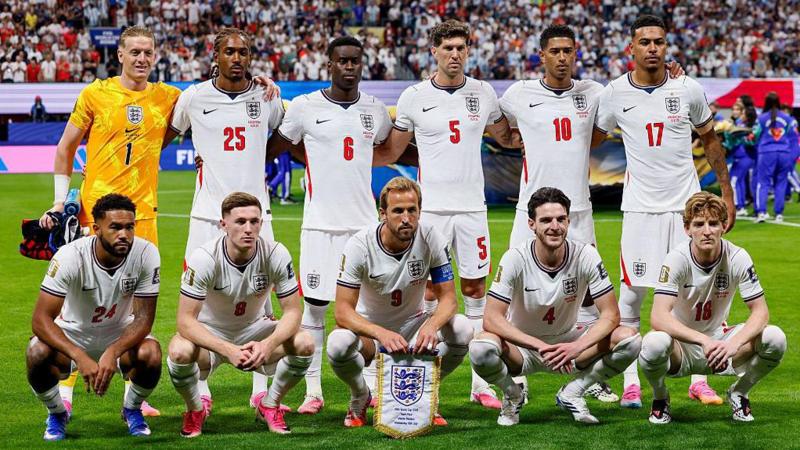
Jude Bellingham was the player most targeted by racist abuse, while Bukayo Saka and Kobbie Mainoo experienced the highest proportion of racism compared with the total number of posts mentioning them.
Djed Spence, who has converted to Islam in recent years, was also subjected to a distinct stream of anti-Muslim abuse, Hope Not Hate said.
In addition, researchers examined how abuse gathered in the replies to individual high-profile posts on the platform.
In its response to the report, an FA spokesperson said "all players have the right to play without being exposed to hateful, discriminatory and distressing content online".
"We want service providers to take all of the necessary steps to create a safer life online for everyone," it added.
Hope Not Hate said current attempts to tackle online abuse often focused too heavily on what happens after a racist post had already been seen.
Players can block users, report messages and platforms can suspend accounts, but Hermansson says those measures do not address the way abusive content is amplified.
"X doesn't take racism seriously enough," he added. "We've seen it for a number of years now. There is no change or improvement."
He said social media companies already had the tools to alter how their algorithms recommended content, particularly during periods when abuse is surging.
"It's actually a relatively small number of accounts and originating tweets that then get tons of replies," he said.
"I think it's entirely feasible to stop this, or a vast amount of it."
Hope Not Hate said one option would be to downrank posts attracting large volumes of abuse, meaning they were recommended to fewer people.
Before the new Premier League season the group called on UK's media regulator Ofcom to use its existing powers under the Online Safety Act more effectively and address predictable spikes in hate.
They want Ofcom to outlaw the algorithms fulling abuse and also to designate major sporting events as "high risk".
This would require platforms to deploy strict safety-by-design rules, remove abuse proactively and downrank rapidly escalating viral hate through algorithmic adjustments.
In a statement to BBC Sport, Ofcom said: "We're pushing tech firms hard to make their services safer, and we'll be holding them to account if they don't."
Ofcom also cited a new partnership with police and footballing bodies before the World Cup to tackle online abuse.
Hope Not Hate collected posts mentioning England players by name or X handle, and replies to player and team accounts. They also collected posts mentioning Team England and other related keywords. Irrelevant posts were filtered out.
The researchers then used artificial intelligence to sort the data, based on human-labelled examples.
Different forms of racism were identified, as well as "far-right narratives" and hateful slogans. Samples were checked manually for accuracy. Posts were counted as abuse on a yes-or-no basis, rather than graded by severity.
Source: BBC Sport · View original article ↗
This article has been sourced from an external provider and does not represent the views or opinions of AccaMate.