AccaMate logo

News Hub

Latest Sports Stories

304 stories ·The Guardian
Football Daily | Kulusevski and Maddison return to form but are Tottenham also back?

Football News

Football Daily | Kulusevski and Maddison return to form but are Tottenham also back?

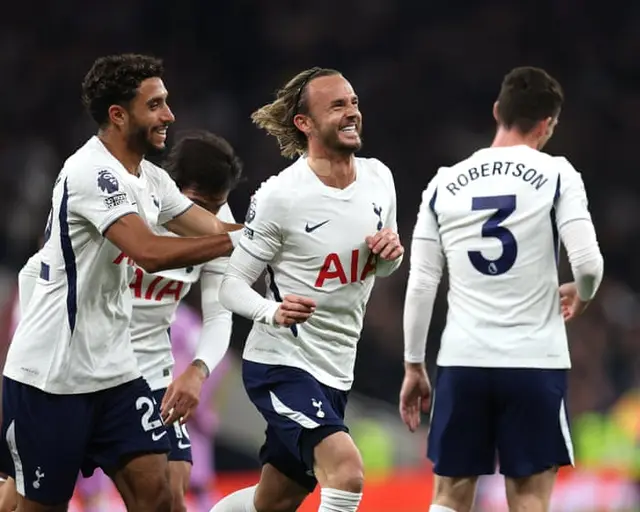
As Tottenham edged to victory over Coventry, a familiar face among the post-match salutations. Could that be Dejan Kulusevski? For it was he, playing 526 days since his last Spurs appearance. Much has changed though still much stays the same. Ben Davies’s deflected late clincher catapulted Spurs up to … 16th. When Kulusevski last played on 11 May 2025, Tottenham were 17th, the position in which they finished both that season and in 2025-26. So what has changed? Ange Postecoglou was tinned that summer despite winning the Flamin’ Bigger Vase. Thomas Frank was an appointment the soccer sensibles agreed was smart. A coach with impeccable credentials in improving players, willing to work in tandem with club suits, an ideal apex for an org chart. With lovely hair, too. Frank was sent packing in February, his popularity ratings plunging to depths unseen since Alan Sugar had the bright idea of appointing George Graham, who had paid his gardener to shape his lawn into the Arsenal crest. In football’s world of irrelevant but interesting (you sure? – Football Daily Ed) coincidences, the last time Spurs beat Coventry in the league, when Sergiy Rebrov’s goal completed a 3-0 stroll in 2001, the manager’s programme notes had been written by Gorgeous George, who the day previously had been the recipient of Sugar’s “you’re fired” flex. Igor Tudor’s tenure resembled a slasher movie, an appointment on the nod from a sporting director, Fabio Paratici, who had already left. Classic Spurs. What could possibly go wrong? Everything, it turns out. Or close to, until Roberto De Zerbi was handed the keys and a control none of his predecessors commanded. The transfer spend has been heavy, and when Kulusevski arrived in the 87th minute on Monday, the game not yet won, he did so following an absence where Spurs signed 20 players either permanently or on loan, at a cost of £530m. Scoring Spurs’ opening goal on Monday was James Maddison. Football’s king of the oche was absent for almost as long Kulusevski. Last season, as De Zerbi attempted to arrest the slide towards relegation, ‘Madders’ initially sat on the bench on a vibes-only basis and closed out the season with not much more than 30 minutes of play, and had little time to do Maddison things like his arcing beauty against his hometown club on Monday, which opened the scoring for Spurs. Good feelings at last, following a sunshine break in Marbella where, according to De Zerbi, his players became less a squad than a family. “You have to play for your friend and your brother, not like 11 robot players on the pitch,” he cooed. With two of his stars back in tandem, De Zerbi’s enforcer intensity brought a first league win of the season, to help Tottenham off the bottom. “With them in the dressing room there is another atmosphere,” De Zerbi roared. Jam tomorrow? Glory, glory? Lads, it’s etc … Join Scott Murray from 8pm BST for Liverpool 2-1 Villarreal in the Bigger Cup action while Simon Burnton is on clockwatch action to bring you updates from PSG 3-3 Barcelona, Manchester City 4-1 AEK Athens, and more. “People still call me a ‘party boy’. That stigma has been overused and has followed me since I retired from football. I’m not saying I didn’t enjoy myself as a player. You never hear that I didn’t turn up for training or wasn’t fit … now I’m not a kid trying to get into management for the first time. I’m a manager” – Dwight Yorke speaks to Morgan Ofori from his home in Dubai about his career ambitions, having been linked with the vacant Ghana job. double quotation markFurther to Peters and Lee [Monday’s Football Daily letters] another 70s example that occurred to me was the West Ham players Mervyn Day and Bill Green . They were both in the West Ham United team from 1976-78, and in Carlisle United’s greatest season 1974-75. When Green was still at Carlisle, he played against West Ham’s Day. So plenty of Green Day commentary opportunities there. Of course, the band hadn’t formed yet, but who knows, perhaps they thought of the band’s name whilst watching some old 70s football footage” – Bob Dunning. double quotation markOn the subject of musical football matchups, all I can say is that it’s just a shame Gareth Barry was at Manchester City a few years too late to play alongside David White ” – Tim Russell. double quotation markAs an aside to the music makers and fitba’, in the late 60s at the old Highbury, we would be entertained at every first team match by the local constabulary brass band. Such was the style of play, it did introduce a some element of entertainment into our visits to the old stadium” – Tommy Boyd (and, surprisingly, others). If you have any, please send letters to the.boss@theguardian.com. Today’s prizeless letter o’ the day goes to … Bob Dunning. Terms and conditions for our competitions, when we run them, are here . This is an extract from our daily football email … Football Daily. To get the full version, just visit this page and follow the instructions.

Source: The Guardian · John Brewin
Tue, 20 Oct 2026
Read story
How Brazil’s election result could shape women’s football in the country

Football News

How Brazil’s election result could shape women’s football in the country

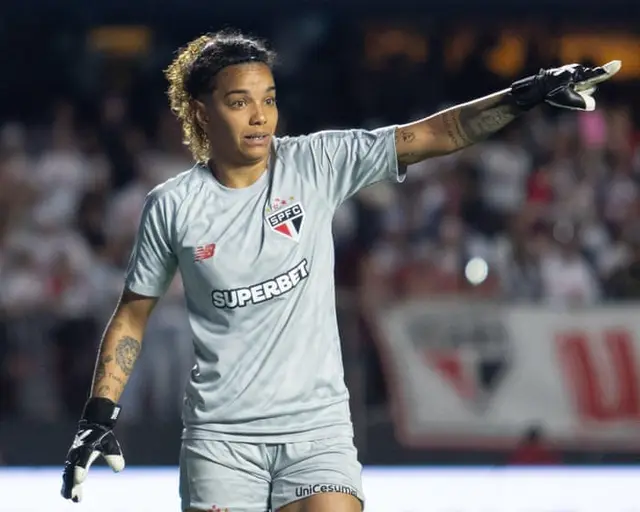
Female players including Carlinha and Tayla Carolina have spoken out against the far-right, who they fear will harm the women’s game as well as wider society The day before the first round of Brazilian elections, the Estádio do Morumbi hosted the second leg of the Brazilian Women’s Championship final, in which São Paulo drew 1-1 with Corinthians to win 3-2 on aggregate and secure the Brasileirão Women’s title. It had been an incredible final but after the game the goalkeeper Carlinha used an interview to appeal to her fans: “Never again Bolsonaro in power,” she shouted to a record-breaking TV audience of 23 million people. Having lost her grandmother during the Covid-19 pandemic, Carlinha recalls the challenges faced by hundreds of thousands of Brazilian families when the far-right president Jair Bolsonaro spread fake information about the virus while ignoring public appeals for the government to buy and distribute vaccinations. More than 700,000 Brazilians died during the pandemic. Now his son, Flávio, is standing against the 80-year-old incumbent leftwing president, Luiz Inácio Lula da Silva. “I didn’t just think of [my grandmother] when I gave that interview, I think about her and miss her every single day,” Carlinha tells Moving the Goalposts. “I felt relieved after talking about my personal opinion in such an important moment of Brazilian democracy. I’m a journalism student and I know the impact if the right wins the elections.” Carlinha is one of several female football players who have used social media and their visibility to speak up before and during the presidential election, which will come to an end on Sunday with a second-round vote. The father of the Bolsonaro dynasty is currently under “humanitarian house arrest”, serving a 27-year sentence for a coup attempt. Carlinha’s club and international teammate, Tayla Carolina, went viral the weekend after discussing her family’s background and how public policies implemented during Lula’s government were important for her mother and grandmother, who have worked as cleaners throughout their lives and have since passed. “I’m from a very humble family, I’m a Black woman. I’ve studied in public schools and used the national healthcare system … my mum, dona Dora, worked for over a decade for someone who never paid her labour rights … and she worked until she couldn’t walk any more due to the cancer that took her from us. She never saw me play because she never had the time, she never rested,” she wrote. Her story resonates with many Brazilians who fought for shorter working weeks, approved earlier this week in congress. Tayla elaborates her point: “I’m from a country where most of the people are poor but the country is not seen as poor. It shows there are huge inequalities, which come from exploitation. Years have passed and there’s still a lot of inequality and I come from it … as a public figure, and someone who has lived similar lives to the majority of Brazilians, I feel the responsibility to speak up.” The player organisation Fifpro has just released a new study showing that nearly half of female football players think of early retirement owing to the psychological and financial pressures of the women’s game (800 professional players took part). With the Women’s World Cup being staged in Brazil next year both Carlinha and Tayla feel the election will have a huge impact on the game going forward. “There is one side that makes it quite clear how they feel about women’s rights,” says Carlinha, referring to, among other things, politicians such as Eduarda Campopiano, one of the most voted members of the São Paulo Assembly, who calls herself an “enemy of feminists” and has said she does not believe in femicide – that women and girls can be killed because they are women. Tayla also feels the need for policies to support the women’s game at a crucial moment. “We still need government incentives, so it may not be immediate, but the game will be affected, positively or negatively, depending on how the elections go.” Lula approved the World Cup law in June 2026, which regulates many aspects of the tournament, including how ministries, the Brazilian FA (CBF), state federations and clubs will commit to developing a legacy and supporting the women’s game in the country. The legacy plan, divided into four strands, proposes supporting access and permanence of girls and women in football, developing and professionalising the game, fighting gender- and racial-based discrimination, and enhancing the economic and cultural aspects of women’s football in Brazil. The commitment to the tournament is stated in Lula’s government plan. Bolsonaro’s proposals for women’s sport do not mention the World Cup; instead, he proposes “ensuring that women’s categories, from youth to elite, are played by athletes of the female sex, protecting women and tournaments from ideological agendas”. Brazilian football, men’s and women’s, has been heavily politicised for decades, and the rise of social media has led to an increase in players publicly supporting their political candidates. In the men’s game, the far-right is often championed by the Santos and Brazil forward Neymar, who has showed support for the Bolsonaro family on many occasions. Tottenham’s Richarlison, meanwhile, is positioned on the left and this week accused Flávio Bolsonaro of “taking possession” of an island he says he bought a few years back. The country’s female players do not have the same number of followers on social media and cannot influence a big audience in the same way as the men. However, it is true that the result of the election is likely to have more of an impact on the women’s game than on the men’s. Kely Nascimento, the daughter of late football legend Pelé and founder and executive director of the Nascimento Foundation, says: “Female players, female athletes, they don’t have the protection of wealth. What feeds the brilliance of Brazilian football are the players, and they mostly come from communities, favelas and other places that are going to be hugely affected by these elections. Women are more affected by all this, right?” Carlinha, who played in one of the two recent friendlies against Argentina, says playing for the national team at home is “one of the best feelings ever”. At both stadiums, in Porto Alegre and Recife, the crowd predominantly chanted in support of Lula, which could be heard over the TV commentary during the broadcast. The politicisation of women’s football is not new, as Brazilian women’s football historian and author Aira Bonfim explains. “This is a hundred-year-old history, because we have episodes of women playing football in Brazil since 1915, and the women’s game reveals different perspectives of gender inequalities, racial inequalities, class, territory, which will affect the progress of the women’s game,” she says. “By knowing women’s football history, we can look at episodes which are equally as political, such as the ban on the women’s game [between 1941 and 1979], the persecution of women, and lies that were told so that female players would give up on it.” One of the pieces of history that she has uncovered in her research became a short film, which debuted earlier this month at the Rio Film Festival, The House of Dona Carlota, produced by Mymama Entertainment and directed by Lili Fialho and Bruna Linzmeyer, which tells the story of a woman who was arrested and persecuted because she led a women’s football team, Primavera Atlético Clube. It shows women’s football as a space of socialisation, sport and resistance to the Estado Novo dictatorship in the late 1930s and early 1940s. The women’s game was banned in Brazil for decades, and the World Cup in 2027 is where many hope its renewed development will be consolidated. “What’s at risk [in this election] is a waste of all of the human investments in building social legacy plans. There is also the risk of dismantling all political communication that has been done to support [the World Cup] through the ministries, cities and state governments. If you elect someone who did not make any commitments towards it, who did not commit to the World Cup or what it represents to women, it can be a huge loss,” Bonfim says. “Just the fact that during Jair Bolsonaro’s government he removed the status of the ministry of sports reveals how he feels about the sector.” The hosting of a Women’s World Cup is key in developing public policies and attracting investment and support. As Nascimento says: “There are girls all over Brazil for whom football is not just their dream, but it’s also how they get out of very awful situations. And there are amazing people doing God’s work all over Brazil just to get girls to play, to be educated in another way … for some reason, Brazil just makes football magic, and that’s not gender-specific. And there’s an enormous Brazil that is being ignored and taken advantage of.” There are many reasons for the international community to look closer at the second round of Brazil’s elections on Sunday, from how it can affect climate change, foreign policy and financial markets to many other issues. Women’s football, and all it represents, is one of them. If you have any questions or comments about any of our newsletters please email moving.goalposts@theguardian.com. This is an extract from our free email about women’s football, Moving the Goalposts. To get the full edition, visit this page and follow the instructions. Moving the Goalposts is delivered to your inboxes every Tuesday and Thursday .

Source: The Guardian · Júlia Belas Trindade
Tue, 20 Oct 2026
Read story
Animal rights group urges Crystal Palace to retire bald eagle mascot

Football News

Animal rights group urges Crystal Palace to retire bald eagle mascot

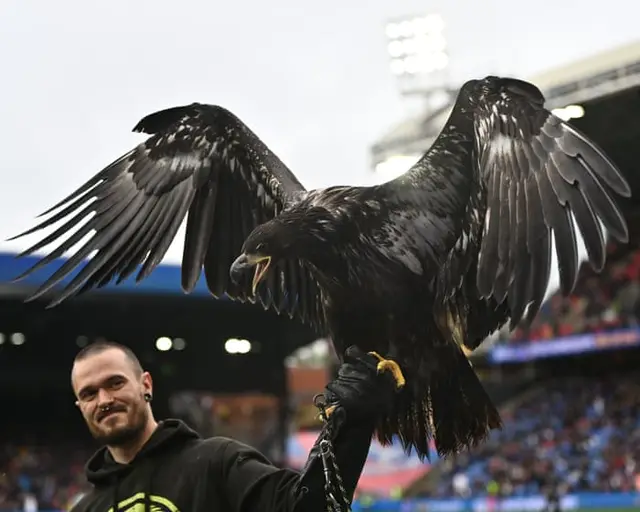
Peta calls on club to never again use a live animal mascot ‘There’s no reason to drag a wild animal into a stadium’ A leading animal rights group has urged Crystal Palace to retire their American bald eagle mascot because, it says, the matchday experience can leave the bird “frightened, disoriented and panicked” and put spectators at risk. In a letter to Palace’s chief executive, Sharon Lacey, People for the Ethical Treatment of Animals (Peta) called on the club to end Phoenix’s appearances at Selhurst Park and commit never to use a live animal mascot again. Palace, known as the Eagles since 1973 after the then manager Malcolm Allison changed their nickname from the Glaziers, introduced a pre-match display from Kayla the Eagle in 2010. She died in 2020 after a decade’s service but Kayla’s replacement, Phoenix, made her debut before the game against West Ham in August 2024 at four months old, meeting supporters in the fanzone and being introduced at half-time with her handler. Phoenix is based at the Eagle Heights Wildlife Foundation in Kent, and its website said at the time that she “had been carefully prepared for her prestigious role as Crystal Palace’s official live mascot since hatching”. Phoenix has yet to appear again at Selhurst Park. It is understood plans for her to make a maiden flight across the pitch before kick-off – a ritual Kayla for which was renowned – were abandoned at a match this season. In the letter seen by the Guardian, Peta said bright lights, loud noises and boisterous crowds mean stadiums are “no place for animals” and potentially put animals and spectators at risk. It detailed incidents of eagles that have collided with walls or glass windows and a falcon that landed on a spectator’s head, embedding its talons in the man’s scalp. Peta also referred to an incident involving Kayla in 2015 when a Charlton fan was found guilty of trying to punch her during a League Cup tie marred by crowd trouble. Dr Carys Bennett, Peta’s senior corporate projects manager, said: “Bald eagles are revered as symbols of freedom, yet Phoenix is being used as little more than a prop to entertain football fans. Crystal Palace already has a human mascot to energise supporters, so there’s no reason to drag a wild animal into a noisy, crowded stadium. Peta is urging the club to let Phoenix spread [her] wings and retire [her] from matchday duties for good.” Palace did not respond to Peta’s letter or to a follow-up request last week. They have been contacted for comment. The Guardian sent a number of questions to Eagles Heights to ask about Phoenix’s welfare and did not receive a reply. Peta’s letter argued that eagles’ natural behaviours make the stadium environment unsuitable for them. In the wild, the birds can travel across vast territories and typically avoid close contact with humans. The organisation said even birds raised in captivity retain their natural instincts and may experience frustration and stress when unable to engage in natural behaviours. Benfica’s home matches feature appearances from a bald eagle called Águia Vitória – a custom that the Portuguese club started in 2003 when their new Estádio da Luz opened.

Source: The Guardian · Ed Aarons
Tue, 20 Oct 2026
Read story
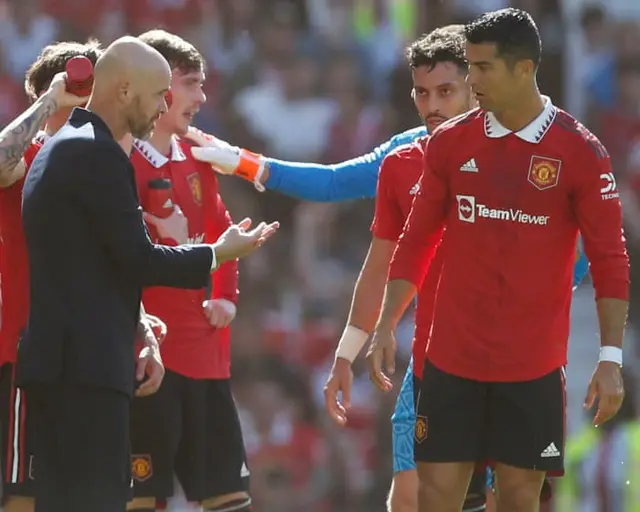
Erik ten Hag accuses Cristiano Ronaldo of ‘letting down’ Manchester United

Football News

Erik ten Hag accuses Cristiano Ronaldo of ‘letting down’ Manchester United

Ten Hag says Ronaldo did not complete post-match run Former manager claims club broke promises made to him Erik ten Hag has claimed Cristiano Ronaldo “let the team down” during their time together at Manchester United. Ten Hag has also alleged that promises made by United’s owners went unfulfilled, leading to his sacking by United in October 2024. Ronaldo returned for a second spell at United in August 2021 and was already at the club when Ten Hag was appointed as Ole Gunnar Solskjær’s successor in 2022. However, the relationship between the pair quickly broke down, with Ronaldo refusing to come on as a substitute in a win over Tottenham in the October before he then publicly criticised the club in a TV interview. The forward’s contract was mutually terminated the following month. “He let the team down, and he let me down, because we planned with him,” Ten Hag said in an interview with the Athletic. “He’s one of the best in football history. I respected him a lot. But at that time, as a manager, I had to make a rational decision and keep the players I admire in.” Ten Hag claims Ronaldo did not complete the full run that players were set after they were beaten 4-0 by Brentford early in his reign. “I confronted him with this,” Ten Hag added. “Many times I say, ‘Ronnie, everyone wants to work for you to bring you in the right position, but if you can’t bring yourself in the box, you can’t score’..” Ten Hag was sacked only five months after he won the FA Cup and then signed a contract extension. The Dutchman claimed in the discussions with the club’s owners about his new deal that he was made promises which were not kept, and he was left “embarrassed” when Scott McTominay was sold to Napoli without his consent. He added: “They promised me loyalty, they promised me backing, they promised communication, that we get aligned. We spoke about the issues. But the promises, they didn’t keep. “I said, ‘No selling Scott McTominay’. And in the end they sold him. I got, of course, very embarrassed and disappointed.”

Source: The Guardian · PA Media
Tue, 20 Oct 2026
Read story
Dwight Yorke: ‘I’m not a kid trying to get into management – I’m a manager’

Football News

Dwight Yorke: ‘I’m not a kid trying to get into management – I’m a manager’

Ghana may soon come calling for Trinidad and Tobago’s former captain and manager, who is proud of his CV since his days as a Premier League striker Dwight Yorke wants you to stop calling him a former player. “I’m not a kid trying to get into management for the first time,” he says from his home in Dubai. “I’ve done that and I want that message to come across clearly.” The message has a deadline. Carlos Queiroz left his job as Ghana head coach on 1 October and the Ghana Football Association is searching for his successor. Yorke is among the names under consideration, along with Pape Thiaw, Aliou Cissé and Walid Regragui, the former Morocco head coach, according to Ghanaian media. He is tired of the shorthand way he is described during these high‑profile job hunts. People focus on his playing accolades, including calling him the treble winner, a label he says belongs to one season in a run of three Premier League titles at Manchester United from 1999-2001. “I’m a manager,” he says. Over the past four years, Yorke has quietly built a coaching résumé far removed from Old Trafford. His first taste of management came in May 2022, taking charge of Australia’s A-League All Stars against Barcelona in front of more than 70,000 people in Sydney. They lost 3-2. “I realised then that I enjoyed it,” he says. Macarthur, based in Sydney, followed that July. “We went to a relatively unknown team in the A‑League and managed to win the cup.” The Australia Cup success, three months into his spell, was the club’s first trophy. It did not last. Macarthur sacked him in January 2023, with the club sixth, after a post-match address when he reportedly called the club a “pub team” run by “muppets”. A Fifa chamber found Macarthur had dismissed him without just cause. The court of arbitration for sport upheld that in 2024 and ordered the club to pay AU$212,500 (£111,300 at current exchange rates). “I wish I’d had the opportunity to finish what I started,” Yorke says. The job taught him communication and the importance of being transparent. “There was a disagreement. It was resolved amicably and I’ve moved on.” Between Macarthur and his next role, he kept his hand in. He worked as a pundit for beIN Sports and on the Saudi Pro League and travelled the world watching coaches at work. In November 2024, Trinidad and Tobago came calling. The Soca Warriors finished third in their World Cup qualifying group behind Curaçao and Jamaica, missing out on the finals tournament, and Yorke’s tenure ended soon after. The Trinidad and Tobago Football Association said talks over revised terms had not produced an agreement and the contract was ended by mutual consent, announced in March. “The decision to end things was out of my control,” Yorke says. He does not accept that missing the World Cup defines his time in charge. “People can be blind to success because they focus on whether you qualified.” He lost once in six qualifiers, 2-0 in Jamaica in September 2025. He had been handed a brief: make people care about Trinidad and Tobago again, boost recruitment and qualify. “I was given three tasks and completed two,” he says. With Yorke as the head coach, crowds came back and a number of US-born players with Trinidadian and Tobagonian heritage, such as the CF Montréal winger Dante Sealy and Real Salt Lake’s Kobi Henry, opted in and made their debuts. Yorke gave a new generation a fighting chance to emulate the team he captained to the finals in 2006. “I left Trinidadian football in a far better place than I found it,” he says. The TTFA president at the time described Yorke’s mandate as qualification alone. The team were ranked 102nd by Fifa when Yorke was hired, behind Curaçao (91st) and Jamaica (62nd). “I miss management,” Yorke says. “I miss what we were creating.” The players are understood to want him back because his successor, Derek King, is struggling with two draws and eight defeats from his 10 games. Ghana, though, is the live opportunity. “It’s a job I’d be interested in, given Ghana’s history and the players available.” The Ghanaian FA has not confirmed any approach. The team are bottom of their 2027 Africa Cup of Nations qualifying group with no points, after a 2-0 defeat in Côte d’Ivoire and a 4-2 home loss against the Gambia in which they led by two goals. It is a sharp decline for a side that reached the last 32 of the World Cup this summer, losing 1-0 against Colombia. “You look at the squad and your eyes open even wider,” Yorke says. He says an agent called to tell him Ghana were interested. “The conversation started there and then reached the media before I really knew it.” From the outside, he says, Ghana “sometimes looks disjointed”. The GFA has said its women’s head coach, Kim Björkegren, will take temporary charge of the men’s qualifying double-header against Somalia next month. In Yorke’s view, outside noise unbalances things, from the administration to the players. So how would he fix it? Organisation, transparency and everyone speaking the same language. “The talent is there. Build the culture and get the players to buy in and the football will follow.” He has considered the effect that diaspora players could have in the role, pointing to Ghana’s Antoine Semenyo and Brandon Thomas-Asante as proof that countries can benefit immensely from UK-born talent. It reflects a broader trend: at the World Cup, 23.6% of the 1,248 squad players represented countries outside their place of birth. For Yorke, the approach is simple: identify the players, establish their heritage and quality and sell them a vision. “I’d make sure that what I say is what I do.” Older managers might have screamed and shouted to get messages across, but he says: “I’m not sure that approach can last in the current environment.” He would not berate a player in public. “That can be done behind closed doors, while still being assertive.” Respect and punctuality are non‑negotiable. He has sat in dressing rooms with big egos and says nobody gets special treatment. “Everyone starts equally.” He borrows, but he does not copy. Sir Alex Ferguson, who managed him at United, is the shadow over any such comparison. Among contemporary managers, Pep Guardiola offered him the best advice. “He said, in effect, that I can’t be him or any other manager. I have to be myself.” Other labels have stuck anyway. “People still call me a ‘party boy’. That stigma has been overused and has followed me since I retired from football. I’m not saying I didn’t enjoy myself as a player.” But he says: “You never hear that I didn’t turn up for training or wasn’t fit.” In Dubai, he tends to fast for nearly 20 hours a day and eats one meal. “I’m a fitness fanatic who trains every day.” Ask Yorke how he wants to be remembered as a coach and he sits up and answers with a list. Committed. Transparent with players. Decisions made for the team, never for an individual. “I’m straightforward. I don’t mess around, take shortcuts or do the job halfway.” Yorke has the interest and, by his own account, the answers. “If anyone doubts me, I can prove them wrong.”

Source: The Guardian · Morgan Ofori
Tue, 20 Oct 2026
Read story
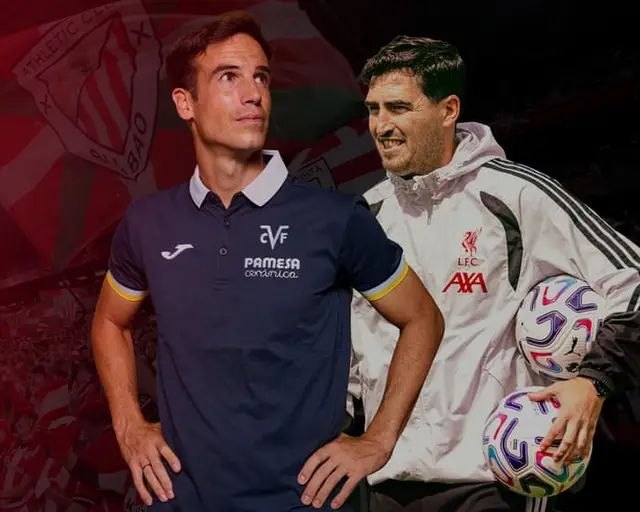
Villarreal’s Iñigo Pérez ready to meet Iraola again in test of old bond

Football News

Villarreal’s Iñigo Pérez ready to meet Iraola again in test of old bond

Refused a work permit at Bournemouth, Pérez comes face to face with Liverpool’s head coach in Champions League On Iñigo Pérez’s first day as a head coach he took a call from Andoni Iraola, just as he had every day for months. They had known each other for 22 years, lived in the same residency, come through the same academy and played in the same team; they had worked side by side, manager and assistant, and embarked on an adventure together. Now, though, Pérez was having to go it alone. At 36, he had become what his friend thought he would be from the moment they met, just not so soon. “He wished me luck and said he was there for me,” Pérez said, “said that if I ever needed anything …” “Sometimes life brings what you never imagined,” Pérez said after his coaching debut. Now he is off to Anfield. It’s funny the way it goes. Had he not been denied a work permit by the Home Office, had a Football Association panel not declared him incapable of contributing to English football, a partnership broken and a family turned back, a career seemingly derailed from the start, Villarreal’s manager wouldn’t be sitting on the bench to the left of the halfway line at Anfield tonight. He would be sitting on the bench to the right. This time, the man who should have been Iraola’s assistant is instead his opponent, nothing given for 90 minutes. “I’m looking forward to seeing him; we speak continuously, always there,” Pérez says. “To encounter each other pitchside is emotional. When the referee blows, it all ends, but it’s a very nice story.” The story starts in 2002, when Pérez arrived at Athletic Club Bilbao’s academy, aged 14. Iraola was 19, six months from his first‑team debut. They first played together in the first team in October 2009 but, teenagers and tenants, something had already drawn them together and would do again. If Pérez was more open, Iraola more private, timid even, there was much they shared: an inquisitive mind, an ability to observe and listen, a humility befitting a club where presumptuousness is prohibited. “Intellectually they’re brilliant,” says a teammate from that time, Carlos Gurpegui, intelligent a word that keeps coming back and with warmth too. “Andoni had a privileged mind and Iñigo was so intuitive. We played [Fantasy Football] and Andoni always won,” the goalkeeper Raúl Fernández recalls. If that gave them natural leadership, it was worn lightly, not imposed. As one coach notes: “If everyone was going left and Andoni said: ‘Go right,’ they’d all be like: ‘Yeah, yeah, go right!’ They are two unusually intelligent guys, always rationalising, able to reach others.” Iraola saw it in the kid coming through, ideas explored together. “Iñigo was always aware of tactical [shifts],” he said later. “At 14 or 15, the way he thought about the game was mature. Ever since I knew Iñigo, I thought he had the personality to be a coach. In fact, he had a clearer idea about being a coach than I did.” David López, who played alongside them, says: “It’s no surprise they became coaches.” Eneko Bóveda, who came through the academy with Pérez, says: “They might have become coaches individually; together, they were bound to. Iñigo was extremely impressive in personal relationships, inside every dressing‑room circle: emotionally intelligent, empathetic.” The age difference was no barrier, a product of their place, the communal culture that made them. “When we reached the first team, that generation [above] was established, but it was very easy to talk to them, even take life advice,” recalls Fernández, born in 1988, like Pérez. “I remember asking Andoni what to do about my contract. Under Marcelo Bielsa, the players would come together before games with a hot chocolate, a croissant and talk. Bielsa was super‑demanding, always at your throat; we took refuge in each other.” Pérez might not have been there at all, unwanted by Bielsa until the training session when he crashed into the goalkeeper Gorka Iraizoz. “There was blood everywhere, his lip split open, but Iñigo carries on and Marcelo thinks: ‘I can follow this guy to the end of the world,’” Gurpegui recalls. Picturing the scene, Fernández starts laughing: “Iñigo didn’t know what would happen to him. I seem to remember him even sleeping at Lezama [the training ground] on a mattress, which showed how committed he was. And that day Bielsa was shouting at the physios: ‘Leave him! Leave him! He wants to carry on!’ He’s going to Iñigo: ‘Bravo! Bravo! That’s it, lad!’” An opportunity opened at full‑back and Pérez did what he always did: adapted. Above all, they observed, took it all in. “Iñigo and I would speak a lot about the way Bielsa coached,” Iraola recalled. They would ask endless questions of assistants Claudio Vivas, Pablo Quiroga and Diego Reyes, always wanting to know why . “But then they’re football nutcases who learned from everything,” Boveda says. Their last game together was in October 2013. Iraola retired in 2016 and started coaching two years later. Unseen, Pérez was drifting in the same direction. Common friends and a shared agent meant they were never far away and in February 2022 they crossed paths again. Pérez didn’t play when Osasuna won 3-0 at Rayo but their conversation that night stuck in Iraola’s mind, a mental note made. Aged 34, Pérez had told Iraola his role now was really about helping the coaches. Indeed, Osasuna’s manager Jagoba Arrasate was already referring to him as a “player-assistant coach” and soon invited him to join the staff. Bielsa approached him too, furious when Pérez turned down Uruguay. When Iraola heard Pérez was retiring, he called immediately, convincing him to come to Rayo. The assistant coach Unai Mendia was leaving and his old teammate was perfect. The impression made was immediate: “Iñigo’s top,” a member of Rayo’s coaching staff says. “He was special, a phenomenon. Super‑elite, like Andoni.” Together with the fitness coach Pablo de la Torre, who constructed a physical model around which the whole, wild ride was built, they were a revelation, practitioners of organised chaos. Nowhere was football more fun, a shared vision soon enticed to the Premier League. “When we found out that Andoni was leaving for Bournemouth, I told Iñigo he should be our head coach,” the Rayo striker Sergio Camello recalls, and the club hierarchy agreed. Pérez, though, thought it would be morally wrong: this was Iraola’s construction, not his to take. Besides, he wanted to continue with his friend. Iraola wanted that as well, taking only two staff to England: Pérez and De la Torre. It was a new start, a new life, and he needed his partners there. But then Pérez was denied a work permit. Bournemouth took it to an FA exceptions panel. Supporting letters were sent, a case made. Iraola wrote, too, explaining their history and describing Pérez as “fundamental”. The panel, though, remained unsatisfied that he was “of the highest calibre and able to contribute significantly to the development of the game at the top level in England”. “We did everything we could,” Pérez said, which was true: they even requested a permit as youth‑team coach, earning a telling off for trying it on. As he awaited a final resolution, Pérez kept working: he couldn’t wear a club tracksuit, appear publicly or sit on the bench, but he was at the training ground daily. Until, in the late autumn, they had to admit defeat. That hurt, personally as much as professionally. “It was very difficult, an uncomfortable situation for all of us,” Iraola says. “You can’t [work], you can’t put your kids in school.” Between them, Shaun Cooper, Tommy Elphick and De la Torre had to assimilate Pérez’s duties, Iraola impressed and grateful at the staff he inherited. His tourist visa expiring, Pérez returned to Spain. Calls from Bournemouth continued, some consultation and a lot of conversation, not always about football. Then when Rayo sacked Francisco Rodríguez in early 2024, the club offered him the manager’s job again. Iraola encouraged Pérez to go for it. “In the summer, I didn’t feel ethically comfortable and I wanted to continue with Andoni,” Pérez said. “The circumstances changed.” Camello admits: “I think the transition from assistant to head coach here was hard. He had been so close to us. Iñigo loved us too much: he felt so responsible for us that the inevitable frictions as No 1 were taken to heart. But he opened up to us, reached us. The relationship is still so good: he messaged me yesterday with some bands to listen to. And I doubt I’ll ever come across someone so capable in football terms. It’s amazing how many solutions he gives you on the pitch. Seeing him and Andoni in the Champions League doesn’t surprise. They have no limits; we’re just grateful that two monsters coached us.” Their paths had separated, but the courses set were similar, the styles too. “My football belongs to Andoni,” Pérez said. Chaos still reigned many miles away and only a phone call apart. Iraola took Bournemouth to Europe for the first time; Pérez achieved Rayo’s first European qualification, and led them to the only final in their history. This summer greater challenges awaited, so here they are at Anfield, where there is relief that a friend’s career was not ruined but rather launched. “I am so, so happy for Iñigo,” one staffer says, “because you want good things to happen to good people and he’s very, very good people.” They will watch in Bilbao, where it all began. “It’s special: I’m so proud of them,” says López. Gurpegui says: “Iñigo suffered in England but that situation opened another opportunity and now look: Andoni at Anfield. Bloody hell, I’m so pleased, because they’re two incredible people: humble, always there when you need them. Football needs more people like that.” Fernández adds: “And knowing them, it will be fun too: bold, brave football, a great game.” Iraola says: “These games aren’t good for your relationship. We usually talk a lot but when you’re facing each other you talk less. It’s a special game because he’s my friend. He knows me very well. We’ve been through a lot together.”

Source: The Guardian · Sid Lowe
Tue, 20 Oct 2026

Read story
Football Australia chair Anter Isaac dismisses recent Fifa ructions as ‘growing pains’

Football News

Football Australia chair Anter Isaac dismisses recent Fifa ructions as ‘growing pains’

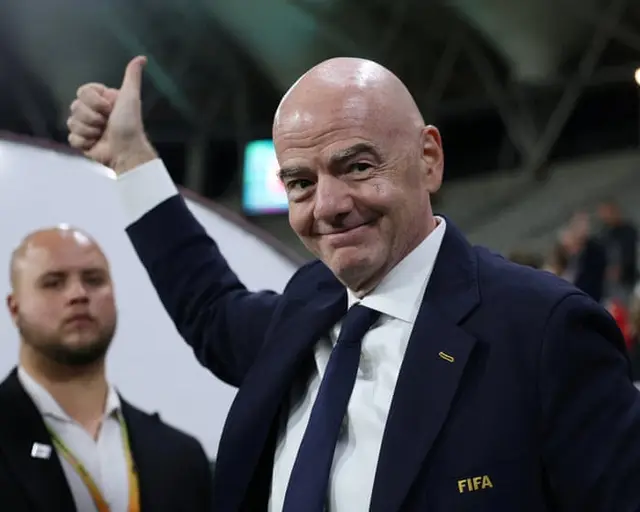
Isaac appears to back current direction of world governing body But ‘premature’ to talk about support for Gianni Infantino Isaac’s sentiments come amid a global rebound in support for the embattled Fifa president, who at one stage appeared unlikely to be able to continue in his role following criticism led by officials in Europe and North America. The Swiss lawyer now enjoys backing from South America, Africa and growing chunks of Asia, which would represent a bloc large enough for him to win March’s Fifa presidential election. Continental powerbrokers are converging on Tokyo this week for the Asian Football Confederation congress. Fifa’s leadership and governance do not form part of the formal meeting agenda, but will be discussed by those present alongside the likelihood of January’s Asian Cup in Saudi Arabia going ahead. Isaac, the most senior football official in Australia, was asked about the situation at Fifa in an episode of a little-known sports business You Tube channel earlier this month that has been viewed fewer than 200 times. “We can look at it and be unsophisticated and say, what a mess,” he told Beyond the Game with Dillon and Rafael. “Or we can take a more responsible, mature view and say, you know what, these are growing pains.” Isaac pointed out that Fifa’s revenues have exploded in recent World Cup cycles, and “systems and processes” at the organisation may not have kept pace. He was adamant that the intentions and motivations of people in football are “always in the best interests” of the sport. “Maybe it’s not always aligned, but everyone involved in football really does want that, right? Everyone, at least in my experience and my interactions with them, that’s not even a question. So where has it become misaligned? Maybe it is in approach, maybe in communications and so forth.” FA’s previous statement on the controversial proposal dubbed Fifa Forward Enterprise (FFE), issued in August, called for “clear and credible action” but stopped short of calling for Infantino’s resignation. It was broadly in line with a letter co-signed by Asian Football Confederation president Sheikh Salman bin Ibrahim Al Khalifa which demanded from Fifa “leadership that serves football, not seeks to command it”. Since then Salman appears to have softened his stance against Infantino, instead calling for strengthened Fifa governance, as a growing bloc of Asian nations including Qatar and the UAE indicate support for the Fifa president. Isaac said people will criticise bodies like Fifa, AFC and Uefa but will not have the same knowledge of those within the system. “If I had the same information that most critics or the general public have, I would probably draw the same conclusions as them. But I don’t. I have a lot more information. I see a lot more that happens,” he said. “So when I reflect on Fifa and major institutions in football, I see a lot of the incredible work that they do, that confederations do, even our association [does], that goes unnoticed in supporting and serving and servicing different stakeholders, especially the ones that need the greatest help.” The missive follows last week’s meeting of the Fifa council in Zurich, the first since FFE came to light. Infantino listened to questions there, but declined to provide comprehensive answers, and called for questions in writing to be submitted before the next meeting in Doha on 16 December. Isaac said it was “premature” to talk about whether he would support Infantino at next year’s election. While he noted he has his “own views” – and he wanted to avoid being openly critical himself – he sees criticism of Fifa’s president as largely about “process”. “I’ve been encouraged that, right across the board, everyone is now focusing on that [process] with a view to, OK, let’s try and diagnose, what maybe could have been done differently or better, so that in future – and we codify it – so that in future we avoid it and what’s happened in this particular situation.”

Source: The Guardian · Jack Snape
Tue, 20 Oct 2026
Read story
‘Like a family’: De Zerbi credits players’ talk and bonding trip for improving Tottenham

Football News

‘Like a family’: De Zerbi credits players’ talk and bonding trip for improving Tottenham

Spurs off bottom after first win against Coventry Roberto De Zerbi said that Tottenham are playing with more togetherness after holding a clear-the-air meeting before their recent game with Manchester United. Spurs went on to draw 1-1 with 10 men against United and are out of the bottom three after beating Coventry 3-1 at home on Monday night. De Zerbi felt the performance against Coventry could have been better but was happy with his side’s attitude as they claimed their first Premier League win of the season. “It’s important,” the Spurs manager said. “The result is important but most important, two things. First one, we are able to realise we can win a game like other teams in the Premier League. The second thing, if we put [in] something from ourselves like we have done in the last two weeks. The day before Old Trafford we had a big meeting and spoke about the situation. We can’t accept and can’t move on if we don’t accept responsibility.” De Zerbi took his squad to Marbella for a bonding trip and warm weather training last week. “This week has been important because we spend time together and want to be like a family,” he said. “During the game if you have a problem and there is a tough situation you have to play for your friend and your brother, not like 11 robot players on the pitch.” Spurs took the lead when James Maddison marked his first start in 536 days with a brilliant goal. Coventry equalised through Jack Rudoni but Omar Marmoush responded with his first goal since leaving Manchester City and Ben Davies sealed the result. Spurs are up to 16th and De Zerbi was happy that Maddison’s first goal since May 2025 was joined by Dejan Kulusevski coming off the bench to make his first appearance since suffering a serious knee injury in the same month. “They are different players,” De Zerbi said. “Different talent, different experience, different personality. With them in the dressing room there is another atmosphere.” Frank Lampard was happy with Coventry’s fight but was surprised that Marmoush’s goal was not ruled out after the Egyptian elbowed Milan van Ewijk. “I did think that,” Coventry’s manager said. “If you roll and your elbow is that high and it connects with Milan, I thought VAR would cancel it.” Lampard was optimistic about his side. “It was a really big display,” he said. “3-1 changes the view at the end of the game. At 2-1 we were pushing.”

Source: The Guardian · Jacob Steinberg at the Tottenham Hotspur Stadium
Mon, 19 Oct 2026
Read story
Davies ensures Spurs off the bottom after first win of season against Coventry

Football News

Davies ensures Spurs off the bottom after first win of season against Coventry

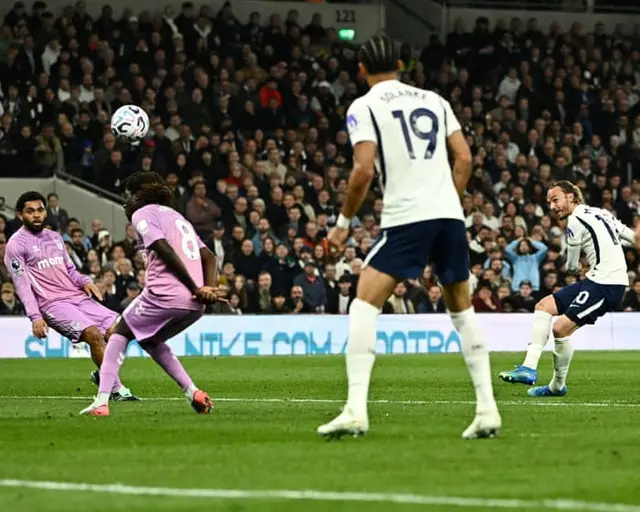
Tottenham are level with Beyoncé at last. Progress is represented in Roberto De Zerbi’s side earning only their sixth home win in the Premier League since November 2024. Cynics will point out that this spectacular stadium has hosted as many Beyoncé gigs during that time, but Spurs are finally singing a happier tune after dragging themselves out of the bottom three thanks to a messy but gritty 3-1 win over Coventry. It was not especially convincing. Coventry raged at the second Spurs goal, delivered when Omar Marmoush responded to Jack Rudoni’s equaliser for the visitors with a vicious effort in the 59th minute. Relief poured out of Marmoush after his first goal since joining on loan from Manchester City, but should it have stood? The Egyptian forward, who otherwise had a quiet game, was fortunate not to be penalised for an elbow on Milan van Ewijk. Frank Lampard looked bewildered. The night belonged to Spurs, who have their first win of the season. James Maddison marked his first start in 536 days by opening the scoring with a brilliant goal. Ben Davies, on as substitute, calmed the nerves by drilling in the third goal in added time and the home fans were also cheered by Dejan Kulusevski coming on to make his first appearance after more than a season out. The hope for Spurs was that the sight of Kulusevski on the bench would give the crowd an emotional lift. The Swede was back in the squad for the first time since suffering a knee injury in May 2025 and has been missed. Spurs, who have struggled without Kuluseveki’s creativity, needed to cling to the positivity after their gritty draw at Manchester United. The encouraging thing is that they have been starting games well. This time, though, there were some early jitters after De Zerbi’s switch to a back three. Mohammed Kudus was a surprise choice as an attacking right wing-back, Archie Gray partnered Sandro Tonali in midfield and Coventry had the first chance, a fast break ending with Tatsuhiro Sakamoto seeing a deflected shot spin over. There were a few groans but Spurs showed rare mental fortitude and struck through another creator rebuilding his career after serious injury. Kudus, lively and direct, provided the spark with a dart past Jay Dasilva. The Ghanaian laid a pass off to Maddison and the No 10, whose every touch had been booed by Coventry supporters apparently still seething with the England international leaving his boyhood club 10 years ago, used his right instep to beat Carl Rushworth with a crisp bending shot from 25 yards. It was a lovely movement for Maddison, who beamed at his first goal since scoring in a Europa League semi-final against Bodø/Glimt on 1 May 2025. He slogged through his rehab, never giving in, and his enthusiasm was infectious. Even Lampard had to smile when Maddison tracked back to stop a counterattack and apologised after smashing the ball into the Coventry bench. Coventry were slow to respond. Not that Spurs were flowing before half-time. Maddison was involved in some bright moves and Dominic Solanke jabbed a shot over but De Zerbi must have wanted the passing to be sharper. A slick exchange between Sidiki Cherif and Brandon Thomas-Asante was a reminder that this was not over. Thomas-Asante surged past Jan Paul van Hecke and towards Antonin Kinsky, only for Micky van de Ven to intervene with a crucial challenge. Spurs did not heed the warning. A lethargic start to the second half featured Van Hecke ambling out of defence and losing the ball. Coventry countered, Rudoni pushing down the left. The midfielder exchanged passes with Caleb Yirenki and Spurs froze. Rudoni shot against Thomas-Asante, retrieved possession, chested the ball down and jabbed it past Kinsky to draw Coventry level. Stung into action, Spurs raised the intensity and Tonali sent two shots over. Coventry looked uncertain but they raged when the hosts regained their lead. Marmoush took a pass, turned and caught Van Ewijk in the face with an elbow. Yet Andrew Madley allowed play to continue with the Coventry right-back on the floor, allowing Marmoush to spin into space and blast an exquisite shot past Rushworth from 20 yards. It was a stunning way for the Egyptian to score for the first time since May. There was no intervention from Paul Tierney, the video assistant referee, and the away end reacted with astonishment when the goal was replayed on the big screens. Coventry were fired by a sense of injustice. They pushed for another equaliser and produced a spell of concerted pressure, only for Spurs to defend their box with determination. De Zerbi sought more energy by bringing on Mateus Fernandes and Conor Gallagher. The Italian took his squad to Marbella for some warm weather training last week. Spurs, who pushed Coventry into 17th place, will hope sunnier times are on the way.

Source: The Guardian · Jacob Steinberg at the Tottenham Hotspur Stadium
Mon, 19 Oct 2026
Read story
Uefa demands Fifa releases documents relating to World Cup sell-off scheme

Football News

Uefa demands Fifa releases documents relating to World Cup sell-off scheme

European governing body gives two-week deadline Letter addresses other issues including Balogun affair A letter sent to Fifa’s general secretary, Mattias Grafström, by his counterpart at Uefa, Theodore ­Theodoridis, is accompanied by an eight-page document that has more than 50 questions about Fifa’s ­handling of dozens of issues over the past 12 months. These include the proposed sale of 20% of its commercial rights, the Folarin Balogun affair, the peace prize and relations with Donald Trump and the arrangements for next year’s Fifa presidential election. Uefa’s document also makes a number of allegations about potential conflicts of interests at Fifa, as well as repeating calls for a “genuinely independent” governance review. Uefa’s latest intervention ­follows last week’s meeting of the Fifa ­council in Zurich, the first time it had gathered since the emergence of the Fifa Forward Enterprise (FFE) ­controversy in July. Infantino listened to questions on FFE and other ­matters, but declined to provide substantive answers, instead asking council members to submit them in writing before their next meeting in Doha on 16 December. In a letter sent on Monday, ­Theodoridis wrote: “These explanations have not begun ­satisfactorily to address a number of ­fundamental questions raised by Council members. “Others remain unanswered, and the information and documentation requested have not been provided. “Following the invitation made during the meeting to submit our questions in writing, we therefore enclose a consolidated set of questions and requests for information. “We formally request a substantive written response to each question, together with all ­supporting ­documentation by Monday 2nd November. Any refusal to disclose information or documents should be justified individually, with a clear explanation of the specific grounds relied upon. “These questions require answers now. They cannot be deferred until the next meeting of the Fifa Council – nor can future governance reforms substitute for scrutiny of decisions already taken and accountability for them.” The accompanying document and list of supplementary questions constitutes a damning takedown of Fifa’s leadership under Infantino, who, as it stands, is on course to be re-elected unopposed as president next year, although Uefa is increasingly hopeful of identifying a candidate to take him on before nominations close on 18 November. “A series of decisions, transactions and interventions involving the Fifa President, the President of the United States and individuals associated with him raise serious questions concerning potential conflicts of interest, transparency and institutional accountability,” Uefa states. The amount Fifa is paying to rent office space in Trump Tower is also queried, as is a report in the Times last week that Infantino in 2024 “received substantial additional remuneration which was not disclosed in Fifa’s annual report”. Fifa has said it “does not pay a second salary to the Fifa president and complies with all reporting requirements in relation to compensation”.

Source: The Guardian · Matt Hughes
Mon, 19 Oct 2026
Read story
Cristiano Ronaldo receives 30-day suspension and £215 fine over Portugal walkout

Football News

Cristiano Ronaldo receives 30-day suspension and £215 fine over Portugal walkout

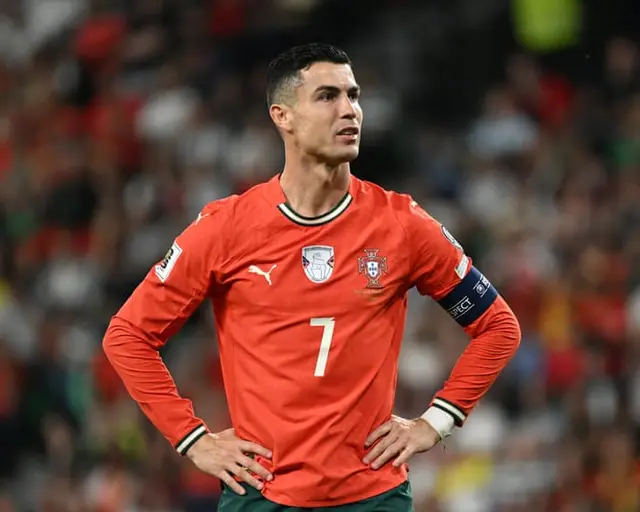
Disciplinary council upholds charge against 41-year-old Portuguese FA president has left door open for return Cristiano Ronaldo has been suspended for 30 days by the Portuguese ⁠FA after leaving the national team camp following a rift with the coach, ⁠Jorge Jesus, over ⁠his role in the side. The federation’s disciplinary council said it had upheld the charge against ⁠the 41-year-old forward in full and imposed a fine of €255 (£215). Ronaldo left Portugal’s base in ⁠Copenhagen before their Nations League match against Denmark earlier this month, having accused ‌Jesus of twice ‌breaking his word about his role after he was an ‌unused substitute against Norway. Jesus denied making any agreement with Ronaldo but left the door open for his return after Portugal’s 2-1 win. The disciplinary council’s non-professional section found Ronaldo had intentionally committed an offence under Article 160(1) ‌of the federation’s disciplinary regulations. Proceedings were opened on 9 October over facts reported two days earlier. The statement did not specify which matches or activities the suspension would cover, or whether time already served under a provisional suspension would count towards the 30-day sanction. Ronaldo later ⁠apologised for failing to acknowledge supporters after the Norway match and for leaving his teammates, saying he remained available for selection after serving any ‌punishment arising from the incident. The Portuguese FA president, Pedro Proença, has said everyone within the federation wanted Ronaldo to return to the national team once the matter was resolved.

Source: The Guardian · Reuters
Mon, 19 Oct 2026
Read story
Tottenham v Coventry: Premier League – live
Premier LeagueTottenham3–1Coventry

Tottenham v Coventry: Premier League – live

Sport’s ability to ape and shape the world means it teaches us many things, often in a friendlier environment than real life. It is, for example, better to learn the Australian states and their capitals during an Ashes series than by rote in a geography lesson, just as the accordant failure and disappointment is – ultimately! – less painful to process when it’s happening to yet another bunch of hapless tourists than when it’s happening to us. Football, though, is a slightly different thing, the constant competition and the way in which teams are passed down through families installing their nature as part of our personalities, both heirloom and genetics. And within that, there’s supporting Tottenham, a relentless barrage of dark nights and false dawns delivering martyrdom to the afflicted and mirth to everyone else. Even in context, though, a summer spend in excess of £300m, to go from fourth-bottom to bottom, is exceptional behaviour, suggesting a malaise too encoded to alleviate. But it is also the case that their performances have been better than three points from six games suggest – which might be viewed as integral to the nature of it all, or might indicate an imminent upturn. Tonight’s match will give us a decent idea as to which interpretation is accurate. Coventry – whose fans understand a misery far beyond the conception of Spurs types – arrive in N17 following an uplifting thrashing of Newcastle. As such, they will be confident, physical and beatable or, in other words, exactly the kind of outfit against which Spurs are prone to fail. A win tonight would take Frank Lampard’s men up the table from 16th to 11th but, more than that, with home games against Fulham and Sunderland coming up next, it could set them up for the season. This should be fun…

Source: The Guardian · Daniel Harris
Mon, 19 Oct 2026
Read story
Will that do? Lamine Yamal conjures another magical spell as Barça pass first test | Sid Lowe

Football News

Will that do? Lamine Yamal conjures another magical spell as Barça pass first test | Sid Lowe

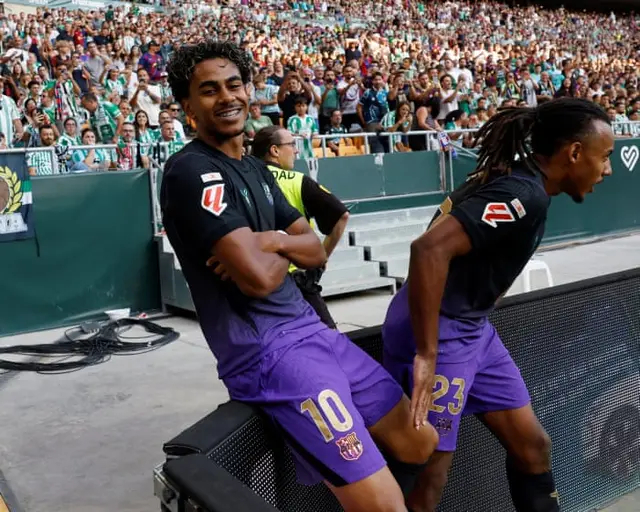
The 19-year-old scored a cracker in Seville, days after his ‘almost rabona’ at Galatasaray, as La Liga leaders beat Real Betis When at last it was time for Lamine Yamal to leave, the 19-year-old’s number going up before the 90th minute for only the second time since the opening day, Real Betis fans whistled him all the way to the touchline where Barcelona’s coach was waiting. His work here done, Hansi Flick invited him to take the weight off his feet and his shoulders, not that he wanted to. First, though, he took Lamine Yamal’s head in his hands and, leaning in away from the amateur lip readers, tried to make himself heard over the noise. “I told him I was proud of him because he played a fantastic game,” he said. At least he could think of something. When Lamine Yamal had opened the scoring just nine minutes into the match that was supposed to find out how good Barcelona really were, it hadn’t been easy. Nothing erudite, anyway. On the morning that Barcelona went to Betis – first versus third, a proper opponent at last – Jorge Valdano had lamented that sometimes he doesn’t have the words, and he always has the words. Valdano had just watched Lamine do that , whatever that was, in Istanbul – an “almost rabona ,” the kid called it – and now he had a problem. “If he keeps doing strange things, we’re not going to be able to explain it,” he wrote. To which Lamine Yamal responded by doing another strange thing that same afternoon, scoring another brilliant goal to set Barcelona on the way to a 5-2 win over Betis in a game that made history. And if Lamine Yamal had been a little lucky three days before, momentarily losing control only for the rebound to bounce back to him like the ball knew where it would rather be, this was all him and very him . The move started with Gerard Martín losing his boot and ended with pretty much everyone else losing their heads. In Martín’s momentary absence, Rodri dropped into defence and began it from there, the ball moved across the box and back until it was played up to Lamine Yamal. His superb pass with the outside of the boot unlocked everything and then, receiving again just inside Betis’s half, he set off. There’s a moment, Lamine Yamal says, when you can sense the anticipation, feel people getting up one after the other all along the stand, a wave accompanying you, moving with you. At that moment, he says, there’s some inner power and you feel like Superman or Spiderman; the defenders are robots, he says, and however good a robot is, however well programmed to stop him, a human is better. Too fast, too agile, too inspired. Too much thought gone into this, too much psychology. Man against the machines, c ode this . He rolled the ball one way with his left foot, flicked it the other with the heel of his right, and from the edge of the box, sent it flying into the far top corner. Somehow. Sometimes you have nothing new to say, you know? It’s not big and it’s not clever but sometimes only swearing will do: sometimes only holy shit! hits the spot. Sometimes you can be sitting alone on the sofa and still shout: ’ Oh, my god!’ , call them in to watch this. But it won’t be the same when they do, even if it’s sort of better: a chance to slow it down and break it down, see the detail, work out how he did it, like you’re ever going to do that. Because for all the expectation, it’s still a shock seen live, the purest reaction of all. Words? Pah! This weekend, Gabriel Jesus put it best: as the ball passed him, he just held his head in his hands. Lamine Yamal ran to the corner. Fermín López chased, wiping his brow: woah, what was that? Adeyemi went wagging his fingers. On the touchline Flick almost took off his assistant’s hand with the hardest high five. Teammates ran towards him not so much celebrating as laughing, so good it’s funny and even funnier for being repeated, an outrageous goal his catchphrase. Lamine Yamal sat alongside Jules Koundé on the advertising board, arms crossed like it was easy, like ’what are y ou lot losing your heads about?’ Maybe it is. And there is something in the way he hit it that felt a little like he put it in the top corner because, well, why not? Might as well . Lamine Yamal got up, stood holding the corner flag, looking about: will that do? If this was the first test Barcelona have faced, it hadn’t taken him 10 minutes to score again, and like that. And that’s the thing. Who knows, this might not even have been the best goal of the weekend: there were glorious moments from Arda Guler and Kylian Mbappé in Madrid’s win against Sevilla. Javi Rodríguez’s run was wonderful for Celta against Alavés. And Pablo Martínez’s shot in Málaga’s 2-5 loss to Real Sociedad was ridiculous. It might not have even been the best shot of this game had Gio Lo Celso’s “goal” not been ruled out. And it definitely might not even be the best Lamine Yamal has scored, but this keeps happening. Statement after statement. He didn’t stop there either: there was an absurd pass from which Adeyemi should have scored. A run through three. Another assist. And the moment that got the Betis fans whistling him: when, with Fermín on the ground and Lamine Yamal going over, Facundo Bernal pushed him, he took a run up and pushed Bernal back, and the defender head-butted him, seeing red. The game hadn’t stopped with his first either; instead, Rodri said afterwards, it had “everything”. Always watch Betis, especially when they’re playing Barcelona: unbeaten in 15 home games, the last time anyone beat them here was Barca too. And it finished 5-3. This time they were only one short. Barcelona had dominated the first 25 minutes, the ball theirs alone but Valentín Gómez headed in to make it 1-1 before Rodri made it 2-1. Within two minutes, Lo Celso had smashed in an extraordinary 25-yard shot on the bounce and the turn to make it 2-2, only for it to be ruled out for a handball fourteen seconds earlier. All that before half-time. And yet it was summed up better by the 30 seconds that passed between Álvaro Valles making a superb save at one end and Joan García matching it at the other; by the 59 seconds that passed between that and Gabriel Jesus getting the third. Or the two minutes 59 seconds between that going in and Ez Abde making it 3-2. Then the fight that followed it, Lamine Yamal tumbling maybe a touch too hard and Bernal walking. By the time Lamine Yamal did, at last encouraged to rest, Eric García had scored the fourth and it was done. “With this result, we had to make the change,” Flick said; with tensions rising too. Dani Olmo added a neat fifth and it finished. Betis were furious. Asked how it had left him feeling, the manager, Manuel Pellegrini, said: “impotent.” Lo Celso’s goal shouldn’t have been ruled out and Gabriel Jesus’s should, he said. Ask how he felt, Fran García said “frustrated, angry … and tired”. They had given everything, the ovation as generous as their effort had been. “This is one of the hardest games in La Liga,” Rodri said, but Barcelona had won again. That’s nine from nine, a new record. Now, a word of advice from Mr Wolf. When it comes to historic starts, Barcelona’s previous record was under Tata Martino, who you may remember but probably don’t. “This is a nice thing but we want to win titles,” Flick said; Martino did not. Betis were the first team Barcelona have played in the top half of the table. The rest currently sit in 19th, 18th, 17th, 16th, 15th 14th, and 11th. Harder games are coming: PSG next, then Real Madrid. They also have an injury crisis at the back. But no one is playing like them, and certainly not scoring like them. They have scored 39 league goals, 48 in 11 matches in all competitions. When Robert Lewandowski, Ferran Torres and Marcus Rashford went in the summer, when they didn’t manage to sign Julián Alvarez, you couldn’t help asking where the goals were going to come from. The answer was everywhere. Thirteen different players have scored. It turns out that they have the best striker in Europe: Raphinha, the man who is just filling in there, has scored more than anyone else. They may also have the best player at 19, the kid who came back a World Cup winner and still wasn’t satisfied. “After the game against Elche at the start of the season, people were saying: ‘He’s not right’,” Lamine Yamal said. “But I was calm at home, thinking: ‘I’ve just won the World Cup, I’ve not had a break, I know my body: bit by bit I’ll get to the point where I explode and start to score. And those same people will suddenly be saying I’m the best.” In the first two games, against Elche and Athletic, Lamine left little. Since then he has scored or assisted in every match. Nine goals, 10 assists, and most of them brilliant. He went to the international break and scored after 104 seconds at Wembley, 70 in Seville, and 320 in Oviedo. Here, on the day they said this time it’s for real, it took him 530, heads in hands, words stuck in throats, and another win on the way. “It was amazing, a match for all the people who love football,” Flick said. “For me Lamine is the best in the world. I’m happy about his performance; this is what I love to see. And when you see the first goal, it’s unbelievable.”

Source: The Guardian · Sid Lowe
Mon, 19 Oct 2026
Read story
Houdini act in Venice leaves Massimiliano Allegri searching for an escape at Napoli | Nicky Bandini

Football News

Houdini act in Venice leaves Massimiliano Allegri searching for an escape at Napoli | Nicky Bandini

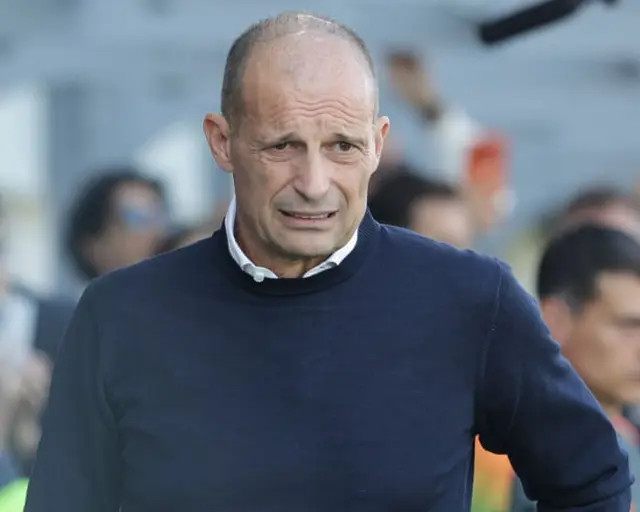
Manager’s latest setback exposed growing doubts about his squad and his approach as Davide Nicola began his Venezia tenure with a remarkable win “I’ll love you even if you win,” promised the Venezia supporter’s banner. More gallows humour from a fanbase that proved long ago that its relationship with the club could survive a defeat. They had endured six already in the first six rounds of this Serie A season: the only team in the division without a winor even a single point. The last time they were in Serie A, in 2024-25, Venezia finished 19th. The time before that, in 2021-22, they finished bottom. Deja vu all over again? A 3-1 defeat to Atalanta in the first game back after this month’s international break pushed Venezia to a breaking point. The club fired the manager Giovanni Stroppa, who had led them to the Serie B title and promotion the previous season. His replacement, Davide Nicola, is a renowned survival specialist, though his most recent appointment at Cremonese ended with his dismissal last March, when the team were 18th. If Venice’s Lagoon has a deep end, then Nicola was thrown into it, beginning this latest job at home to last season’s runners-up, Napoli. But a man whose past relegation escapes have drawn comparison with Harry Houdini could hardly be afraid of the water. Nicola’s first Venezia team sat in a patient low block, refusing to be drawn out. And when an opportunity was casually presented to them at the start of the second half, they took it. A long punt down the left by Simon Sohm took a kind bounce off the head of the Napoli defender Amir Rrahmani, who lost track of it in the air. Venezia’s Akor Adams took a touch to his right before striking back across his body from the edge of the area, wrong-footing Napoli’s goalkeeper Alex Meret. Stung to life, Napoli introduced Kevin De Bruyne, Alisson Santos and Rasmus Højlund from the bench. None of them could find a way past the Venezia goalkeeper Filip Stankovic, who saved a penalty from De Bruyne and made a sensational one-handed stop from Stanislav Lobotka before denying Alisson in the 90th minute as well. The game ended 1-0, Venezia’s first win of the campaign. A dream start for Nicola. And a result that left some people wondering whether this could be the beginning of the end for Napoli’s manager Massimiliano Allegri. Appointed to replace Antonio Conte in the summer, he has presided over five defeats in nine games. Losses to Inter and Como might, in isolation, be excused. The failure to pick up any points at home to Arsenal or away to Villarreal in the Champions League group stage has put qualification for the knockouts at risk, but Conte also fell short on that front. The big picture takes on a different complexion, however, when you follow all that up by losing to pointless opponents. We can say Napoli were unfortunate against Venezia. They created more than enough chances to score. Stankovic was inspired, and Juan Jesus made a brilliant last-ditch tackle to stop Højlund from prodding the ball into an empty net moments after the forward’s introduction as well. It is also true that Allegri’s substitutions changed the game. De Bruyne initiated that chance for Højlund, pinching the ball form Ridgeciano Haps in midfield and feeding Alisson, whose excellent cross took Stankovic out of the picture. Why, though, had all these players been on the bench to begin with? Were Napoli presumptuous to think they could beat Venezia without their standout creative talent, their first-choice centre-forward and one of their most able dribblers? Any team competing in Europe must make tough decisions about squad rotation. In Allegri’s case, though, it is hard to ignore the context of his appointment. Conte quit Napoli last summer, walking away from a well-paid third year on his contract, because his assessment of the playing squad diverged from that of the owner Aurelio De Laurentiis. The Partenopei spent more than €150m between 2025 and 2026’s summer and winter transfer windows, bringing in the likes of Lorenzo Lucca up front, Sam Beukema at centre-back and Noa Lang on the wing. A further €60m was committed to making Højlund and Alisson’s initial loan signings permanent this summer. For De Laurentiis, this was enough. The choice of Conte’s successor followed this same line of thought. Allegri has embraced his reputation in Italy as an “aziendalista” – a company man. At his introductory press conference, he said “that word, to me, is a compliment”, and stressed his belief in the strength of the existing squad. He has backed those words with actions. Napoli have used 23 players already this Serie A season. Lucca, who started against Venezia, is almost halfway already to his total minutes from last season. Lang, who was sent on loan to Galatasaray in January after clashing with Conte, is back in the fold and scored in a recent win over Frosinone. But what if Conte was correct in his assessments all along? Lucca is yet to score and struggled to make any impact on Saturday. Lang, an unused sub against Venezia, was seen being chastised by teammate Frank Anguissa on the sideline, reportedly for cutting short a warm-up after Allegri opted to send Alisson Santos on before him. One area in which the new manager was widely thought to have improved on his predecessor was in the handling of De Bruyne. It was no secret that the Belgian did not see eye to eye with Conte. In an interview with Il Corriere dello Sport this month, De Bruyne described Allegri as “a little bit more relaxed, a bit more informal, and from what I’ve seen he takes more care of the personal connection with the players.” During Napoli’s games this season the manager has several times been observed conversing with De Bruyne, strengthening the impression that the two were forming a strong working relationship. During the defeat to Villarreal, however, De Bruyne appeared to resist appeared to resist Allegri’s instructions to drop into midfield and make space for Scott McTominay to get forward, both men gesturing frustratedly in opposite directions. Allegri played the incident off as a result of their language barrier. But there is little indication yet of De Bruyne warming to his manager’s publicly stated belief that he might extend his career by reinventing himself as a deep-lying creator. These situations do not appear yet to be at breaking point. De Laurentiis will know he is unlikely to find another manager of such experience with such willingness to toe the line. Allegri has bitten his lip thus far about the fact that the one player he did request this summer – Gabriel Jesus, available at a relatively modest price tag – is averaging better than one goal for every 60 minutes at Barcelona. Perhaps the pressure was even alleviated in some small way by Lazio thrashing Juventus 3-0 on Sunday night, transferring the media’s attention to another former Scudetto-winning manager struggling at one of Italy’s biggest clubs. Luciano Spalletti, a year into his project at Juventus, may well be on thinner ice. The Bianconeri are a point worse off than they were after seven games last season under Igor Tudor, who was sacked after losing the eighth (by coincidence also against Lazio). These are separate stories, each with its own dynamics, but as two of four current Serie A managers who have won the competition previously, it is inevitable that parallels will be drawn and questions asked about whether each of Allegri or Spalletti still know how to deliver results. That conversation might extend to Maurizio Sarri, too, who has lost four of his first seven with Atalanta. The Venezia supporter with the sign may love their club come what may. For football managers, wherever they work, such affection is rarely unconditional.

Source: The Guardian · Nicky Bandini
Mon, 19 Oct 2026
Read story