AccaMate logo

Football News

Latest Sports Stories

Fifa plans symbolic Israel v Palestine fixture as opening game of new under-15s tournament

Football News

Fifa plans symbolic Israel v Palestine fixture as opening game of new under-15s tournament

Tournament open to all Fifa members, including RussiaInfantino wants to use football to promote peaceAlthough not an official Under-15 World Cup, the competition will be open to all 211 Fifa members, including Russia, who remain banned at senior level.Infantino experienced embarrassment in April when an attempt to orchestrate a handshake between the Palestinian and Israeli delegates at the governing body’s congress in Vancouver backfired.The Palestinian Football Association’s president, Jibril Rajoub, refused to stand alongside the Israel FA’s vice-president, Basim Sheikh Suliman, in an awkward moment towards the end of the 76th Fifa congress despite repeated entreaties from Infantino.This experience does not appear to have deterred Fifa’s president from attempting to play peacemaker, however, with a proposal to open the under-15s tournament with a game between Israel and Palestine under active consideration.The venue for the tournament has not been confirmed but Miami is regarded as the most likely. Fifa has extensive offices in the city.The first tournament will be a boys’ competition, with a girls’ edition 12 months later, before Fifa moves to organise two separate festivals each year from 2028.“Let me thank the two representatives from Israel and from Palestine, who have the same rights, duties and obligations, who are members of Fifa,” Infantino said. “We will work together, let’s work together to give hope to the children, let’s work together for that.“We have a beautiful under-15 tournament coming up, where we will invite all 211 countries to participate, all the children of the world, let’s do it for that. Let’s work together. You have my commitment, you have the support of the whole room.”One Fifa source said a handshake in Vancouver had been agreed in advance, only for Rajoub to change his mind during the speeches.The Palestinian delegates were unrepentant in the immediate aftermath, with the Palestinian FA’s vice-president Susan Shalabi telling Reuters: “I cannot shake the hand of someone the Israelis have brought to whitewash their fascism and genocide. We are suffering.”

Matt Hughes in MiamiMon, 15 Jun 2026
Source: The Guardian
Read story
Will Norway’s slick modern model succeed where the class of ’94 failed?

Football News

Will Norway’s slick modern model succeed where the class of ’94 failed?

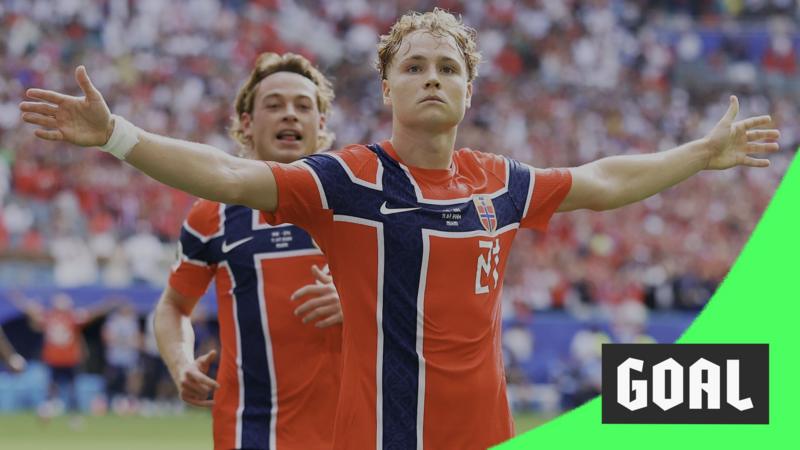
Ståle Solbakken’s fast, flexible side are far from the no-frills unit that last made the World Cup but new challenges awaitIf Norway’s highly fancied generation need a warning from history they need only look back 32 years and study the lessons from another searing, suspenseful American summer. They had raced through qualifying at England’s expense to reach their first World Cup since 1938; their top players were starting to make it in the Premier League and through the euphoria shone a confidence that a place in the knockout stage, at least, was there to be seized.“When we got there we didn’t manage to even get close to the quality of play we had produced in qualification,” remembers Lars Bohinen, one of the silkier elements in a side that, under Egil Olsen, became renowned for an uncompromising and no-frills approach. “That’s the biggest disappointment when I talk now to my old teammates. We never got near to performing at the level we needed.”In fact Norway were a shade unfortunate. Planted in a strength-sapping group alongside Mexico, Republic of Ireland and Italy, they finished fourth despite the teams finishing level on points and goal difference. Their failure came in attack; Olsen’s side were eliminated because they only scored once, beating Mexico before ultimately running aground in a famously sweltering goalless draw against Jack Charlton’s team at Giants Stadium.This year’s Group I does not look much easier. But the dynamic of Norwegian football is different now; the not entirely inaccurate picture of burly Vikings replaced by elite, technically supreme talents in the moulds of Martin Ødegaard and Antonio Nusa. There is an Erling Haaland-shaped spearhead to convert chances that flow more frequently in Ståle Solbakken’s fast, flexible setup.“Back then we played much more direct, physical football,” Bohinen says. “Now we can control the game with the ball and that’s a big difference.“The players’ technical level has increased and so has the speed. It’s a result of many years professionalising the academies at Norwegian clubs. They have better coaches, better infrastructure, better pitches, more possibilities for more people.”Artificial turf, in place from the remotest Arctic Circle locations down to the Oslo suburbs, means the harshest conditions can be surmounted. The class of 1994 did not enjoy that luxury although Bohinen points out that their qualifying campaign, in which England were stunningly dispatched with in a 2-0 win at Ullevaal, was not simply a route one exhibition. He feels they reverted more to the long ball once they reached the World Cup, where the “Flo Pass” – a crossfield ball generally aimed from the left-back Stig Inge Bjørnebye to the giant centre-forward Jostein Flo, who would pull out to the right – earned renown.“We had that pass going left to right,” Bohinen says. “Then we had to pick up the second balls from those duels. From then we had to try to get close to goal as soon as possible. That was the whole aim really: get close to goal quickly. And in the heat of the States, it was too much.”There were a handful of roses among the thorns, including Bohinen, a classy midfielder well remembered for his spells at Nottingham Forest, Blackburn and Derby. “It was easier to stand out because there were not so many who had those qualities at the time,” he says. Even if the ball was frequently sent over his head, he still scored 10 times for the national team. “But now we have a lot of players, some of them really good dribblers, who have a strong technical base and make very few mistakes on that front. It’s a change for the better.”But if Norway’s ball players can hold their own against France, Senegal and Tuesday’s opponents Iraq, an unintentional corollary may be a less aggressive defensive posture. They only conceded five times in a perfect qualifying campaign but were not seriously tested, a disappointing Italy their closest rivals. Bohinen believes the focus on creating a silkier Norwegian footballer has meant centre-backs with the ruggedness of Erland Johnsen or Henning Berg have become unfashionable.“We have a fantastic attacking force but we don’t produce defenders any more, everyone wants to be ball players,” he says. “It’s reflected in the national team because that’s our weakest link. We’ve created a lot of offensive, technical players but now we may be paying a price for that.”Kylian Mbappé will be among those hoping to discover Bohinen is correct. But Norway appear far better prepared for setbacks than in 1994, when the intensity of their approach backfired. “What we all agree on is that we trained too hard,” Bohinen says. “The competition for places was so big and we trained too long in the heat, as if it wasn’t for a tournament but for one game. We didn’t have any energy left when we played. We also spent hours going to the embassy and standing around, meeting the ambassadors and people from different industries. It took too much energy and focus away from what’s important.”Those mistakes are unlikely to recur in Greensboro, where Solbakken has been tuning them up from the sanctuary of the local University of North Carolina campus. Solbakken took aim last week at the political problems that clouded the tournament’s buildup but controversies within his own camp have been nonexistent. Perhaps the dance moves Haaland exhibited during a training session last Thursday reflected a cooler, calmer, slicker Norway who feel more comfortable in their modern skin.“The euphoria felt bigger when we qualified in ’94,” Bohinen says. “We had been complete outsiders. Now there’s a little bit more expectation.” Soon Norway will find out if their drastically revamped 2026 model is capable of handling it.

Nick AmesMon, 15 Jun 2026
Source: The Guardian
Read story
Racism monitor urges Fifa to remove World Cup official over ‘white supremacy’ gesture

Football News

Racism monitor urges Fifa to remove World Cup official over ‘white supremacy’ gesture

VAR official Shaun Evans made ‘OK’ sign with right handResembles white power symbol used in far-right circlesFifa’s discrimination monitor at the World Cup called for a video assistant referee (VAR) to be removed for appearing to make a hand gesture resembling a white supremacist sign.When the official broadcast of Germany’s opening game against Curaçao on Sunday cut pre-game to show the team of VAR officials, Shaun Evans from Australia made an “OK” symbol with his right hand in front of his right leg. Though the game was played in Houston, VAR officials work in Dallas at the World Cup broadcast centre. In 2019, the gesture – with thumb and forefinger touched in a circle and other fingers outstretched – was designated a hate symbol by the New York-based Anti-Defamation League.“Advice from our experts is that the gesture used clearly resembles an upside down ‘OK’ hand symbol used as a ‘white power’ symbol in global far-right circles,” the Fare network, a longtime partner of Fifa and Uefa, the European football governing body, to monitor racist and discriminatory chants, flags and symbols at international games, said in a statement. “Clearly this official should have no further role to play in this World Cup,” it added, also describing the gesture as “neo-Nazi.”It was unclear if Evans, working at his first game at the World Cup, was making a political gesture or playing a children’s game prank.The “gotcha” or “circle game” is where someone flashes an upside down OK sign below their waist and punches the shoulder of anyone who looks at it. It was appropriated a decade ago as a signal for white supremacy that started as a hoax on the far-right online messageboard 4chan.In 2019 when the sign was designated as a hate symbol, Oren Segal, director of the ADL’s Centre on Extremism, said context is key to interpreting whether an “OK” symbol is hateful or harmless. At the time, he said: “There is enough of a volume of use for hateful purposes that we felt it was important to add.”Evans is among 30 VAR officials selected by Fifa to work at the World Cup being played in the United States, Canada and Mexico.“Why is a VAR supervisor using this symbol at a global football event at the very moment he knows the cameras are on him?” Fare said. “We note that in the two subsequent games it appears TV directors have stopped introducing the VAR panel to the TV audience.”

Associated PressMon, 15 Jun 2026
Source: The Guardian
Read story
Real Madrid sign Cucurella from Chelsea

Football News

Real Madrid sign Cucurella from Chelsea

Real Madrid have signed defender Marc Cucurella from Chelsea on a six-year deal.The fee is £47.5m plus £4.3m in add-ons, with the potential to rise to £51.8m in total.Chelsea signed Cucurella from Brighton four years ago for £63m. The 27-year-old made 163 appearances for the club, winning the Conference League and Club World Cup.Multiple clubs were interested in signing him but the former Barcelona full-back wanted to sign for Real Madrid. He had been linked with a return to Barca, as well as Atletico Madrid and Manchester City.Cucurella is currently at the World Cup with Spain, who play their first Group H match against Cape Verde on Monday.Cucurella made public comments criticising Chelsea's transfer policy and the decision to let Enzo Maresca leave at the start of the year.He was not considered one of Chelsea's "untouchable" players, which includes Cole Palmer and club captain Reece James.Stream the Premier League with no contractChelsea said: "Everyone at Chelsea FC would like to thank Marc for his efforts during his time at the club and for the role he played in our recent achievements."We wish him every success as he begins the next stage of his career."It has already been a very busy summer for incoming Real Madrid manager Jose Mourinho, who will officially start work at his new club next month. Deals for Ibrahima Konate, Denzel Dumfries and Bernardo Silva have been secured.Netherlands defender Jorrel Hato, who joined from Ajax last summer for £37m, is now in contention to be Chelsea's first-choice left-back next season, although the club could also strengthen in that position.Cucurella's move to Real Madrid is totally separate from any possible move for midfielder Enzo Fernandez to the same club. Fernandez said in an interview back in April that he would welcome living in Madrid.Chelsea have very good relations with Real, but they would not let Fernandez leave for less than £120m. He arrived at Stamford Bridge from Benfica in 2023 for a fee of £106.8m.

Sky SportsMon, 15 Jun 2026
Source: Sky Sports
Read story
What’s it like to be in a World Cup host city? We’d love to hear your stories

World Cup News

What’s it like to be in a World Cup host city? We’d love to hear your stories

If you live in one of the 16 cities in Mexico, Canada and the US hosting games, we would be delighted to hear from youThe game between Mexico and South Africa on Thursday kicked off the biggest World Cup in history: 48 teams playing 104 matches over 39 days in 16 host cities. If you live in one of those cities, we want to hear from you. How’s it going so far?This is a diverse tournament, with a different feel and vibe across the various countries and venues. With that in mind, we want to know what the mood is like in your home city during the tournament, as part of our My World Cup series.Is there a buzz? How are businesses faring with an influx of fans from around the world? Is the mood one of excitement, exhaustion, apathy or anxiety that the sporting action will be overshadowed by geopolitics? Whether you are a diehard fan, a casual observer, a business owner or someone who wants to avoid the whole thing, let us know what the atmosphere is like in your city as the matches begin.We’d really appreciate your submissions and it would be helpful to know whether you would feel comfortable sending us short videos during the World Cup too.The full list of host cities is: Mexico City, Guadalajara and Monterrey; Toronto and Vancouver; and Seattle, San Francisco Bay Area, Los Angeles, Dallas, Houston, Kansas City, Atlanta, Miami, Boston, Philadelphia and New York/New Jersey.If you’re having trouble using the form, click here.

Guardian community teamMon, 15 Jun 2026
Source: The Guardian WC
Read story
World Cup hydration breaks - who are the winners and losers?

Football News

World Cup hydration breaks - who are the winners and losers?

8 CommentsIt has become a familiar scene at World Cup games.The referee blows his whistle to stop the game 22 minutes into each half to allow players to rehydrate.The mandatory three-minute drinks break at all 104 games has been introduced to help players tackle stifling heat and humidity levels in Mexico, Canada and the United States.Some have described the breaks as commercial interruptions to appease US broadcasters.Hydration breaks even take place at grounds with retractable roofs with interior climate control.Asked about the stop in play in each half of every match, Mauricio Pochettino, the head coach of co-hosts USA, said: "I don't like it. I only like it when the conditions are extreme."But when the conditions are good, it is unnecessary."So, who are the winners and the losers of the World Cup hydration breaks? And how have they affected the opening games?When Brazil's players took on water midway through the first half at the New Jersey New York Stadium on Saturday, they deservedly trailed Morocco 1-0 after a lacklustre start.Six minutes after play resumed they were level.Yes, it was down to a moment of individual brilliance by Vinicius Jr after he cut back inside on to his right foot before lashing a brilliant strike into the roof of the net.But as Brazil boss Carlo Ancelotti acknowledged afterwards, the hydration break enabled him to deliver fresh instructions to his players and tweak the system.Having been second best, the five-time world champions suddenly had momentum."You can explain a problem to the players," the Italian coach said afterwards when asked what benefits could be achieved in the breaks."[You can] make a tactical adjustment that can be very good."If hydration breaks are to help player welfare, should managers even be allowed to deliver fresh instructions?United States women's boss Emma Hayes, speaking to ITV Sport, explained that stopping play for a break killed momentum for the team on top."It's advantageous for the team losing momentum - that's why I call them momentum breaks," she said."When you're on top, you don't want it; when you're losing, you do."Sometimes it's not even coaching [during the hydration break]. It's about taking on fluid and calming players. Sometimes it can be doing nothing, but that can be considered coaching as well."It's a shame. I can understand it in really warm parts of the country, but it seems like it could be something that could here for good."Like Brazil, Canada also equalised soon after a hydration break - this time in the second half - when substitute Cyle Larin cancelled out Bosnia-Herzegovina's lead on Friday.Scotland scored the only goal of the game in a win over Haiti shortly after a break - while Australia grabbed their opener in similar circumstances in a 2-0 win against Turkey.Juan Mata, a World Cup winner with Spain in 2010, said he would have disliked a three-minute break in each half when he was playing."As a player I don't think it's great," he told ITV Sport."When you're losing, you want to score, and when you're winning you want to keep the ball. I think they break the momentum."So who are the losers, besides fans who have forked out high prices for tickets to see free-flowing, entertaining football - only for the game to be stopped in each half?Well, World Cup debutants Curacao were in dreamland after equalising to make it 1-1 against Germany shortly before a first-half drinks break in Houston on Sunday.However, the smallest nation ever to play at the World Cup, by size and population, were not the same when play resumed and lost 7-1 after the drinks break allowed the Germans to regroup.The Czech Republic were on top during the first half against South Korea, but the hydration break abruptly ended that spell of pressure, and when play resumed, they lost momentum.Despite taking the lead, they ended up losing the game 2-1.Meanwhile, the Netherlands led Japan 2-1 going into the second-half hydration break in Arlington, Texas, on Sunday. They failed to hold on and drew 2-2.Hydration breaks are not always the cause of these momentum shifts, of course.But the further we go into the tournament, the more it should become clear whether the interruptions are becoming a major factor.Former Arsenal and England forward Ian Wright made it clear where he stood on the breaks."I just think it's another way of getting adverts into it from an American point of view," he said.US broadcaster Fox US overran adverts, external during a hydration break in the opening match of the tournament between Mexico and South Africa."They've used the fact that it's for the players, but it's not for me," added Wright.While the breaks have their detractors, there are others who believe they are a positive introduction."I am always interested in the health of my players. I think it's the right measure, a pause, freshen up and continue," said Spain boss Luis de la Fuente before his side's opening game against debutants Cape Verde on Monday (17:00 BST).That match is taking place in Atlanta where the venue has a retractable roof and is temperature controlled."Tomorrow, it's chilled temperatures in the stadium," added De la Fuente on Sunday."Throughout the week, we've seen huge temperatures. It's very difficult to be exposed to these temperatures for so long when you're working."In my opinion, the best thing to do is to drink lots of water. Take a break, let them breathe for a few seconds."It's not going to be that hot [on Monday] but we need to let them breathe and then one or two minutes to give them a couple of directions."How thunderstorms and lightning could impact games at World CupWhy can't World Cup games kick off on time?From last-chance saloon to World Cup redemption for PotterShirts, stuffed lions & Lego - the stolen England items worth $18,000

BBC SportMon, 15 Jun 2026
Source: BBC Sport
Read story
'Best night of my life' - new series looks at Boro's Uefa Cup feats

Football News

'Best night of my life' - new series looks at Boro's Uefa Cup feats

1 Comments"That's the best night of my life. Sometimes I still go to YouTube to watch it, not just for my goal but for the atmosphere. It was a magical night."It has been 20 years since Middlesbrough's extraordinary run to the Uefa Cup final.It took 128 years for Boro to qualify for their first major European competition by virtue of winning the League Cup, the club's first silverware, in 2004.Boro had a run to the last-16 of the Uefa Cup and a top-seven finish in the Premier League in 2005, and a fairytale journey through the knockout stages to face Sevilla in the showpiece in Eindhoven in May 2006.Steve McClaren, speaking in a seven-episode series from BBC Radio Tees, looking back at the greatest period in the club's history, said: "Winning a trophy was special, great for the fans and for Steve Gibson, but getting into Europe... I knew it was different."European nights are unbelievable. I wanted to bring that to the Riverside, and I loved going away, the Boro supporters, just proud of the fact we're a small town in Europe and we're in it."Football is an adventure. How far can you go and what experiences can you give the players, fans, the owners, and yourself and the staff? Let's enjoy the adventure..."'We'll play European football in two years'After joining from Aston Villa in 2002, midfielder George Boateng was one of the foundations of McClaren's super-team.However, the former Netherlands international told BBC Radio Tees he 'wasn't so keen' on the Boro project at first and favoured a move to London. It was only after a conversation with Jaap Stam, who worked under McClaren at Manchester United, that he agreed to meet the Boro boss."It was the best couple of hours I spent, looking back at my career," Boateng said."Steve said if you sign for us, I promise you that we'll get other players that come because of you and in the next two years we will be playing European football."He said it in such a convincing manner and tone that I wanted to be a part of this. It was a step back but I wanted to build and invest and play in Europe."Boateng's Dutch team-mate Jimmy-Floyd Hasselbaink left Chelsea to join Boro before their European bow in 2004 and said: "I wanted to stay in the Premier League. Middlesbrough was on the right path. It was a really exciting time."Hasselbaink says he is proud to have scored Boro's first goal in European competition at home to Banik Ostrava and added: "That will never go out of the books. The Uefa Cup games on Teesside were very special."It was a good learning curve, the first season. It was a special year. The year after we were much more confident and more equipped mentally and physically, we played some magnificent games."Mark Viduka scored the other two goals in that 3-0 win over the Czech size, having plenty of European pedigree from his days with Dinamo Zagreb, Celtic and Leeds.He told BBC Radio Tees: "I knew they were looking to do well in Europe, they had the resources and the will to invest in a good team."The first year I had some problems with injuries and I was not as consistent as I wanted to be but I was rapt at the end that we got a new chance at Europe."I really enjoyed the team, a good bunch of blokes, some older players, foreign players, our relationship with the youngsters."Some of the youngsters really stepped up, Stewart Downing had one of the best left feet I've ever seen."The man who brought these players to the Riverside was McClaren, who said he had an amazing five years on Teesside after being sold on Steve Gibson's vision."The goal was to win a trophy, we'd done that, I just felt the next season I needed more firepower and a bigger squad," McClaren said."We wanted to go further into cups, do well in the league and not just make it a one-season wonder."McClaren said the 2-0 group-stage win over Lazio in their first campaign was a key moment, adding: "That was it, that's what being in Europe is all about, it's different to beating the Arsenals or Manchester Uniteds at the Riverside."With an abundance of attacking talent at his disposal, McClaren had sent striker Massimo Maccarone out on loan in 2004-05 after the Italian struggled to make an impact after joining from Empoli two years earlier.McClaren planned to loan him out again in 2005, with Hasselbaink, Viduka and Yakubu all ahead of him in the pecking order, but Maccarone told BBC Radio Tees: "I said I want to stay, I want to try to find my space. I worked hard every day, you have to show the coach and everybody you can play."Maccarone was limited to just six starts and 16 sub appearances across the Premier League, FA Cup and League Cup, scoring twice, but wrote his name into Uefa Cup folklore when he replaced Franck Queudrue 23 minutes from time in the quarter-final second leg against Basel, with the Swiss side leading 3-2 on aggregate.Hasselbaink scored 11 minutes from time before Maccarone squeezed home the winner in the last seconds, sparking wild celebrations and the iconic removal of his Boro shirt."This game changed the opinion of McClaren for me going forwards. You have to be lucky sometimes," Maccarone added."This was an important goal, inside me was six or seven months of not playing a lot, it was emotion."It's not easy training every day then going to the stands or the bench on a Saturday."Boro also slipped 3-0 down on aggregate in the semi-final against Steaua Bucharest before Maccarone replaced Gareth Southgate inside half-an-hour and started the comeback with an angled strike."I believed it could still be done," Maccarone said."The atmosphere was unbelievable, and because of the Basel game we knew it was possible."Viduka and Chris Riggott levelled the tie then, with a minute remaining, Stewart Downing's cross from the left was powered home by Maccarone's diving header.He said: "It's something you can't describe. It's hard to understand. I just put my head like Superman. You have to believe."I haven't never felt anything like that moment since. Against Basel some people left the stadium with 20 minutes to go. Against Steaua nobody left. Everybody believed we could do it, and we did."Maccarone recalled popping champagne after the game and being told by Hasselbaink he would be loved forever."That's the best night of my life," Maccarone said: "I'll never forget it. Sometimes I still go to YouTube to watch it. Not just for my goal but the atmosphere. It was a magical night."When I went back to the Riverside last year it was fantastic - the people treated me like a hero. That was very emotional to me."The magic ran out as Sevilla proved too tough in the final in Eindhoven, but despite the pain of defeat, Maccarone added: "It's football. We played a good team. In the moment you are very disappointed but now you look back, it's a good memory, history for the club."Latest Middlesbrough news, analysis and fan viewsListen to Middlesbrough content on BBC Sounds'The greatest adventure in Boro's history'Mark Drury, BBC Tees Boro commentatorOver the course of two action-packed seasons Middlesbrough changed beyond all recognition.They staged some of the most remarkable comebacks the game has ever seen and flew higher than at any time in their history before crashing back to earth after falling at the final hurdle.It was the greatest adventure in Boro's history and is still the touchstone for a whole generation of the club's fans and players.A Small Town In Europe, which debuts on 15 June on BBC Sounds, draws on the memories of Steve McClaren, star players including Mark Viduka, Jimmy Floyd Hasselbaink and Stewart Downing, youngsters like James Morrison, Andrew Taylor and Tony McMahon as well as staff who had to make the whole thing work, journalists who covered the run, fans who rode the Boro rollercoaster, including a fan of Boro's first foreign opponents Banik Ostrava, who fell in love with them and moved to Teesside as a result.

BBC SportMon, 15 Jun 2026
Source: BBC Sport
Read story
What is 'Snicko' and how does it work at the World Cup?

Football News

What is 'Snicko' and how does it work at the World Cup?

Sweden's fourth goal against Tunisia at the World Cup on Sunday night was controversially awarded following the use of Snickometer technology.Mattias Svanberg scored just 18 seconds after coming on as a substitute in the second half by converting a Yasin Ayari free-kick during the 5-1 win.Initially, Svanberg had been declared offside at the time the free-kick was delivered.Following protests from Sweden's coaching staff and players and after a check by the Video Assistant Referee (VAR) team, the goal was later given.Waveform technology that mirrors cricket's Snickometer (more commonly known as Snicko) judged that after the free-kick was taken, Sweden and Liverpool striker Alexander Isak got the faintest of touches on the ball - and when he did, Svanberg had moved back into an onside position, meaning the goal was allowed."It is a good finish by Svanberg, but I can understand why the Tunisian players will be disappointed because when you look at it, it didn't look like there was a touch," former Republic of Ireland striker Clinton Morrison said during BBC Radio 5 Live's coverage of the game."It must have been the slightest touch off the outside of his right boot. Credit to VAR, credit to the referee. They got it spot on."Contact formContact formHow does the technology work and has it been used before?'Snicko' in sport is more traditionally associated with cricket, but in recent years, football has adopted similar technology.The Trionda match ball, made by Adidas for this year's World Cup, has a microchip in it that can detect when the ball has been touched.It is part of Adidas' Connected Ball Technology, allowing precise data such as every individual touch of the ball with a boot or hand to be immediately sent to the Video Assistant Referee in real time.Adidas say the technology "enables faster in-game officiating decisions and more insight into gameplay than ever before."When Svanberg's goal was awarded, replays showed a flat-line sensor on the screen that had a spike as the ball passed Isak's outstretched foot, confirming that he got a touch on the ball that was not necessarily obvious to the naked eye.Similar technology has also been used at the 2022 World Cup and 2024 European Championships.At the Qatar World Cup, 'Snicko' was able to prove Bruno Fernandes scored Portugal's opening goal during a 2-0 win over Uruguay.His cross towards Cristiano Ronaldo in the penalty area was enough to beat goalkeeper Sergio Rochet, which Ronaldo celebrated while claiming he had headed the delivery in, although the technology then showed he did not touch the ball.And at Euro 2024, Belgium had a goal disallowed against Slovakia following another 'Snicko' review.Romelu Lukau had initially been awarded an equaliser, but the review using the technology clearly showed teammate Lois Openda handle the ball in the build-up to the goal.Cricket's Snickometer is a decision-making technology system used to determine whether a batter has hit the ball during a video review.The technology shows replays in frame by frame pictures, with a waveform created to display if there has been contact between bat and ball.It was invented by English computer scientist Allan Plaskett during the mid-1990s, but it is no longer used in Tests in England. However, it is still used in Australia and New Zealand.'Snicko' caused controversy during the 2025-26 Ashes series, with Australian batter Alex Carey given not out in the third Test due to "human error" by its operators. Carey was 72 not out at the time and went on to make 106 in the first innings in Adelaide.The use of 'Snicko' in cricket is reducing as more advanced technology becomes available. It operates at 340 frames per second, less than the likes of Adidas' Connected Ball technology and UltraEdge, with the latter being used in Test matches taking place in England.This article is the latest from BBC Sport's Ask Me Anything team.

BBC SportMon, 15 Jun 2026
Source: BBC Sport
Read story
Meet the former Man Utd midfielder who has helped Iraq reach the World Cup

Football News

Meet the former Man Utd midfielder who has helped Iraq reach the World Cup

“It is going to be a dream come true and I cannot wait,” Zidane Iqbal tells Sky Sports. He is going to the World Cup and is understandably excited. The former Manchester United midfielder has helped Iraq qualify for the first time in 40 years.That 1986 appearance was long before his time. "The 2010 World Cup is the first I can remember." Not even the headbutt by his namesake Zinedine Zidane in the 2006 final? "I have seen the clips but I was only three!" Now Iraq get to make memories of their own."The amount of messages, the support we have had is crazy." Iqbal, now playing for Utrecht but born and raised in Manchester, is eligible through his Iraqi mother and has become a firm favourite having scored a crucial goal against Indonesia during qualifying."Honestly, it was an unbelievable feeling," he recalls. "It was just surreal scoring that goal because that is what I was waiting for." Unfortunately, that alone was not enough to get Iraq to the World Cup. They still needed a play-off win over Bolivia to end their exile.Iqbal sat that game out on the bench. Just back from long-term injury, the coach only planned to use him if absolutely necessary. As it is, his team-mates got the job done. He actually found it harder to watch. "When you are playing, the adrenaline takes over."The celebrations were special with Iqbal donning a sombrero that night in Mexico amid joyous scenes. He talks of the Iraq team being "one big family" and receiving messages from around the world. He understands that this can be a life-changing experience.As a result, the focus since has been on getting himself in peak condition for the World Cup. "Making sure I can be at 100 per cent." Even on his days off, he has been having one-on-one sessions in Manchester, determined to ensure it is a summer to remember.Iraq will have to be workmanlike at this World Cup but Iqbal is the one capable of providing the spark. "I like to play football," he says. "I like to dribble. I like to play forward and link up the play." That is what took him all the way to the Manchester United first team.Iqbal signed for Manchester United at the age of eight and spent a dozen years at the club. "I can say that I lived my childhood dream," he says. In 2021, at the age of just 18, he made his first-team debut in the Champions League against Young Boys."It was probably one of the best days of my life," he admits. "I did not expect to come on. I just thought I would warm up, sit down and watch the game." Instead, he was introduced for the final moments. "The ball took forever to go out as well!" And made history.Iqbal was not only the first South Asian to play for United but the first to play in the Champions League. "I just focused on football, not to be the first of this or that, just because it was a dream of mine," he admits. "But it is nice knowing that you can inspire kids."While that taste of first-team action at United was the obvious highlight, the pinnacle of his career at the club, it was the day-to-day experiences that have stayed with him too. Iqbal had the opportunity to train alongside an all-time great in Cristiano Ronaldo."Seeing someone that you had played with on FIFA and stuff to then train with was crazy. Just watching and trying to learn from him, just him being around. It is hard to describe because he is probably one of the greatest of all time, if not the greatest."What has he taken from seeing Ronaldo work? "Just his mentality, how focused he is, how seriously he takes things. But he is also a very nice, calm guy. When people ask me how he is and does he speak to the guys, he does. He is like everyone else. He is chill."The decision to leave Manchester United was his own. A loan move was an option but Iqbal was ready for the next step. "I thought I needed to go out somewhere and prove myself." The Netherlands just felt right. "The best league for me to go to. Technical."His time at Utrecht has been disrupted by two injuries. "But I have come back stronger from both of them." Importantly, he has been exposed to the sort of experiences, both in the Eredivisie and in Europe, that have accelerated his game to the next level."It is a lot different," he explains. "The stadiums are full. You are playing for points. There is more pressure from the fans to perform. If you do not play well then you are going to know about it. When you are playing for the U21s, it is family and friends in the stands."For instance, he adds: "Our tunnel to the changing room has glass windows on each side, so we can see the fans. If you are losing at half-time or not having a good game, some players can get some abuse. I have matured a lot as a player and as a person."It is that off-field aspect that has tested him most. Moving abroad just after turning 20 was a massive step. "When you get there, reality hits you. You need to do this and that. The cereal and the milk in the fridge is not just going to be there at the weekend."Now 23 years old, he is open about the fact that it has been challenging. "When you wake up on your day off and the house is empty, that is the main thing." But he is proud of the way that he taken on that challenge. "Living by myself, I have grown up a lot."After three years away, the call of home is growing. Iqbal has one year left on his deal but a return to England is a possibility. "I just miss it here. We will see what happens." However, before all that, there is the small matter of the greatest show on earth.The draw was not necessarily kind. "We have got the group of death," says Iqbal with a wry smile. Iraq begin their campaign against Erling Haaland's Norway before taking on the might of France. "Their team is amazing." The final group game is against Senegal.Iraq coach Graham Arnold is fond of calling this schedule the group of excitement or the group of opportunity instead and that is how Iqbal likes to look at the situation too. "As a team, we are all fighters. So, we might be able to shock some people," he argues."No one is expecting us to get out of the group so we have got less pressure on us. I probably prefer a group like this because you get to test yourself against high-level players and you can compare your level to theirs. You always have to back yourself."Iraq's journey to this World Cup has been an arduous one. "We have broken that 40-year curse." Now, their lad from Manchester just wants a special moment. "Football isn't played on paper. There have been upsets in the past before. Why can't we do it?"

Sky SportsMon, 15 Jun 2026
Source: Sky Sports
Read story