AccaMate logo

News Hub

Latest Sports Stories

4 stories ·Sunderland
Europa League: Sunderland held in Poznan as Juventus denied comeback win

Football News

Europa League: Sunderland held in Poznan as Juventus denied comeback win

Sunderland drop points in 1-1 draw but stay unbeaten VAR rules out Juventus winner in draw with Rennes Sunderland ’s winning start in the Europa League was ended with a 1-1 draw away to Lech Poznan . The point keeps Sunderland unbeaten in Europe this season but ends their winning start, which saw them claim back-to-back victories over AZ Alkmaar and Torreense. A thrilling opening saw Sunderland go in front early through Timur Tutierov, who was making just his third competitive start since arriving at Sunderland’s academy in 2023. The visitors had opportunities to extend their lead when Malick Fofana hit the post and Nordi Mukiele forced a strong save from Mateusz Lis, but Lech responded in the 70th minute through the substitute Leo Bengtsson’s low strike. Régis Le Bris made six changes from Sunday’s Premier League defeat to Bournemouth, including a first start of the season for Habib Diarra following his return from injury. Sunderland took the lead in the second minute when Nilson Angulo pounced on a tame pass from Lis, and the winger crossed into Tutierov in the middle of the box to comfortably nod home for his first Sunderland goal. Robin Roefs was called into action at the opposite end with a double save to deny Patrik Wålemark and palm away Antoni Kozubal’s header before Diarra charged up the pitch and fired into the side netting. The hosts had two good chances to level when Pablo Rodríguez blasted just past the post and Daniel Håkans was played through in a one-on-one with Roefs but flicked his shot wide. Sunderland enjoyed a good spell of possession which saw the skipper, Granit Xhaka, have a strike parried away by Lis and the rebound fell to Fofana, who rattled the woodwork. Moments later Dayann Méthalie was denied at the near post by Lis as the visitors pushed for a second goal. Early in the second half, Fofana cut into the box but could only send his effort over and Poznan looked to strike when Wålemark scuffed a shot wide following a good solo run. Diarra fired wide for and Angulo’s low strike was scooped up by Lis, who moments later made a great save to tip Mukiele’s shot over the bar. Bengtsson looked to make an instant impact from the bench when his effort from Wålemark’s cross was sent wide. However, the midfielder made no mistake when next presented with an opportunity as a corner rebounded towards him just inside the area and he fired into the bottom corner with 20 minutes to play. Poznan almost took the lead moments later when Roefs made a brilliant point-blank stop from Michal Gurgul. Fofana skewed an effort wide as Sunderland looked to restore their advantage and the substitute Chris Rigg’s powerful shot landed on the roof of the net, but the spoils were shared. Juventus dropped their first points of the Europa League campaign after coming ⁠from behind to draw 2-2 with visitors Rennes . Zeki Celik gave Juventus a fifth-minute lead, but ⁠the French side ⁠kept their ​composure and were level 10 minutes later when the Jordan international Musa Al-Taamari finished from close range for ⁠his first goal in the competition. Rennes then stunned the hosts with a Boulaye Dia penalty two minutes before the ⁠break as the Italians struggled to create chances until Nick Woltemade equalised ​from the spot in the 67th ‌minute. The Germany forward ‌twice went close to scoring again as Luciano Spalletti’s team upped the ‌pressure, and Juve thought they had won it in the 88th minute when Jhon Lucumí found the net from close range, but his effort was ruled out for offside. The draw at least spared Juventus a second successive defeat following Sunday’s 3-0 home loss to Lazio ‌in Serie A. Jonas Hofmann made the most of his surprise start for Bayer Leverkusen , scoring twice in three minutes ​to give the Bundesliga side a 2-0 victory at OFI Crete to go top of the table with their third straight win. Crete, who stunned Hoffenheim 2-0 in their opening league-phase match, were twice caught napping by Hofmann, ⁠who was added to the side following an injury to ​Martin Terrier. Leverkusen have ​nine points and lead Ferencvaros ​on goal difference after the Hungarian side beat Torreense ​4-1.

Source: The Guardian · Agencies
Thu, 22 Oct 2026
Read story
Evanilson seals Bournemouth’s win against Sunderland after Danso sees red

Football News

Evanilson seals Bournemouth’s win against Sunderland after Danso sees red

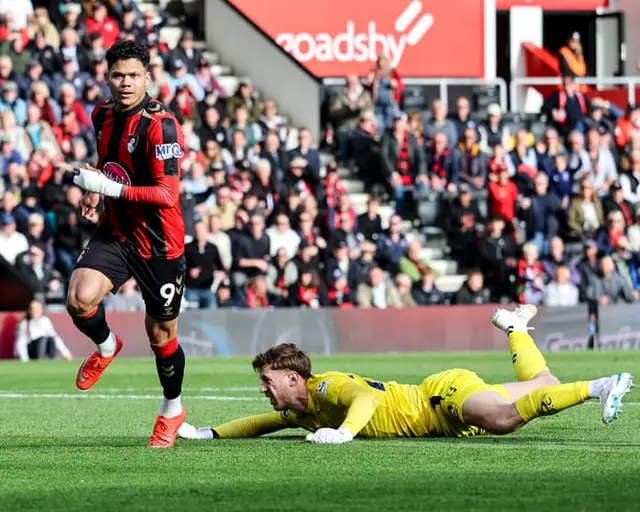
Bournemouth’s and Marco Rose’s wait for a Premier League win is over. Sunderland, locked in the bottom three, are becoming this season’s object lesson in travelling too far too fast. Sixth and seventh last season, that both teams have struggled domestically while cruising in the Europa League speaks to a continental drift where talent from mid-range but historically grander clubs is readily picked off by Premier League clubs. Two of Bournemouth’s summer additions came via Benfica and Sevilla, Sunderland bought from Lille and Lyon. None of which is any guarantee of Premier League safety. Once Kevin Danso, on loan from Tottenham, was dismissed in the 17th minute for a blatant denial of a goalscoring opportunity, Sunderland were sunk on the south coast. With a turnaround tight time from Leiria on Thursday, England’s south coast on Sunday and Poznan in midweek, resources are stretched thinly for Régis Le Bris, at a club where the European dream comes against uncomfortable domestic realities. Talk of a possible sale to new investors has not abated, with a boardroom reshuffle placing Kyril Louis-Dreyfus, the youthful majority owner, in charge of day-to-day operations. And to place in pure football terms, Sunderland have not celebrated a league win since August, and lost four in succession. Both managers had selected stronger teams for Sunday’s fixtures compared to Thursday’s. Five changes for Sunderland from Torreense, with Granit Xhaka restored, spelled out Le Bris’s priorities, as did the selection of James Hill, Adrien Truffert and Rayan as Rose likewise made five alterations from beating Sturm Graz at home. Xhaka’s early mistake prefaced the jet-lagged, error strewn performance that followed Sunderland’s first European away match since 1973. Bournemouth began as Rose demanded, high-press from the get-go, vertical when possible. After Lewis Cook dabbed the ball forward, Evanilson, restored to the line-leading striker’s role, seized on a collective muddle between Danso and Omar Alderete. The Brazilian’s reputation for unselfishness was deepened by his next choice of action. Instead of shooting, he laid up a diving Marcus Tavernier to head home. Danso’s exit swiftly followed. Evanilson escaped beyond the dallying defender and clumsiness served as no excuse. Craig Pawson, the referee, and his team, could reach no decision other than sending the Austrian for an early sachet of shower gel. A goal up, a man up represented a challenge to Bournemouth’s presence of mind; they had previously conceded nine points from winning positions. First-half chances piled up, Robin Roefs asked to bail out bungling defenders on repeated occasions. There was audible and visible squabbling within the Sunderland ranks over the blame for Rayan and Evanilson enjoying such space. With pressure piling on, the season lurching, Le Bris might argue he can only fight with the resources available to him. Brian Brobbey, on the bench in Portugal after injury on international duty, was missing altogether. Timur Tutierov, 21, last season loaned to Exeter, played as an increasingly lonesome striker, chasing autumnal shadows before a merciful substitution before the hour. That a Danso header was Sunderland’s final attempt on goal of the first half said it all about the direction of travel. Rose, who revealed this week he had binge-watched Sunderland ’Til I Die on Netflix, kicked every ball on the sidelines. The German’s need for three points was implicit. Patience has been a virtue of the Bournemouth project, but with the Vitality Stadium modernising fast, fans sitting in new-build corner stands as part of renovations, relegation battles cannot be countenanced. The second goal came with a collective sigh of relief, and via more Sunderland benevolence. Evanilson, given nobody else to pass to by Alderete’s brain-fogged back-pass, supplied a hip swivel Rudolf Nureyev might have been proud of to sit Roefs down and slot into an empty net. A popular goal for a popular player, one of many signings the Bournemouth back office have been successful in making. Bournemouth could and should have scored more, raining 29 shots on Sunderland’s goal by the 70th minute, including Rayan’s header being hacked from the line. If thoughts were understandably drifting to Thursday and Milan, seven-times European champions, coming to Dorset in the Europa League, Rose would not allow his players to be distracted. After Sunderland enjoyed a late spell of the game that at last had mackem visitors in full voice, Rose’s team played out the game with admirable calm, Rayan’s dancing feet to the fore as the ball was retained. On this evidence, two clubs facing similar challenges are on very different trajectories.

Source: The Guardian · John Brewin at the Vitality Stadium
Sun, 18 Oct 2026
Read story
Europe is a blast – but more a curse than a blessing if you are not a Premier League super-club I Jonathan Wilson

Football News

Europe is a blast – but more a curse than a blessing if you are not a Premier League super-club I Jonathan Wilson

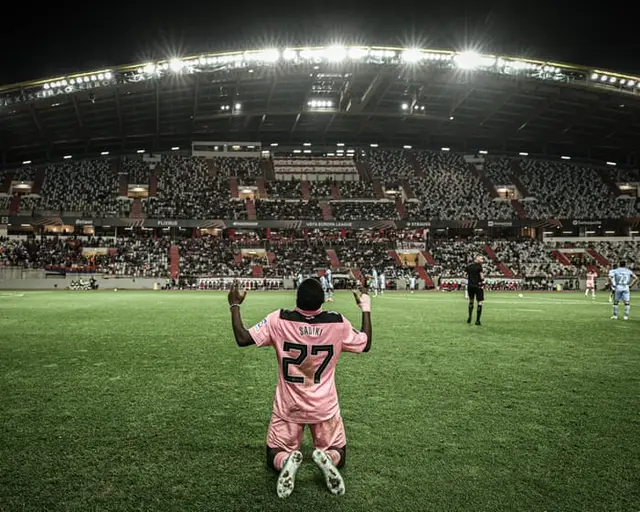
The four Premier League clubs playing in the lesser continental competitions face each other on Sunday – but three are struggling domestically The sun shone. The temperature was in the high 20s. There was a mood of great conviviality. If you were struggling with the official allocation, it turned out you could just email the president of Torreense and he’d sort you out. Were these “Nuno-tickets” real? It turned out they were. Not only that, but you could sit anywhere you wanted in a stadium too big for the game and, if you happened to have gravitated to the comfortable hospitality seating at the back of the lower tier, the beer was inexplicably free. Locals in Leiria seemed bewildered but could hardly have been more accommodating. A beer pump had been installed outside a patisserie on the Praça Francisco Rodrigues Lobo, whose owner soon found fans happy to help stack empty barrels if that facilitated the free flow of Sagres. “There was a meeting at the town hall to explain these are not hooligans,” said the owner of a radical leftist flammkuchen restaurant between the square and the cathedral. “They told us the club comes from the labour movement and I found that very interesting.” And how had she found the fans? “Noisy, but with a quirky sense of humour.” This was everything Sunderland fans could have wished for from their first European away game in 53 years and more. They had seen other fans experience these things, and now they could tick off the checklist: complicated travel to a pretty foreign town they would otherwise never visit, a fussy Albanian referee and a great sense of togetherness and community. There was even an injury-time winner from, miracle of miracles, Noah Sadiki. Ask any of the 5,000 or so Wearsiders who made the trip to Portugal if the Europa League was worth it and the answer would be unanimous. Bournemouth, Crystal Palace and Brighton fans would surely say something similar: European football, especially for clubs who are unfamiliar with it, is a joy and an adventure. It generates experiences that will be remembered for ever, and if the cost is that the risk of relegation goes up, that’s a price worth paying. Others at those clubs may see things differently. The four Premier League clubs involved in the lesser two European competitions play each other on Sunday. Brighton are thriving; the other three are not. Palace were 12th before the weekend fixtures but not playing well. Bournemouth against Sunderland is a battle of third- and fourth-bottom. Whether the Europa League football can yet be blamed is debatable. Brighton surely can’t be bucking the trend just because of the lesser demands of the Conference League. Thursday’s was only the second round of Europa League league games, and the clubs involved bypassed a round of the Carabao Cup; fatigue may come but it shouldn’t be an issue yet. There are other factors at play. Sunderland have already played Manchester City, Arsenal, Brighton and Brentford, the top four going into this weekend. They could easily have been a couple of goals up by half-time at Brentford. They missed a penalty to go ahead against Arsenal. They registered an xG of 2.72 in losing 5-3 at Manchester City. Only in the defeat to Brighton last weekend have they really disappointed. In the equivalent six games last season (substituting Ipswich for Burnley), Sunderland took only one point; in that sense, they are actually three points better off this campaign. But that can’t alter the fact that four points from six games leaves them beginning to fret. There is pressure on this next run of fixtures: after Bournemouth, they are home to Leeds, then away to Coventry. Sunderland’s transfer business left a major question on the right of the forward line that has yet to be resolved. A lack of depth in certain areas has been exposed by injuries to Brian Brobbey and Habib Diarra, although both players were on the bench on Thursday. Bournemouth have also lost key players to injury. Eli Junior Kroupi, who scored 13 league goals last season, has not played this campaign. Neither has Amine Adli, although he came off the bench on Thursday, as did Justin Kluivert, who had been out for a month. Most damagingly of all, perhaps, after impressing for England against Croatia, Alex Scott has been ruled out with a thigh injury. The transition away from Andoni Iraola was always likely to be disruptive and, while Saturday’s 5-1 defeat at Chelsea was a jolt, their other losses this season were to Manchester City and Liverpool. There has been a sense of margins going against them, of draws that might have been wins. The concern, as with Sunderland, comes if that affects morale, and decent displays that have yielded disappointing results curdle into disappointing performances. Palace are in a slightly different position. Other than City, their fixture list has been relatively kind. Seven points from six games would constitute comfortable survival if extrapolated over the season as a whole, but Opta’s expected points table, which has Bournemouth ninth and Sunderland 10th, has them 18th. A new manager is settling in, Maxence Lacroix and Daniel Múñoz were sold over the summer, while Jean-Philippe Mateta hasn’t played since the opening weekend. For none of those three sides can unsettled starts be blamed entirely or even primarily on Europe. That said, the evidence is clear: over the past five years, teams who did not play in Europe the previous season see their league position fall when they do play in Europe: Palace dropped from 12th to 15th, Nottingham Forest from seventh to 16th, Newcastle from fifth to 12th, Brighton from sixth to 11th, West Ham from sixth to seventh. Of those examples, only Forest even came vaguely close to relegation, but the fear nags away. Although winning the Europa League would bring the vast rewards of Champions League football, losing in the final would probably bring in not much more than £20m for a Premier League club, plus gate receipts and whatever intangible benefits there might be from increased exposure. To put that in context, that’s roughly the difference between finishing ninth and 14th in the Premier League. Which is to say that while fans revel in trips to Milan, Prague or Lyon, for club executives a few nice mini-breaks do not balance out the potential financial headaches.

Source: The Guardian · Jonathan Wilson
Sat, 17 Oct 2026
Read story
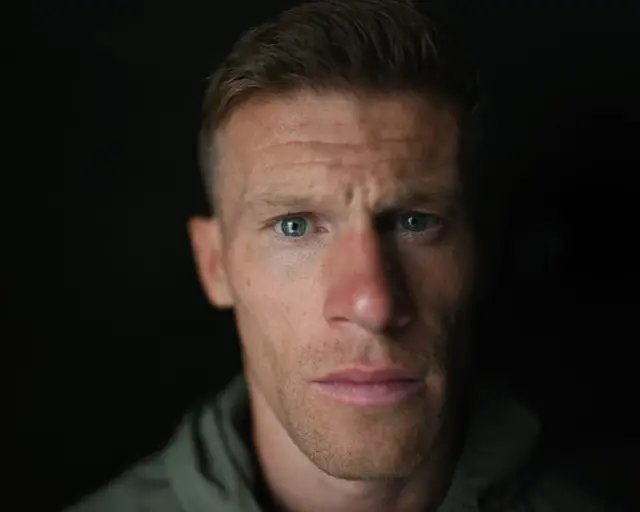
James McClean: ‘Wearing the poppy was just never going to happen’

Football News

James McClean: ‘Wearing the poppy was just never going to happen’

The former Republic of Ireland international on growing up in a community still reeling from the Troubles and the controversy that scarred his career “The perception of me is that, basically, I am a madman,” James McClean says calmly. “I’m outspoken. I’m a loudmouth. I’m very opinionated and I hate all things British. That’s from people who don’t know me. The reality is quite the opposite. I’m pretty boring. I go training, go home and switch off. A lot of my days are quite bland, quite basic.” McClean sounds as sane as he looks gaunt on a bleak Monday in Derry. He spent 14 years in English football and the fact that he is now at war with his own club, Derry City, can’t obscure the fact that he is the fifth-most-capped Republic of Ireland international, having played 103 times. “People define success in different ways,” he says, “but I’m the only footballer from the north of Ireland to win over 100 caps for Ireland. I played 150 Premier League games over five seasons, 800 professional games and won a lot of individual accolades. I count that as success and don’t look back with regrets.” But there’s sadness, too, in the way his life and career were scarred by his refusal to wear the poppy when playing games around Remembrance Sunday in England. “It’s completely changed me as a person,” McClean says. “It’s made me a bit of a recluse because I don’t trust a lot of people now. I’ve been stung bad.” McClean’s autobiography, The Walls, is one of the best sports books of the year. It’s a powerful and sometimes disturbing read elevated by McClean’s willingness to show himself in an unflattering light. I have written a lot about Derry and boxing, and Bloody Sunday, but it helps to be back here to understand how McClean can respect the millions of soldiers who died in two world wars while refusing to forget how the British army killed so many Irish people in this city. He comes from Creggan, the estate affected most on Bloody Sunday in 1972 when 14 unarmed civilians were killed by the British army in Derry. Six of the fatalities were from Creggan. In 2010, after the Saville report finally concluded that all the victims posed no threat, the British prime minister David Cameron apologised for the “unjustified and unjustifiable” massacre. McClean was born in Derry in 1989 and he writes that “learning how to make a petrol bomb was one of my first life lessons. I was 11 before I’d properly mastered it.” He pauses when asked how he would feel if any of his three daughters or his son, who is 11, ended up making petrol bombs. “I’m very thankful they don’t have to. It’s a different era now. I just want them to be proud to be Irish.” The 37-year-old spells out the contrast with his youth. “I grew up in a very Republican community still dealing with the effects of the Troubles. You would see gunmen on the street. People got shot, kneecapped. To get access to my street you had to go through a lane where you sometimes saw masked men doing punishment beatings. But you weren’t scared. You knew you’d done nothing wrong. That was the norm … but it’s not normal.” His biological father, Joe Kelly, was an alcoholic in Creggan and McClean spoke to him only once – when he shouted at him in the street to stay away. But he remembers a happy childhood and, when his professional career began with Derry City, “I was very carefree”. McClean was 22 when Steve Bruce signed him for Sunderland in August 2011. He made his Premier League debut that December after Bruce was replaced by Martin O’Neill. McClean soon became a regular starter and that first season in English football was full of joy and praise. He was fast, skilful and disciplined. Apart from wasting money his biggest vice was typing his name on Twitter where he would revel in glowing reports of his play. “It was amazing,” McClean says. “I never thought about the politics when I first got to England so up until November 2012, when the poppy thing started, I never experienced any bother.” Everything changed when he told Sunderland he wouldn’t wear the poppy because it also represented the British army which had occupied Derry for so long. “There was never a decision for me to make,” he says. “Wearing the poppy was just never going to happen. It was a very difficult year and I felt a lot of that could have been handled better by the club. But Sunderland came out with a statement before the game which drew all eyes on me. It was there to protect the club. They basically said this is James’s personal decision but we, as a club, wholeheartedly support the poppy appeal. “I wanted to make my own statement but I was constantly told by the club that: ‘No, no, it’ll die over. Just leave it.’ I’d just turned 23 and I thought the club had a duty of care to look after me and that’s what they were doing. I’d won the player of the year the previous season but I felt they hung me out to dry.” McClean recalls that: “The next game was away to Fulham on a Sunday, on Sky. A threat was made that I would be shot if I came on to the pitch. I remember [his wife] Erin panicking. It sounds extreme and people might say: ‘Oh, wise up, you’re not going to be shot on TV.’ But the night before the game I was assigned two police officers to stand outside my door. So the Met police took it seriously and that made it more real.” O’Neill brought him on in the second half and his every touch was booed – by the Fulham and Sunderland supporters. The vitriol poisoned his world but McClean kept searching for his name on Twitter. He became furious whenever, after a mutually respectful encounter with a member of the public, the person would go online to abuse him. Sometimes McClean would track the person down and demand an apology. “Maybe that madness was always there, but it got stronger,” he notes. McClean moved to Wigan before joining West Brom where, in “the best kind of madness” he earned £42,000 a week while he had his best spell in the Premier League. But as one poppy season blurred into another, the death threats kept coming, as did the warnings that Erin would be raped. McClean says: “My reaction was always to fight fire with fire. I went into some games in the wrong frame of mind. It wasn’t: ‘Can I help the team?’ It was: ‘I hope I score today so I can shush them up.’” McClean admits: “There were days where I went looking for the conflict.” He posted a photograph of himself listening to his favourite Wolfe Tones song, The Broad Black Brimmer. “I knew exactly what I was doing,” McClean writes. “It was an IRA song – and I was sure it would rile a certain type of person up.” By the time he reached Stoke, for whom he played 111 games between 2018 and 2021, his problems in English football reached a new low. “Brexit made the idiots louder” and “the poppy season seemed to be getting longer every year”. He had also made a stupid mistake during lockdown when he posted a photograph of himself, wearing a balaclava, with his two eldest children below a caption which read: ‘Today’s school lesson – History.’” McClean thought he was being funny but his choice not to wear the poppy, in contrast, was heartfelt. “I thought others might have followed suit but it never turned out to be the case.” Did he feel that a more rounded understating of his stance had emerged by the time he enjoyed his happiest seasons in English football, while playing for a Hollywood-tinged Wrexham from 2023 to earlier this year? “A wee bit, aye. When you explain it to footballers you’ve played with, and to people on a personal level, it opens their eyes and they say: ‘Oh, I understand that.’ But the overall British population? I don’t think so.” Reflecting on his Premier League years, McClean marvels at the brilliance of Kevin De Bruyne and Eden Hazard. “You had to accept there were lads capable of doing things that were beyond you,” McClean writes. “But there were also games where I thought I was coming up against a physical strength that I found suspicious. Coming back into the Premier League after a break convinced me that some players had to be benefiting from some kind of performance-enhancing support. “I remember coming up against one player that I’d encountered at Sunderland who I always felt that I’d been able to match in terms of his speed and power. While I’d been away from the Premier League, he’d gone to a bigger club, and now he was a different animal completely.” These are startling allegations and, while McClean has no concrete evidence to support his doubts, he trusts his gut reaction. “I’ve always been very fanatical about my fitness,” he says. “But when you come against the top Premier League clubs, no matter what height, what size, they’re just faster, they’re stronger, and you’re thinking: ‘How is that possible?’” After their daughter Willow was diagnosed with global development delay and autism, Erin persuaded him to be tested for autism. He was found to be “at the high-functioning end of the spectrum” but he still struggles with the fact that “I’ve probably got body dysmorphia or some kind of bulimia. Maybe it’s the autism thing, because I’m so strict with my diet 95% of the time. But when I can’t work out I binge. So if I’m travelling and flying, I’ll just eat that much shite to the point where I have to make myself sick. I still feel really guilty, because the next day I’ll punish myself in the gym – which is not healthy.” Life has become even more complicated since he returned to Derry City in January. “I was meant to be coming home for the fairytale ending. But you quickly realise the promises are just bullshit.” McClean has not played for the club since July and, asked about the situation, he says: “It’s not good. It’s a player against owner and there’s only one winner. I think that’s it in terms of Derry City. You never think you’ll be betrayed by your own so it’s painful.” When contacted by the Guardian, a spokesman for Derry City said: “The club cannot speak to, or comment on, how James feels.” He also rejected the suggestion that Derry City had failed to fulfil any promises made to McClean. Earlier this month, McClean said he couldn’t “understand or accept” the way he was being treated by the club and that he was fit to play despite being left out of the squad by interim manager Mark Connolly. Derry City then released a statement in which they said: “The club has sought to resolve this internal matter privately. Out of respect for confidentiality and the fact that this dispute involves sensitive medical details regarding James’ hip condition, the club have previously refrained from making any public statement on the matter.” McClean insists he could play football elsewhere but how does he feel if this is the end of his career? “It doesn’t unsettle me because I’ve been boxing off and on for 10 years and in the past 18 months I’ve really thrown myself into it. I’m not going to start a pro boxing career because it’s just not feasible at my age. But I’ve been in contact with Misfits and they want me to fight.” Misfits Boxing was set up by KSI and the Sauerland brothers, who made their name in the traditional fight game, and it features YouTubers and former athletes who want to become boxers. It is dismissed by boxing purists but McClean sounds enthusiastic about making his debut in the ring once his contract with Derry expires: “Boxing is giving me that purpose to wake up and train hard.” What kind of boxer would he like to become? “I’m a pressure fighter. I like to be constantly in someone’s face because I’ve got the fitness to maintain that. I’m not saying I’m by any stretch of the imagination a [Gennady] Golovkin or a Canelo [Álvarez], but I love watching them. I’m not looking to have a career in boxing but three or four fights a year is perfect. The dream was always to be a footballer but this is a new excitement, a new challenge.” As we prepare to step out into a rain-sodden Derry, there seems little chance of any reconciliation for him on the football field. But he looks up and his taut fighter’s face suddenly relaxes into a smile. “It could be a blessing,” McClean says softly. “It could end up a blessing in disguise.” The Walls by James McClean (Sandycove, £22). To support the Guardian, order your copy at guardianbookshop.com. Delivery charges may apply.

Source: The Guardian · Donald McRae
Sat, 17 Oct 2026

Read story