AccaMate logo
FIFA World Cup 2026 logo

FIFA World Cup

2026 — The Tournament Of A Lifetime

11 June – 19 July 2026

Host nations

Canada flagCanada
Mexico flagMexico
USA flagUSA

Countdown to World Cup

--Days
:
--Hrs
:
--Mins
:
--Secs

World Cup News

The latest stories, squad announcements, build-up coverage and tournament analysis — direct from FIFA.

Belgian FA still wants Balogun ban answers

World Cup News

Belgian FA still wants Balogun ban answers

Belgium's Football Association says it still wants answers about why Folarin Balogun was allowed to play against their team at the World Cup - and have asked for the issue to be on the agenda at the next Fifa Council. In one of the most controversial moments of the summer's World Cup, Balogun was cleared to play for co-hosts USA in the last-16 tie with Belgium after a one-game ban following a straight red card in his previous game was suspended for a year by Fifa. That was a highly unorthodox decision and received widespread criticism, especially after it emerged US President Donald Trump and White House officials had lobbied Fifa. European governing body Uefa and the Royal Belgian Football Association (RBFA) were among those to question the decision. The RBFA said it had asked Fifa for "a clear justification of the decisions taken and details on how such situations will be handled in the future". Balogun - who scored three goals up to that stage - started in the game, which Belgium won 4-1. The Red Devils lost to Spain in the quarter-finals. In a statement on Monday, the RBFA said it now wants the issue discussed on the Fifa Council meeting on 15 October - and says it will not support Gianni Infantino's bid for a further term as Fifa president. RBFA president Pascale van Damme said: "Two months after the events, our questions remain unanswered. "Given the importance of transparency and clarity for all parties involved, we request the necessary explanations and, at the same time, wish to explore where improvements to the current processes are possible, so that similar cases can be handled in a clear, consistent and efficient manner in the future. "Together with Uefa, the other confederations and the national associations, we remain committed to transparency in decision-making, strong governance and clear processes. We remain open to constructive cooperation, in the interest of the trust, integrity and future of football." Balogun's red card was the 189th in World Cup history and only the second, after Brazil's Garrincha in 1962, to not serve a suspension. No other suspensions were lifted at the 2026 World Cup. Infantino, who has been Fifa president since 2016, confirmed this week he will stand for re-election in March. The Swiss has been under huge pressure after details of a now-abandoned plan emerged that sought to sell stakes in Fifa competitions, including the World Cup, to private investment firms. Belgium's football governing body is the latest to join the growing list of those to say they do not want Infantino to remain in the role. The RBFA added its two reasons for refusing to support Infantino were the Balogun case and the Fifa Forward Enterprise to sell those stakes. Red card system in disarray over Trump, Fifa and Balogun decision A shambolic end for the American dream - did Balogun saga play part? Norway consider complaint over Balogun ban decision Listen to the latest Football Daily podcast SoundsGet football news sent straight to your phone

FIFA.com07 Sept 2026
‘The noise was unbelievable’: the referee’s view of Mexico v England at the World Cup

World Cup News

‘The noise was unbelievable’: the referee’s view of Mexico v England at the World Cup

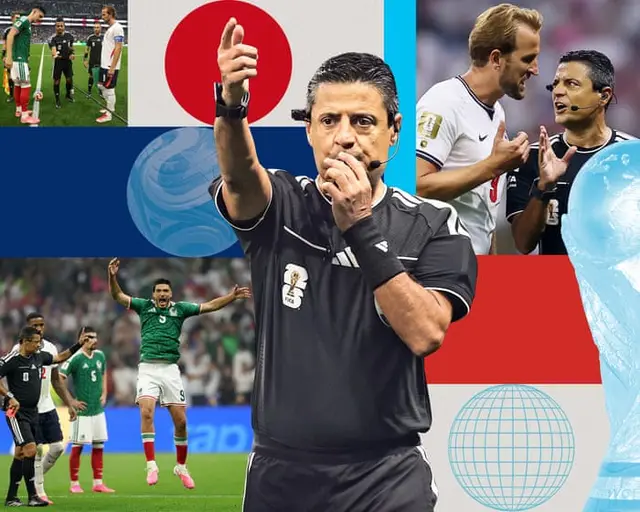
England’s manager Thomas Tuchel called the officiating ‘just not good enough’ in the fiery last-16 tie. Now Alireza Faghani gives his version of events It was 6pm on 5 July in Mexico City, and Alireza Faghani, a 48-year-old Australian-Iranian, was asleep in the locker room, snoring. His assistants had turned the music down. Had it not been for the muffled roar of nearly 90,000 fans through the concrete walls of the Estadio Azteca, he could have slept until the following morning. Faghani was the referee for Mexico v England in the last 16 at the 2026 World Cup. Mexico hadn’t lost a competitive game at the Azteca since 2013, at least in part because they’re used to the conditions. Situated 2,240 metres above sea level, the air contains less oxygen. Opponents struggle to breathe, let alone win. This was Faghani’s third match of his fourth World Cup. A contender for the final, he needed a strong performance. Outside, pouring rain fell from the sky. Thunder cracked overhead. The storm had delayed kick-off by an hour, but it could do little to quell the fans, who banged their drums and sang their chants. Eventually the noise jolted Faghani into action. He splashed water over his face and reviewed his notes again. As a referee in Australia’s A-League, he knew few of the players well, so he’d been studying their triggers, their temperaments and their tendencies in different match scenarios. “You know the key players, you understand their characteristics and how they normally behave in certain situations,” he adds. The uncertainty around the kick-off time had disrupted his preparation for the match. Days earlier, amid warnings of extreme weather, Fifa officials had revealed plans to bring kick-off forward by six hours, only to shelve them after Keir Starmer, then the British prime minister, raised concerns that it would favour the hosts by giving England less time to adapt to the altitude. During those hours of uncertainty, Faghani needed to adjust his pre-match physical and nutritional schedule accordingly. It was unsettling. “I don’t really have any superstitions, but I do like routine,” he says. “That routine gives me a sense of calm and helps me enter the field with a clear mind.” But he tried not to spend too much energy on something he couldn’t control. “At this level, part of the job is staying calm and keeping your preparation as normal as possible, even when everything around you is changing.” As kick-off approached, Faghani also resisted obsessing over his notes. He didn’t want to introduce bias into his decision-making. If you go into a match expecting a player to dive in a one-on-one situation, for instance, you might see a dive when there was genuine contact. Or you might see a player kick out when it was just normal movement. “That can be dangerous because you can start the match with a preconceived idea,” he adds. So he visualised the opening moments. “I try to switch off from everything outside the dressing room and focus only on the match,” he says. Mexico had a tendency for rampant starts. England were hard in the tackle. “We expected a match with a lot of intensity, particularly in transition and in individual duels. The important thing was to be mentally prepared for the speed of the game.” England kicked off to a chorus of boos, and those boos greeted their every touch. “The noise was unbelievable,” Faghani recalls. The same sound that had woken him up was now a distraction, and a threat to his impartiality on borderline calls – so he tried to block it out. “You are always aware of the atmosphere, especially with a home crowd like Mexico at the Azteca. Naturally, they react strongly to decisions involving their team, and you can feel that energy.” In the opening stages, he wanted to let the match unfold without imposing himself on it. To assess the intensity, then decide how strongly he would need to intervene. “Every match develops its own personality, and one of the most important skills is recognising that personality as quickly as possible and adapting your refereeing to it.” In this cauldron, however, Faghani was afforded no such luxury. With just seconds gone, Declan Rice stretched for a loose ball and caught an opponent in the head with his boot. With nearly a full match still to play, Faghani wanted to keep his yellow card in his pocket. Once he books a player, he loses that option to manage them later. Another yellow means a red, which fundamentally alters the balance of a match, damaging the spectacle. But he felt he had no choice. He needed to communicate strongly to the players that dangerous challenges like this were unacceptable, otherwise he feared they would spread. So he flashed his yellow card into the air, igniting the Mexican fans. “It was a clear yellow card for me,” he says. “It also helped everyone understand the line from the beginning.” Thomas Tuchel, the England manager, berated the fourth official on the sideline. As both sides launched into tackles, the fans urging them on, Rice’s chances of seeing out the match seemed slim. “Very quickly I felt it was going to be an intense, emotional, and fast game,” Faghani says. “I knew I needed to stay calm, be strong when necessary, but also give the players space to play.” Finding this balance “comes from reading the players and the temperature of the game”, according to Faghani, but he struggled under the pressure. “You are constantly asking yourself whether an intervention will help the match or interrupt it unnecessarily.” As softer fouls were punished and harder challenges went unpunished, frustration simmered and spread. A Mexican defender threw his arms in the air after being penalised for tugging down Jude Bellingham. “It’s not a foul,” he yelled. “It’s not a foul!” Faghani sprinted over, stood face to face with the player, and blew his whistle – an overt, intentional demonstration of authority. “In that environment, I felt it was important to deal with dissent immediately,” he says. “I wanted to send a clear message that communication was welcome, but there was a limit. Sometimes strong body language is more effective than using cards.” Faghani repeated the tactic moments later when another Mexican screamed at him for delaying a quick throw-in. It seemed to have worked. The dissent dissipated, and in its place came flowing football from the Mexicans. It was two English attacks that led to the game’s first decisive moments, though, with two Jude Bellingham goals. Mexico responded with a goal of their own. 2-1 to England. Faghani clenched his fists, knowing the pressure was only rising from here. But first he allowed himself a brief moment to drink in the skills on show. “You definitely appreciate the quality, but only for a second. As a referee, your mind immediately goes to the next responsibility – restart, player reactions, positioning, and staying focused.” England held on until half-time. In the locker room, Faghani was mildly satisfied with his performance. “Overall, I felt we found a good balance,” he says, speaking about the line of intervention. “My mindset was simply to maintain the same concentration and consistency in the second half.” Not even Faghani, however, could have anticipated what was to come. In the 52nd minute, Jesús Gallardo, Mexico’s left-back, sprinted down the left wing. Jarell Quansah, England’s right-back, sprinted towards him. Between them, the ball rolled slowly over the turf. They were converging on it at full speed. If Gallardo got there first, he would be through on goal, with Raúl Jiménez waiting in the box. From the centre of England’s half, Faghani watched Quansah slide in, taking the ball and Gallardo. Gallardo rolled on the floor in agony and the Mexican fans roared, but Faghani carried on. “In real time, it looked like I could allow play to continue,” he says. Mexican coaching staff shot off their seats, gesticulating furiously at Faghani to stop play. Others shoved England staff. At the next break in play, Mexican players swarmed the referee. He gestured for them to move away. Then his VAR, Nicolás Gallo Barragán, told him to pause the restart while he checked the incident. Faghani’s stomach dropped. He couldn’t help but replay Quansah’s challenge in his mind, wondering what he hadn’t seen. Then Barragán instructed him to use the pitchside monitor. Whistles rang around the stadium as Faghani jogged over. Mexican players yelled at him as he reviewed the incident, demanding a red card. But soon they became white noise, Faghani recalls. “Once you’re at the monitor, your focus becomes very narrow. You concentrate only on making the correct decision.” It took just three replays from the same angle for Faghani to change his mind. From behind Quansah, he hadn’t been able to see the defender’s boot make contact high on Gallardo’s shin. “I saw the challenge but I didn’t have a clear view of the point of contact,” he says. “But now it was clear.” As Faghani thrust his red card into the air, the Mexican fans celebrated as if they’d scored a goal. On the sidelines, Tuchel adjusted his tactics. Faghani gulped down air. “You could feel the physical demand more, particularly after repeated high-intensity runs,” he says. Precisely when he didn’t want one, the game demanded another. Anthony Gordon sprinted towards a flick-on from Harry Kane, closing in on the Mexican goal. As the Mexican goalkeeper rushed from his goal, Faghani sprinted towards the play, fighting to be close enough to see any contact between him and Gordon. Gordon touched the ball before the goalkeeper wiped out his legs. Faghani saw and heard the contact, almost in slow motion, then pointed confidently to the penalty spot. “That’s part of the physical preparation at this level,” he says. “You work hard to arrive in the best possible position, but once the incident happens, you have to become mentally calm very quickly and judge only what you see.” Now the England fans roared with emotion. Harry Kane converted, giving England a 3-1 lead. Walking slowly back to the centre circle, Faghani tried to fill up his lungs and compose himself. Thirty minutes remained, and he knew a Mexico onslaught was coming. The onslaught soon produced a penalty. Hooking away the ball from the England box, Harry Kane kicked a Mexican leg. Despite appeals from the Mexican players, Faghani let play continue. “Initially, from my angle, I wasn’t convinced there was enough for a penalty,” he says. “I heard the appeals, of course, but players’ reactions can’t determine your decision. You have to trust what you see.” Moments later, Barragán told him to pause play to review the incident. Faghani’s stomach then dropped a second time. Seconds passed. Then some more. Once again, Faghani tried not to think about what he might have missed. Under extreme pressure, he wanted to be calm enough to review the incident accurately on the monitor. “Second-guessing yourself for a minute doesn’t help. You need to stay composed and ready for the next step.” At first, at the monitor, he couldn’t see what Barragán had seen. He certainly couldn’t see a clear and obvious error. He considered sticking with his on-field call, something he’d done earlier in the tournament. Then Barragán slowed down the footage and walked him through Kane’s contact with the Mexican player’s boot. Kane had caught the boot without kicking the ball. Slowly, the foul revealed itself. Then it was all Faghani could see. “The communication helped me understand exactly what VAR wanted me to look at,” he says. “Once we identified the relevant contact and I saw the best angle, the decision became much clearer.” Mexico scored. 3–2 to England. Twenty minutes remaining. Plenty of time for big calls. To get them right, Faghani needed to reset, fast. To let go of the disappointment of missing two crucial calls. “You have to move on immediately,” he says. “VAR is part of the refereeing team, and the objective is to get the final decision right. You cannot allow one decision, or even two, to affect the next one.” England hung on. No more goals. In the final minutes of normal time, the Mexican bench pointed at their watches, demanding that Faghani account for every second of stoppage time. When the board showed 11 minutes, Faghani sighed. His muscles were weary, his thoughts cloudy. However hard he breathed, he couldn’t fill up his lungs. By this point, the pressure was almost unfathomable. He knew that a single lapse could reshape history and end his tournament. Fortunately for him, that lapse never came. In the 102nd minute, he blew his whistle and ended the match. English players fell to their knees. Faghani wanted to join them, to close his eyes, to release the tension. Later, in the locker room, he listened to music and chugged down water, reflecting on a job well done. Down the hall, however, Tuchel took aim at him. “The referees are just not good enough, fourth officials are just not good enough. That’s the bottom line,” he said. He singled out the decision to award the Mexican penalty, questioning whether the intervention had met the threshold for a clear and obvious error. “VAR overturns [but] is this a clear and obvious error for the penalty? For sure not. They overturned a situation where [the referee] doesn’t even give a foul.” Faghani, however, refused to dwell on the criticism. Hours later, once the Azteca had fallen silent, he headed for a light dinner and then to bed, where he quickly fell into another deep slumber. This time, he slept peacefully. The Impossible Job: The Truly Unbelievable World of Football Referee s by William Ralston (Viking, £22). To support the Guardian, order your copy at guardianbookshop.com

FIFA.com05 Sept 2026

FA to canvass England players in World Cup review

World Cup News

FA to canvass England players in World Cup review

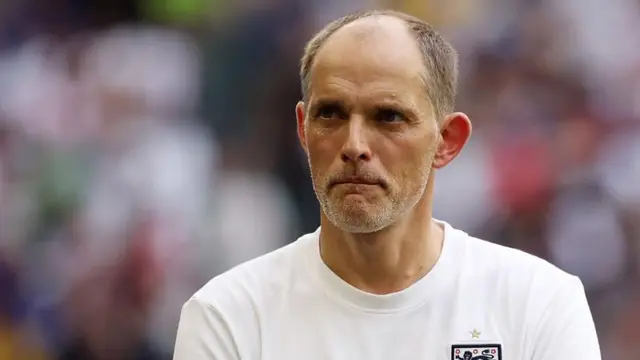
The Football Association's review into England's World Cup campaign will canvass the opinions of players involved in the tournament. English football's governing body has started the post-tournament review they conduct after every major international competition. The FA says the review is the standard process it undertakes after all tournaments. Head coach Thomas Tuchel and members of his backroom team were at St George's Park last week where they were involved in unpacking their performance in north America with a wider report into the team's World Cup campaign to be delivered at a later date. And it is understood members of Tuchel's squad will be spoken to, and their feedback taken into account, as part of the review process. The players' involvement in the review provides an interesting dynamic given the emerging sense from members of the World Cup squad that Tuchel's substitutions and tactical approach contributed to their semi-final loss to Argentina - despite taking a 1-0 lead through Anthony Gordon. BBC Sport revealed in the 24 hours after that defeat that at least three senior players privately expressed misgivings about Tuchel's approach in the closing stages of the game. There was a widely held view that Tuchel's changes and tactical set-up were too defensive late on as they conceded two late goals to lose 2-1. The ongoing review will also look into the impact of the team's permanent Kansas City base during the tournament. After every game, they returned to Kansas City - and the effects of the travelling will be analysed. England went on to defeat France in the bronze medal match to record their best World Cup finish since lifting the trophy in 1966. With that in mind, key figures at the FA view the tournament as a success and the organisation has backed Tuchel before the Euro 2028 qualifying campaign. England will play their first game since the World Cup in the Nations League against Spain on 26 September. They will also face two matches in the tournament against the Czech Republic, either side of playing Croatia, during the next international window. 'Adonis' Gibbs-White's chance to shine - will Tuchel take notice? Kane explains how dropping deep helps him score

FIFA.com04 Sept 2026
Uefa set to drop Fifa tournament boycott threat

World Cup News

Uefa set to drop Fifa tournament boycott threat

The matter will be formally discussed at a meeting of Uefa's executive committee in Monaco on Thursday. Earlier this month, European football's governing body said that despite Infantino's plan being aborted following widespread condemnation, the conditions required to prevent a boycott had "not been met". "Assurances have to be made that such attempts to disfigure the game in this way will never be made again," Uefa insisted. That came after Infantino and Fifa Secretary General Mattias Grafstrom had told national member associations that the FFE proposal was "now off the table", and apologised for "errors". If the boycott threat is lifted, it will mean next month's Under-20 Women's World Cup will proceed as planned. Six European teams - England, France, Italy, Portugal, Spain and hosts Poland - are scheduled to play in the tournament. A Fifa spokesperson said it "strongly believes that football has the power to unite, even in challenging circumstances" and Fifa "remains committed" to furthering "global development of the game" in "full dialogue with the confederations and stakeholders". One source close to the discussions insisted this was not a climbdown by Uefa, adding that Infantino's opponents "will continue until there are wholesale changes". "It is not a Uefa defeat, rather the reality of avoiding hurting young players [over a] once-in-a-lifetime opportunity," they added. "The actions and insistence on change will continue, and will win out in the end." Last month, European football's 55 member associations voted to boycott all Fifa competitions until the Fifa Forward Enterprises proposal was dropped "in its entirety and binding assurances have been given that Fifa will never again open its governance or competitions to private ownership". Culture secretary Lisa Nandy said this month she would not support a boycott of the U20 World Cup. "I am not generally in favour of sporting boycotts full stop, because I think they divide people from one another. I think they unfairly penalise athletes and competitors who are not responsible for the reason that these boycotts take place," she said. "What I would like to see actually is football coming together, resolving this, a change of leadership, a change of direction and a very clear message that football belongs to its fans and it will not have women and girls penalised when the women's game is going from strength to strength. And our Lionesses are leading the world in that." Will a Premier League club break record for transfer sales in one window? On Tuesday, a group of former players published a statement saying "change is necessary" at the head of Fifa. Former Manchester United and France defender Mikael Silvestre, who sits on Fifa's Players' Voice Panel, issued a statement on X on Monday in a post he titled "Enough is Enough!". The statement has been shared on social media by the likes of England defender Lucy Bronze, France's 1998 World Cup winner Emmanuel Petit and former England goalkeeper David James. However on Wednesday, a different group of former players including World Cup-winning Brazil captain Cafu, former Italy striker Christian Vieri, former Portugal captain Pepe and ex-Argentina international Esteban Cambiasso all posted supportive messages for Infantino on social media. All of the players are so-called Fifa Legends, officially recognised by the governing body. Vieri's statement said: "Over the past 10 years, we have seen the work Fifa and President Infantino have done to create representativity for players in football, which did not exist. "We will remain available to support the great evolution our game has seen this past decade, so that it keeps reaching and benefiting people of every country that plays football all around the world." This news will come as a major relief to the European Women's U20 players that have been in a degree of limbo over recent weeks, but who will now hope they can prepare to travel to Poland to compete in the forthcoming World Cup. Meanwhile, Fifa president Infantino may well view it as a significant victory in his increasingly acrimonious battle with Uefa, as he clings to power. While the nature of the assurances it has received are yet to become clear, despite its tough talk of possible boycotts and legal action, Europe's governing body now runs the risk of being seen to have caved in, having issued what amounted to a hollow threat. 'Change is necessary' - players unite against Fifa Listen to the latest Football Daily podcast

FIFA.com26 Aug 2026
Argentina's Paredes banned for 10 games

World Cup News

Argentina's Paredes banned for 10 games

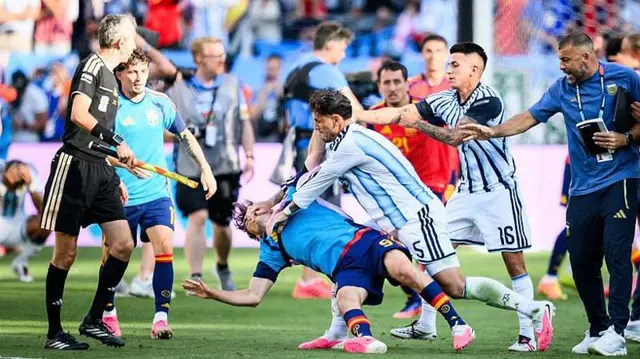
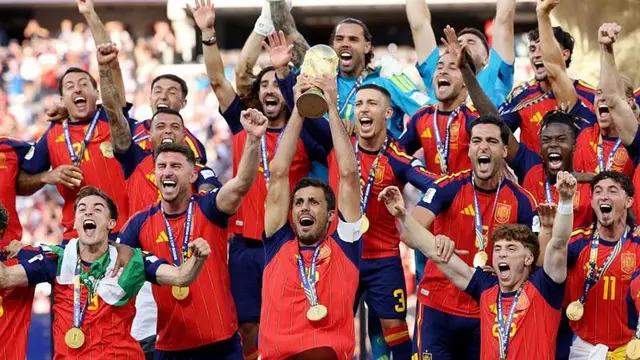
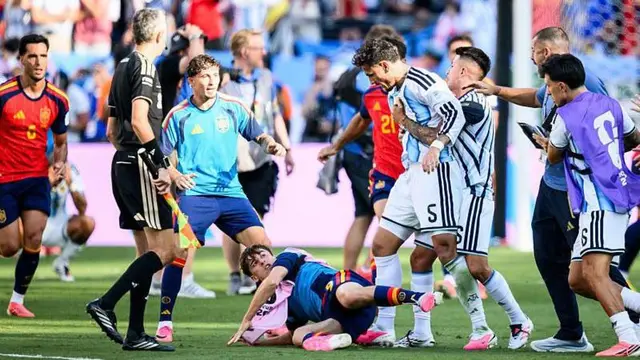
Argentina midfielder Leandro Paredes has been given a 10-match ban for the role he played in on-field clashes after his side were beaten 1-0 by Spain in the 2026 World Cup final. Fifa's disciplinary committee has also handed his team-mate Nahuel Molina a seven-match suspension. Argentina have also been ordered to play their next two home matches with 50% capacity, though one match of that sanction is suspended. The Argentinian Football Association (AFA) has been fined $321,000 (£235,000) for breaches of the Fifa disciplinary code relating to using a sports event for demonstrations of a non-sporting nature, team misconduct, and discriminatory chants and gestures by its supporters. After defeating England 2-1 in the World Cup semi-final, several Argentina players held up a banner claiming Argentine sovereignty over the Falkland Islands, a British overseas territory. Last month, Fifa appointed a disciplinary and ethics prosecutor to assess what happened after the final whistle at the New York New Jersey Stadium, when multiple Argentina players and backroom staff were involved in altercations with Spain players. As well as their suspensions, Paredes and Molina will both pay fines of $90,000 (£66,000). Paredes grabbed Eric Garcia by the throat and wrestled Spain's Gavi to the ground, before appearing to strike the latter in the face. Gavi - who said he did not think Paredes should be punished - will serve a one-match suspension and pay a fine of $30,000 (£22,000) for his part in the post-match confrontations, as will Argentina's Thiago Almada. Roberto Ayala, a member of Argentina's coaching staff, has been given a three-match suspension and a fine of $30,000 for striking Spain's Dani Olmo in the face. The match suspensions will only be enforced in international fixtures. The AFA said it will appeal the sanctions, and if unsuccessful will take its case to the Court of Arbitration for Sport (CAS). Chief football news reporterThere were many elements of Argentina's behaviour around the World Cup final that left a sour taste – now world governing body Fifa has come down hard on those it feels were responsible. A 10-match ban for experienced central midfielder Paredes and seven matches for Molina, who seemed to punch man of the match Rodri as he ran to celebrate Spain's success. In addition, the fine of $321,000 includes a punishment for the Argentina team unveiling a "Las Malvinas son ­Argentinas" – the ­Malvinas are Argentinian – banner following their semi-final triumph against England. It is a significant punishment, underlining how annoyed Fifa are at having their showpiece occasion, broadcast to an estimated 1.5bn people globally, tarnished by such awful scenes. Argentina have been one of the world's best teams for some time. Today shows them to be one of the worst behaved. When the World Cup finishes, the football continues on BBC Sport

FIFA.com21 Aug 2026
Players who turned World Cup heroics into big transfers

World Cup News

Players who turned World Cup heroics into big transfers

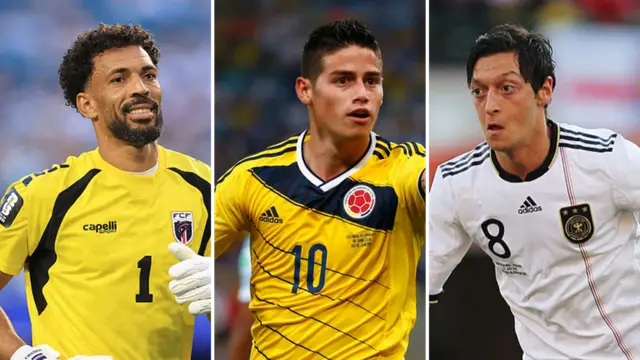
141 Comments The World Cup is football's biggest stage, filled with goals, drama and unforgettable moments - but it can also prove to be the ultimate shop window. World Cup heroics have transformed players' lives in the past, and Vozinha's recent move to Chilean side Colo-Colo after an impressive tournament with Cape Verde is the latest reminder that the competition still has the power to change careers. At the age of 40, the goalkeeper's journey from the Portuguese second division to Chile's biggest club may be unique, but he is not the first to get a big move after starring on the global stage. Here are some of the players whose standout performances at the World Cup earned them a big move. Similar to Vozinha, Marc-Vivien Foe was an unknown name before the 1994 World Cup. Despite Cameroon's disappointing World Cup campaign in the USA, compared to their historic run in 1990, Foe emerged as one of the team's best performers during his debut tournament. A standout game against Brazil caught attention, which then led to a free transfer from Cameroon's Canon Yaounde to French side Lens. Foe spent four years at Lens and helped them achieve their first league title in the 1997-98 season. He also played for West Ham United, Manchester City and Lyon, where he won the French League Cup and Lyon's first Ligue 1 title in 2002. Foe tragically passed away in June 2003 after he collapsed during a Confederations Cup semi-final against Colombia. Gilberto Silva's first appearance at a World Cup came in 2002, when the tournament was hosted in South Korea and Japan. The 25-year-old, who played in Brazil's top division for Atletico Miniero, returned home as a World Cup winner who played every minute of every game for Luiz Felipe Scolari's team. Silva was only brought into the starting XI because Brazil captain Emerson was ruled out by injury. But, after playing a key role in Brazil's triumph, the midfielder earned a move to Premier League champions Arsenal. Nicknamed 'The Invisible Wall', the defensive midfielder joined the Gunners from Atletico Mineiro for about £4.5m. During his six years in north London, Silva won two FA Cups and played a key role in the famous 2003-04 Invincibles side that went unbeaten to claim the Premier League title. At the age of 22, Javier Mascherano announced himself on the global stage at the 2006 World Cup, where he helped Argentina reach the quarter-finals. His performances for both his club back in Brazil and at the World Cup drew the attention of European clubs. Mascherano initially expressed his desire to remain at Corinthians and help the club in their relegation battle. However, he soon made the move to West Ham United in the summer of 2006 alongside his Argentina team-mate Carlos Tevez, who also impressed at the World Cup in Germany. Mascherano had a brief spell with the Hammers until the beginning of 2007, leaving to join Liverpool where he featured in their 2007 Champions League final defeat by AC Milan. Mascherano then played for Barcelona from 2010, winning the Champions League twice and being part of squads that won La Liga on five occasions. At the age of just 21, Mesut Ozil emerged as one of the world's most exciting young players after he helped Germany finish third at the 2010 World Cup. After registering four goals and four assists in seven games, Ozil was able to show off his quality and prove he was a standout performer. Big clubs took note, and by August 2010, Ozil switched Werder Bremen for Real Madrid, for a fee of about 15m euros (£12.4m). Copa del Rey, La Liga and Spanish Super Cup titles were to follow during his three year stay in Madrid, before becoming Arsenal's record signing for £42.4m in 2013. James Rodriguez became one of the stars of the 2014 World Cup, scoring six goals for Colombia and winning the Golden Boot after a memorable run to the quarter-finals. His excellent performances, including his famous volley against Uruguay, earned him a spot in Fifa's team of the tournament. The volley against Uruguay was later voted as the best goal in the tournament by more than four million people on Fifa's website and won the Fifa Puskas Award for the best goal of the year. Real Madrid decided to sign Rodriguez from Monaco for about 75m euros (£71m) after the tournament - a move that led to him winning multiple trophies with Los Blancos, including two Champions Leagues. Vozinha became a cult hero when Cape Verde claimed their first World Cup point against Spain in the group stage and his social media fame has exploded from 50,000 Instagram followers to nearly 30 million. After helping his team reach the knockout stages, taking finalists Argentina to extra time in the last 32, Vozinha was named in Fifa's team of the tournament and even had a newly discovered species of sea slug named after him. Vozinha's career has taken him to Slovakia, Angola, Moldova, Cyprus and, until recently, Portuguese second division side Chaves, but he has always believed himself to be a "big club player". Joining Colo Colo, the most successful team in the Primera Division (34 titles) and Copa Chile (14), is his career "highlight". Gheorghe Hagi - Brescia to Barcelona (1994) Dejan Stankovic - Red Star Belgrade to Lazio (1998) Carlos Salcido - Guadalajara to PSV Eindhoven (2006) Nicolas Otamendi - Velez Sarsfield to Porto (2010) Edinson Cavani - Palermo to Napoli (2010) Sami Khedira - Stuttgart to Real Madrid (2010) Keylor Navas - Levante to Real Madrid (2014) Enner Valencia - Pachuca to West Ham United (2014) Enzo Fernandez - Benfica to Chelsea (2022) Vozinha to join Chilean club after World Cup heroics Vozinha granted shirt name exemption by Chile FA

FIFA.com06 Aug 2026
Fifa scraps controversial World Cup investment plan

World Cup News

Fifa scraps controversial World Cup investment plan

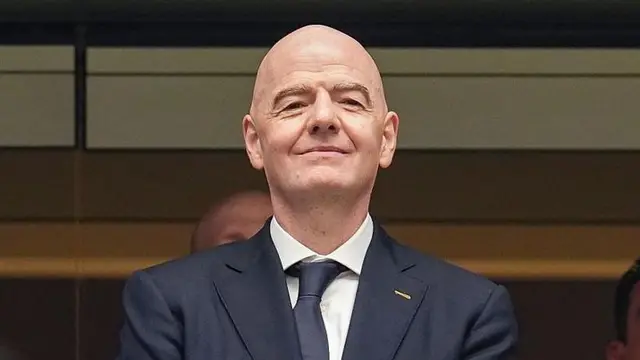
Infantino said it had become clear the project had "created divisions" that are "no longer in the interest" of its original objective. The Swiss official added: "As a result, this proposal will not proceed." Infantino had offered Fifa's 211 member associations $40m (£30m) if they backed a proposal for private investment in its tournaments, including the men's and women's World Cups. However, Uefa - which governs European football - responded by voting to boycott World Cups if the plans went ahead, and other governing bodies also voiced their opposition. Infantino on the brink? Who might replace him if he goes? Carlos Cordeiro - Infantino's senior adviser on global strategy and governance - resigned over the matter, saying the proposal was "a bad deal for football" and would "mortgage football's future". That came after two other major confederations spoke out against the plans. Concacaf, which governs football in North, Central America and the Caribbean - and hosted this summer's World Cup - said its members "rejected" the proposal, with sources saying the vast majority of associations from the region are losing, or have lost, faith in Infantino. The Asian Football Confederation (AFC) said it stood in "solidarity" with Uefa and Concacaf, while UK Prime Minister Andy Burnham said Infantino was "the wrong man" to lead Fifa. It means Infantino is now under immense pressure as he seeks re-election for a fourth term as president at the Fifa Congress in March. "Our purpose has always been - and will always be - to unite and improve," the 56-year-old added in a statement. "Moving forward, my intent is to bring all interested parties back together in the coming days and weeks in the spirit of shared interest in our game." AFC president Sheikh Salman bin Ebrahim Al Khalifa welcomed the withdrawal of the plan. "The future of global football must always be shaped through proper consultation, collective dialogue and respect for the established governance structures of our game," he said. Despite rejections from Uefa and Concacaf, Fifa initially vowed to continue with its proposals on Friday, saying "nobody is selling football". However, Infantino would have needed the backing of a majority of member associations to pass the plans - meaning 106 of its 211 members needed to vote in favour. That became unlikely when the AFC joined Uefa and Concacaf in opposing the plans. If all member associations backed the stance of their governing body, that would have meant 136 nations voting against Infantino's plan. Governing bodies in Africa (CAF) and Oceania (OFC) had said they would discuss Fifa's plan in August. Conmebol - South American football's governing body - said it had asked Fifa for "additional information and clarifications" regarding the "scope, structure, governance and possible effects" of the proposals. It said it would "invite third parties to make minority, non-controlling investments" in a new subsidiary - Fifa Forward Enterprise (FFE). Infantino set a deadline of 19 September for football federations to accept his plans if they wanted to access an initial $20m (£15m). A 25-page document created by investment bank JP Morgan laid out how Fifa's tournaments would expand to hit an estimated increased payout of 24m euros (£20.5m) per member association in the 2035-2039 cycle. It mentioned "new business initiatives" and "attracting top talent with incentive-driven compensation". The World Cup is described in it as the "most widely viewed" sporting event but Fifa, by contrast, is said to be "under-monetised". There was no mention in the document of the women's game. Thrive is an American venture capital firm founded by Joshua Kushner - the brother of US President Donald Trump's son-in-law Jared. Trump - addressing the proposals for the first time on Friday - said he had not spoken to Infantino about the plans. The two have developed a close relationship since Trump assumed office for a second time in 2025. Infantino became Fifa president in 2016 when he beat AFC president Sheikh Salman by 115 votes to 88. Fifa's next president will be confirmed at the organisation's 77th Congress in Morocco next March. Candidates have until 18 November to put their names forward. Prior to this week, it had been anticipated Infantino would be re-elected unopposed. Associations around the world, including some in Europe, had already confirmed their intention to vote for him. It remains to be seen if the events of this week will result in a mass withdrawal of their support. In his statement, Infantino reiterated his plan was designed to strengthen member associations, "especially in countries where support is most needed" - but the proposal clearly created division within Fifa itself. Cordeiro, who represented Fifa on the White House taskforce for the 2026 World Cup, is the first senior figure at the governing body to resign over the plans. In a lengthy statement, Cordeiro said he "unequivocally" opposed the plans and "did not accept the proposition" Fifa needed outside investors to "unlock greater value". He added he had no involvement in the proposal. It is understood Infantino even left some of Fifa's eight vice-presidents in the dark about his plan, which it is claimed could have raised $10bn (£7.5bn). Lamour called it "the project of one person" and said "a president must bring people together, unite them, and inspire them" but this was "the opposite". "If that means I lose my job, then so be it," he added. "I will understand and respect that decision. At least I'll sleep well tonight." Chief football news reporterAs reports first emerged on Tuesday about Fifa's plans, a senior figure in English football told me the story would be as big, if not bigger, than the European Super League. I do not think he felt it would unravel in quite the same way - but the idea only took two days longer than Super League to be scrapped. There have been no fan protests on the streets, but animosity towards the plans was evident from the moment the likely implications dawned on the game. Infantino is an astute politician. He knew the numbers were against him and has decided to cut his losses now rather than risk further personal damage. It is a humiliating moment - but for Infantino, the real work starts now. He has some significant bridge building to do. In their statement - which, in its own way, was just as damning as Uefa's threatened boycott - the Asian Football Confederation (AFC) pointed to a much wider issue. "The AFC considers this issue extends far beyond a single proposal," it read. "Rather, it has exposed fundamental weaknesses in Fifa's consultation and decision-making processes that must now be addressed." Infantino cannot just walk away from the past few days as though nothing has happened. There are a lot of angry people in football who feel he has been acting beyond his power - just as the organisation's chief operating officer suggested on Friday. The immediate crisis has passed. Over the short to medium term, it will be fascinating to see whether Infantino can restore his reputation. Listen to the latest Football Daily podcast SoundsGet football news sent straight to your phone

FIFA.com01 Aug 2026
Why Africa could back controversial Fifa plan

World Cup News

Why Africa could back controversial Fifa plan

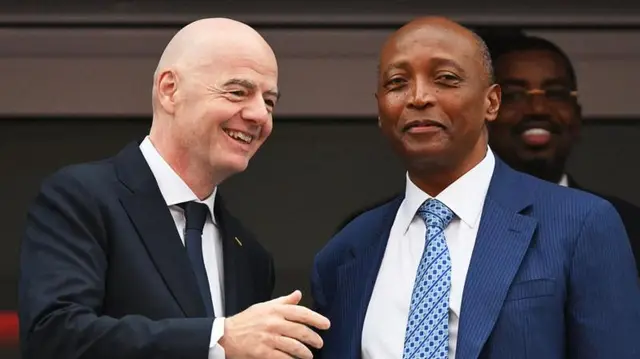
In the row which has engulfed global football and the man who runs it, Gianni Infantino, could Africa end up as a lone voice of support for the Fifa president? While European governing body Uefa has voted to boycott Fifa competitions, including World Cups, if plans go ahead to sell stakes in those competitions to private investors, the Confederation of African Football (Caf) has remained largely silent so far. Much of that has to do with the close relationship between Caf, Fifa and Infantino. Caf president Patrice Motsepe lauded Infantino for his "excellent work" after this year's World Cup and hailed the Swiss as "a good friend". "He is loyal to Africa," Motsepe said on 22 July. "When people have been loyal to you, you never stab them in the back." Fifa's aim is to create a commercial subsidiary to run its main events and allow external investors to buy stakes in it. Caf says its executive committee will meet to "assess and evaluate" the proposal next week, encouraging its member associations to do the same. African countries have already benefited from previous Fifa funding. The new sums at stake could continue to transform the footballing landscape on the continent. Infantino 'wrong man' to lead Fifa says Burnham as criticism grows But given that many African football federations struggle financially, the lure of $40m (£30m) from Fifa may prove enticing to Caf's 54 member associations, especially as an initial $20m (£15m) could be received as early as 1 January – provided the plans are approved by 19 September. "Football is a very expensive venture, especially on the African continent where resources are not easy to come by," Rogers Byamukama of Uganda's football federation told the BBC. "What is wrong with making more money and sharing that money with those that need it most?" However, Isha Johansen, a former president of the Sierra Leonean FA who also served on Caf's executive committee and the Fifa Council, says the proposal "does not sit well". "I think people have got to be really realistic here in knowing where we want to see football going in the coming years," she added. "Should football be commercialised in the manner in which it potentially could be if this proposal were to go through? "As a businessman or woman you want something out of it. You're not just doing it out of generosity. "What price does one have to pay in order to get to this elevated development for football in Africa? I think it's going to take a lot of soul-searching [but] I do hope that they (Caf) go along with all the other confederations." Courting controversy and befriending Trump - the story of Fifa boss Infantino Veron Mosengo-Omba, who served as Motsepe's deputy from 2021 until March this year, was previously chief member associations officer at Fifa - and is a friend of Infantino, having studied law alongside him in Switzerland. Mosengo-Omba was elected head of DR Congo's football federation in May. Together he and Motsepe undeniably improved the financial balance sheet at Caf, not least by improving revenues from the Africa Cup of Nations (Afcon), its flagship tournament, while Infantino has done his part to develop the game on the continent. Africa was the main beneficiary of the expansion of the Fifa World Cup to 48 teams - with the continent awarded a guaranteed nine spots. The previous allocation, five, had long been seen as a slight in Africa. "You need to have a president of Fifa who is as committed to African development and growth as Gianni Infantino is," Motsepe said. "What Gianni has done, to contribute to us increasing the number of African national teams (at the World Cup), [is] enormously important." A lack of financial resources is a big reason for African member associations - many of whom rely on scant government funding - to back Fifa's proposals. "Our government cannot manage to give us even $1m (£740,000) every year for football," Malawi FA president Fleetwood Haiya told Newsday on BBC World Service. "Our government is not able to make sure that they have medical supplies in hospitals [and] at the same time to look at football. "Malawi needs money. Malawi needs stadiums. "I'm 100% in support (of the Fifa proposal). There is no dispute. I don't understand why Fifa took so long to do this." African federations, however, may need to be careful what they wish for, with some people questioning whether governments will continue to fund organisations receiving significant support from elsewhere. Europe, home to the world's biggest domestic leagues, is undeniably where football is most developed and generates the most commercial income. The majority of Africa's top footballers play for clubs there, but the argument is their home countries get little in return. "Uefa is a very rich region," Uganda's Byamukama added. "But how much of their commercial success has been shared with federations that are poor, for instance in Africa, in Asia?" Is Infantino finished? Could Uefa boycott World Cup? What happens now? Cape Verde's impressive debut World Cup campaign came after the Blue Sharks upped their spend on logistical arrangements during qualifying. Haiya says Malawi's performance at the ongoing Women's Africa Cup of Nations, where the Scorchers beat defending champions Nigeria on their debut at the finals, was also built on Fifa funds. "These girls were not given the opportunity or the platform, or they were not supported to showcase their talents. "Gianni Infantino believed in our project for women's football." Byamukama points to money from Fifa helping to fund the construction of Uganda's FA headquarters, a technical centre and a stadium, while a source from another southern African FA said the continent's administrators back Infantino because he has increased financial support. The promise of more to come would only strengthen that bond. "It is a good financial comfort for federations in Africa," the official said. "They can do a lot with grassroots football and infrastructure." However, Caf's close bond with Fifa has had its downsides, with Motsepe appearing unwilling to challenge Infantino or his organisation's decisions in public. Caf did not publicly denounce the world governing body on either issue despite scathing statements from elsewhere. Fifa's expanded Club World Cup, held in June and July last year, meant the 2025 Afcon was forced to move to a December to January slot, causing issues with top European clubs over the release dates for players. And the decision to hold Afcon every four years from 2028, rather than biennially, was seen as a decision that benefits Fifa and the global football calendar rather than Africa. Fifa general secretary Mattias Grafstrom sat alongside Motsepe when the announcement was made. Johansen accepts that the funds from Fifa Forward Enterprise would be a game-changer for many in Africa, but she believes the long-term integrity of the game is under threat. "It is an offer that is hard to refuse," she said. "I think we now come to a point where you really need to know where to draw the line and not sacrifice the beautiful game." Infantino had indicated Fifa's proposals would need a straight majority to go through - meaning 106 of its 211 members need to vote in favour. Should all member associations from those confederations back the stance of their governing body, that would mean 136 nations are already against Infantino's plan. Even if Caf's 54 associations do stand behind the Swiss, the weight of the rest of the world could deny the second-largest and second-most populous continent what many view as a welcome windfall.

FIFA.com31 Jul 2026
Fifa says 'nobody selling football' as plan continues

World Cup News

Fifa says 'nobody selling football' as plan continues

Concacaf, which governs football in North and Central America and hosted this year's World Cup, said its 41 member associations also "rejected" the proposal made by Fifa president Gianni Infantino. In a statement released on Friday, Fifa claimed the consultation process had been "disrupted by incorrect media reports". "We respect the feedback and concern aired in public and reaffirm our commitment to an open and democratic consultation," the statement read. "We will proceed with this consultation process to ensure that each MA (member association) has the ability to express its vote based on facts. "Nobody is selling football. This is not something Fifa would ever entertain." Is Infantino finished? Could Uefa boycott World Cup? What happens now? It said it would "invite third parties to make minority, non-controlling investments" in a new subsidiary - Fifa Forward Enterprise (FFE). In a 25-page document created by investment bank JP Morgan, it is made clear that Fifa's tournaments will expand to hit an estimated increased pay-out of 24m euros per member association in the 2035-2039 cycle. It mentions "new business initiatives" and "attracting top talent with incentive-driven compensation". The World Cup is described in it as the "most widely viewed" sporting event but Fifa, by contrast, is said to be "under-monetised". There is no mention in the document of the women's game. On Friday, Fifa said FFE had been proposed "to ensure all Fifa member associations have the opportunity to take meaningful ownership of the commercial opportunity of football in their respective countries". "This does not come at the cost of either the spirit or the governance of Fifa or football itself," it added. Infantino previously wrote to Fifa members saying they will receive $40m (£30m) if they back his controversial proposal. He set a deadline of 19 September for federations to accept his plans if they want to access an initial $20m (£15m). However, Uefa has accused Fifa of using football "to enrich themselves and their friends". If approval is granted, Fifa says Thrive Eternal is expected to lead the proposed investor group for FFE. Thrive is an American venture capital firm founded by Joshua Kushner - the brother of US President Donald Trump's son-in-law Jared. Courting controversy and befriending Trump - the story of Fifa boss Infantino "The World Cup cannot be treated as an investment product," Uefa's statement on Thursday read. "It is one of football's greatest sporting legacies. It has been built over generations by players, national teams and supporters across every continent. "No part of it should ever be surrendered to private investors. The World Cup is not for sale. "This is not merely a profound failure of leadership, but an abdication of Fifa's duty as the custodian of world football." Concacaf said its members "expressed deep concerns about the lack of due process surrounding the proposal" and the "artificially short deadline imposed". It also questioned the need for private investment after what Fifa claimed was the most profitable World Cup in history. The Asian Football Confederation (AFC) said that it is "deeply concerned that Fifa's unilateral actions appear to undermine the very foundations of continental football". The AFC also said it was "unacceptable" that it had not been consulted before the proposal was publicly announced, nor provided with "detailed governance, financial or legal analysis". The governing body overseeing football in South America, Conmebol, is yet to publicly comment on the proposals. The governing bodies in Africa (CAF) and Oceania (OFC) have said they will discuss Fifa's plan in August. Chelsea manager and 2010 World Cup winner Xabi Alonso was asked about the situation during his side's pre-season tour of Australia. "I think that football has to be for the people, not in private hands and I think that the way we love it is this way and we have seen a great World Cup and it's good to defend the interests of all the people," he said. "Hopefully it won't happen and we will do it - we will keep the game as attractive and as authentic as we like it and that's why it creates these emotions, these passions." Chief football news reporterIt feels as though no-one who matters knows how this situation is going to play out just yet. "Not sure the detail was considered when deciding the overall policy," was the response from a senior European football source when asked what this decision means for the U20 Women's World Cup, starting on 5 September, being hosted by Poland and featuring plenty of European nations. Uefa's boycott threat will be activated if Infantino's funding deal is accepted. Given 19 September is the deadline for countries to accept Fifa's deal and bank $20m (£15m) on 1 January, in theory, countries could be pulling out of that tournament in the middle of the quarter-finals and before the semis. After that, the next senior matches in a Fifa competition are the Women's World Cup play-offs in October, which feature England, Scotland, Wales and Northern Ireland among others. Infantino became Fifa president in 2016 when he beat Asian Football Confederation president Sheikh Salman al-Khalifa by 115 votes to 88. The Swiss is due to stand for a fourth term in March. Prior to this week, it had been anticipated he would be re-elected unopposed. FAs around the world, including some in Europe, have already confirmed their intention to support the 56-year-old. But sources say in addition to rejecting Infantino's plan, the vast majority of the Concacaf members are either losing faith in the Fifa president's ability to govern the game, or have lost it altogether. While Uefa members are among the richest on the planet, many nations elsewhere rely on Fifa funding for basic infrastructure. "There are the aspirations and needs of small nations, but you've also got large nations who have the power," former Football Association chief executive Mark Palios told BBC Breakfast. "It's not dissimilar to the attempts to form a European Super League. On one end you've got the people who create the cash, but on the other end you still need competition." Rogers Byamukama of the Ugandan Football Federation argued that any avenue that could lead to more resources for nations like his should be explored. "First and foremost, you need to understand that football is a very expensive venture, especially on the African continent where the resources are not easy to come by," he told Newsday on BBC World Service. "For instance in Uganda, the number of infrastructure projects that have been funded by Fifa from the resources generated by Fifa, especially at the World Cup, both from ticket sales as well as sponsors. "On top of that, there are many grassroot programmes that have been funded by Fifa, including schools for football. "From my perspective, any avenue that brings in more resources is good because those resources would be distributed and given to federations, especially on the African continent and that would inspire growth." Byamukama acknowledged Uefa's right to speak out, but suggested that its members are not reliant on Fifa funding like many associations in the rest of the world where Infantino remains popular. In the first two cycles of the Fifa Forward development programme, through to 2022, $2.8bn (£2.08bn) was made available for investment across the 211 member associations. After being re-elected unopposed in 2019 and 2023, Infantino is expected to win another term in 2027.

FIFA.com31 Jul 2026
Is Infantino finished? Could Uefa boycott World Cup? What happens now?

World Cup News

Is Infantino finished? Could Uefa boycott World Cup? What happens now?

The bombshell statement landed at 16:00 BST on Thursday, 30 July. In terms of impact, European football's governing body Uefa could not have gone any bigger. "Uefa and its national associations will not participate in Fifa competitions," it said. Eleven brutal words. The definitive reaction to Fifa president Gianni Infantino's plan to sell a 20% stake in a subsidiary company set up to run the world governing body's competitions, including the World Cup. A company it is intended Fifa will run but that will be part-funded by private investors, including the brother of US President Donald Trump's son-in-law, Joshua Kushner. It feels as though no-one who matters knows how this situation is going to play out just yet. "Not sure the detail was considered when deciding the overall policy," was the response from a senior European football source when asked what this decision means for the U20 Women's World Cup, starting on 5 September, being hosted by Poland and featuring plenty of European nations. Uefa's boycott threat will be activated if Infantino's funding deal is accepted. Given 19 September is the deadline for countries to accept Fifa's deal and bank $20m (£15m) on 1 January, in theory, countries could be pulling out of that tournament in the middle of the quarter-finals and before the semis. After that, the next senior matches in a Fifa competition are the Women's World Cup play-offs in October, which feature England, Scotland, Wales and Northern Ireland among others. "Wales is involved in the play-offs for the Women's World Cup in the autumn, and it would be our first qualification for a World Cup," Uefa vice-president and ex-Wales international Laura McAllister told BBC Radio 5 Live. "Nobody can even countenance the thought of not being involved in those. "But let's be clear here. This is not a problem of Uefa's making. It's a problem that Fifa have created. Nobody wants the players to suffer, and nobody wants nations to suffer when it comes to the most prestigious competitions. "We've been pushed into this corner and that's Fifa's responsibility." Is World Cup sell-off plan a step too far by Infantino? No-one can be certain what happens now. And no-one knows what the future for Infantino is. Uefa's statement was followed up by another from Concacaf, which governs football in North and Central America and hosted this year's World Cup, saying their 41 members rejected the proposals. The repeated responses from those who have spoken out are of fury at the lack of proper consultation and lack of dialogue from Infantino, including with his Fifa colleagues, as much as with the proposals themselves. "Anger," said one source, when asked for the prevailing mood at Uefa's emergency meeting. Fifa, meanwhile, has released a new statement claiming consultation over the proposals "was disrupted by incorrect media reports". It added: "We respect the feedback and concern aired in public and reaffirm our commitment to an open and democratic consultation... "Nobody is selling football. This is not something Fifa would ever entertain." Infantino became Fifa president in 2016 when he beat Asian Football Confederation president Sheikh Salman al-Khalifa by 115 votes to 88. The Swiss is due to stand for a fourth term in March. Prior to this week, it had been anticipated he would be re-elected unopposed. FAs around the world, including some in Europe, have already confirmed their intention to support the 56-year-old. But sources say in addition to rejecting Infantino's plan, the vast majority of the Concacaf members are either losing faith in the Fifa president's ability to govern the game, or have lost it altogether. Now there is talk of trying to find someone to stand against him. The name of Nasser Al-Khelaifi has been mentioned. This is understandable. Qatari Al-Khelaifi is already one of the most powerful figures in football, not only through his status as president of back-to-back Champions League winners Paris St-Germain but his leadership of European clubs. Previously known as the European Clubs' Association, Al-Khelaifi took over as chairman in the aftermath of the other seismic event that threatened to pull the game apart - the ill-fated European Super League, which collapsed within 48 hours in 2021. Al-Khelaifi presided over a name change - to European Football Clubs. More importantly, he expanded it to over 800 members. Of the biggest clubs, only Real Madrid remain outside. In theory, he would be the best person to challenge Infantino. But he doesn't want to. "He genuinely, genuinely, genuinely doesn't want the job," was the response of a source close to the 52-year-old when asked about the possibility on Thursday. Historically, sitting Fifa presidents are not challenged in elections. The last president to lose an election was Englishman Sir Stanley Rous when he was beaten by Brazilian Joao Havelange in 1974. "I don't know, in all honesty," said McAllister, when asked if Infantino will keep his job. Former FA chairman David Bernstein was asked the same question by BBC Sport. "In a normal organisation, if he has to back down due to something of this magnitude he'd probably be shown the door," Bernstein said. "But Fifa is not a normal organisation. If he has the support of enough of the national associations, he will continue." Former Uefa chief executive Lars-Christer Olsson told the BBC that Infantino has overplayed his hand and his position could be in trouble. He suggested Fifa should instigate a reform where the presidency circulates around figures from different confederations "rather than giving people so much power" as it has done with Infantino and his predecessors, Switzerland's Sepp Blatter and Brazil's Havelange. When asked if Infantino should be removed from his role, Olsson said: "I think that should be a new start for football." Courting controversy and befriending Trump - Fifa's 'unlikely saviour' While Uefa only covers 55 of Fifa's 211 national associations, in pure playing terms, it is the most powerful confederation by far. In the last edition of the World Cup, the Women's World Cup and the Club World Cup - Fifa's flagship events - Uefa supplied three of the four semi-finalists. If there was no European involvement in a Fifa competition, the commercial impact would be seismic and ensure there was virtually no chance of Infantino hitting the figures he has promised in a letter to the national associations, when he talked about a $40bn (£30bn) product. David Bernstein feels a solution has to be found. "I can't believe in the long term that there will be a schism because it would be a lose-lose for everybody," he said. "Fifa can't afford not to have European nations play in their competitions and frankly Europe can't afford not to be part of it. "On this occasion, Infantino's got to back down. This deal is not acceptable. It's a friends deal and it's not right. If they want to raise capital, there's other, better ways of doing it." Minimum 10-match ban for discrimination - FA McAllister accuses Fifa of 'blackmail' over World Cup plan

FIFA.com31 Jul 2026
Uefa to boycott World Cups if Fifa plans approved

World Cup News

Uefa to boycott World Cups if Fifa plans approved

5333 Comments European football's 55 member associations have voted to boycott World Cups if the sport's governing body proceeds with a plan to sell stakes in its competitions to private investors. The decision was made at an emergency meeting called to discuss the proposal announced earlier this week by Fifa, which oversees world football. Concacaf, which governs football in North and Central America and hosted this year's World Cup, said its 41 member associations have "rejected" the proposal made by Fifa president Gianni Infantino, after it met on Thursday. Sources say the Concacaf nations are also losing faith in Infantino. Uefa, which governs European football, had already made its opposition clear by releasing two damning statements - and that strength of feeling has been reaffirmed. "The World Cup cannot be treated as an investment product," it said on Thursday. "It is one of football's greatest sporting legacies. It has been built over generations by players, national teams and supporters across every continent. No part of it should ever be surrendered to private investors. The World Cup is not for sale." Uefa's boycott would cover all Fifa competitions, including the men's and women's World Cups and Club World Cup, and be triggered if Fifa president Gianni Infantino's proposals are voted through by member associations. The first time this stance will be tested at a senior tournament is in October, when the Women's World Cup play-offs are due to be held. It is understood FA chairwoman Debbie Hewitt and chief executive Mark Bullingham were among those to speak during Uefa's meeting, with the atmosphere described as venomous, such was the strength of feeling against the proposals. Despite being one of eight Fifa vice-presidents, Hewitt had no knowledge of the discussions that Infantino had been having regarding the proposals. Is Infantino finished? Could Uefa boycott World Cup? What happens now? It said it would "invite third parties to make minority, non-controlling investments" in a new subsidiary - Fifa Forward Enterprise (FFE). The plan needs to be passed by a vote of Fifa's 211 members. Infantino needs 106 votes in favour for the proposal to go through. Uefa and Concacaf members combined make up 96 associations - of which 90 have a vote and all of them seem set to vote against. Infantino has written to Fifa members saying they will receive $40m (£30m) if they back his controversial proposal. He has set a deadline of 19 September for federations to accept his plans if they want to access an initial $20m (£15m). In a video released by Fifa on Wednesday, Infantino defended the plans, calling them "an offer, not an obligation". If approval is granted, Fifa says Thrive Eternal is expected to lead the proposed investor group for FFE. Thrive is an American venture capital firm founded by Joshua Kushner - the brother of US President Donald Trump's son-in-law Jared. The White House said it had "nothing" to say on Infantino's proposals "at the moment". How has Uefa reacted?In a statement released after Thursday's meeting, which was held virtually and chaired by president Aleksander Ceferin, Uefa said it and its 55 member associations "stand as one". "We unanimously and unequivocally reject Fifa's proposal to transfer ownership interests in the World Cup and other Fifa competitions to private investors," it said. On Wednesday, Uefa had accused Fifa of using football "to enrich themselves and their friends". Its statement on Thursday was even more damning, calling it "irresponsible and indefensible that a proposal of such significance for football was conceived in secret" and "without any meaningful consultation" with those who steward the game. It added: "This is not merely a profound failure of leadership, but an abdication of Fifa's duty as the custodian of world football. "National associations around the world are now presented with an ultimatum: accept the irreversible capture of football's greatest competitions or bear the consequences. "This is not a 'democratic decision', but governance by intimidation - an act of coercion unworthy of an institution entrusted with the stewardship of the global game." While Uefa only accounts for a quarter of Fifa's membership, it does include most of the world's most successful teams. Six of the eight quarter-finalists - including winners Spain - at this summer's World Cup were European. In the 2022 and 2018 editions, the figures were five and six respectively. Of the 23 World Cups to have taken place to date, 13 have been won by European countries. The other 10 have been won by South American sides. The former Wales international told BBC Radio Wales she hoped boycotts would not happen, adding: "I feel optimistic they won't, because the reality is the powerhouse of world football is Europe." Speaking to Radio 4's PM programme, McAllister said there was "real unity" among Uefa members and an "easy consensus over the need to take the strongest possible action given the existential threat that the Fifa proposal poses to our sport". She added: "The reality is we had no choice other than to issue a threat commensurate with this dreadful, catastrophic proposal that has been rushed through with no due diligence, no proper governance and no consultation." She added: "We oppose Fifa's plans - the Fifa World Cup belongs to football and always will." The Scottish FA added its support, saying its board "agrees unequivocally with the concerns raised by all members over the manner in which these proposals have been issued, and deadline set, without a full consultation process or consideration to good governance". Culture Secretary Lisa Nandy said: "This is a principled decision that we strongly support. Football belongs to the fans, not billionaire investors. Enough is enough. It's time to take a stand to protect our game." UK Prime Minister Andy Burnham criticised the plans on Tuesday, saying going ahead with the idea would mean Fifa had "sold out". Concacaf said its members "expressed deep concerns about the lack of due process surrounding the proposal" and the "artificially short deadline imposed". It also questioned the need for private investment after the most profitable World Cup in history, according to Fifa. Concacaf added that it has tasked its Fifa council members with engaging the governing body on how to use existing reserves to fund development across the region and instruct Infantino to ensure proper governance processes are followed. Ronan Evain - executive director of Football Supporters' Europe - told the BBC that Uefa's stance was "very impressive" and a "proper show of force". He added: "It is the response that football needed - it is the response Gianni Infantino deserved." The Asian Football Confederation said it was "disappointed" it had not been consulted before the plans entered the public domain. The Confederation of African Football said its president Dr Patrice Motsepe would host a meeting of its executive committee next week to "assess and evaluate" the proposals. The World Leagues Association (WLA) asked Fifa to withdraw its project and the Premier League, which is a WLA member, said it "wholeheartedly endorses" that view. At this stage, there is a lot we do not know. We do not know what the implications will be for the Women's Under-20 World Cup, which is due to be held in Poland from 5 September - before Fifa's 19 September deadline for associations to claim an initial $20m payment by 1 January. We also do not know what impact Thursday's news will have on Fifa's stated aim to bank the first tranche of 'private investment' cash by the end of October. "I think on this occasion, Infantino's got to back down," former FA chairman David Bernstein told BBC Sport. "This deal is not acceptable. If they want to raise capital, there's other, better, ways of doing it. "In a normal organisation, if he has to back down on something of this magnitude, it would probably mean he'd be shown the door. "But Fifa is not a normal organisation. If he has the support of enough of the national associations he will continue." Without some sort of resolution, Uefa would be outside the global governance of the game. However, Bernstein does not think it will come to that. "I can't believe in the long term there will be a schism because it would be a lose-lose for everybody," he said. "Fifa can't afford not to have European nations play in their competitions and frankly, Europe, also can't really afford not to be part of it." Chief football news reporterThere is no doubt in my mind this story equals that of the European Super League in being the biggest football has had to deal with. Transfers are huge, but ESL and now this go to the very heart of what makes football the game it is and the structures that underpin it. The logical conclusion to the involvement of private investment in Fifa competitions is that, eventually, they will be expanded, both in terms of size and frequency. That squeeze on the calendar would be felt all the way down the pyramids domestically and affect the structure of the game in every single country. Uefa, which has been criticised itself for expanding its club competitions, knows it has the power to stop the Fifa plan. A World Cup without European teams would rob it of three out of four semi-finalists from this summer's competition and six of the eight quarter-finalists. Three of the four semi-finalists in the last Women's World Cup were European. Three of the four semi-finalists in last year's Club World Cup were European. If there are no European participants it is impossible to imagine Fifa generating the amount of revenue commercially needed to pay the sums it is offering. It cannot be overstated how huge this story is. Minimum 10-match ban for discrimination - FA SoundsFifa could receive first external money in October

FIFA.com30 Jul 2026
Alleged assaults and Falklands banner - Argentina face Fifa charges

World Cup News

Alleged assaults and Falklands banner - Argentina face Fifa charges

Last week, the world governing body appointed a disciplinary and ethics prosecutor to assess what happened after the final whistle at the New York New Jersey Stadium, with multiple Argentina players and backroom staff involved in altercations with Spain players following their 1-0 loss in July. On the recommendation of the prosecutor, Fifa will investigate Argentina players Nahuel Molina (two counts) and Leandro Paredes (three counts), and Argentina assistant coach Roberto Ayala (one count) for alleged assault under article 14 of Fifa's disciplinary code. Molina may also face disciplinary action for one count of alleged unsporting behaviour under article 14. Team-mate Thiago Almada and Spain midfielder Gavi are also accused of the same breach. Under Fifa's disciplinary code, players and officials face at least a one-match suspension for unsportsmanlike conduct and at least three matches for assault. The latter relates to discriminatory chants and gestures, late kick-offs, the team and spectators displaying inappropriate messages, and spectators throwing objects. Argentina's players celebrated their semi-final win over England with a banner in support of their country's claim to the Falkland Islands. It read "Las Malvinas son Argentinas", which translates as "The Falklands are Argentine".

FIFA.com29 Jul 2026