AccaMate logo
FIFA World Cup 2026 logo

FIFA World Cup

2026 — The Tournament Of A Lifetime

11 June – 19 July 2026

Host nations

Canada flagCanada
Mexico flagMexico
USA flagUSA

Countdown to World Cup

--Days
:
--Hrs
:
--Mins
:
--Secs

World Cup News

The latest stories, squad announcements, build-up coverage and tournament analysis — direct from FIFA.

Scotland rue ‘50/50’ penalty calls in defeat: ‘Morocco got away with one there’

World Cup News

Scotland rue ‘50/50’ penalty calls in defeat: ‘Morocco got away with one there’

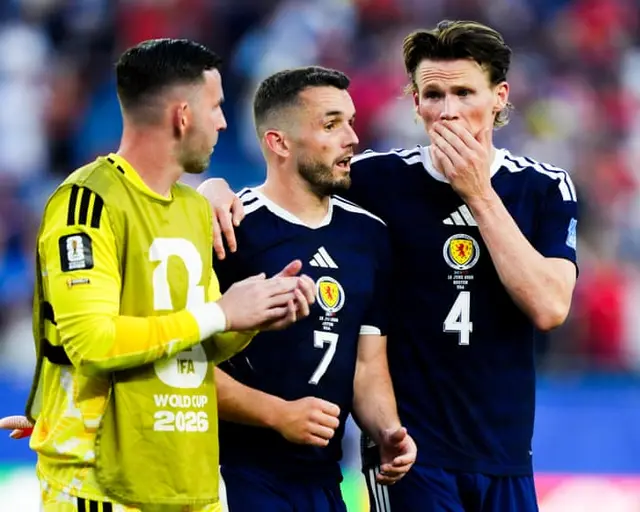
McGinn and McTominay involved in strong appeals Clarke questions if Diop should have been sent off Steve Clarke believes Scotland were unfortunate not to be awarded at least one penalty during their 1-0 defeat to Morocco. In separate incidents, John McGinn and Scott McTominay appealed vociferously for spot-kicks under challenges from Moroccan players. McGinn later insisted a Morocco defender Neil El Aynaoui “took me out”. While Clarke steered well clear of castigating the match officials, he clearly felt the decisions were borderline and suggested Morocco’s Issa Diop could have been red carded early in the game. The deciding goal arrived after just 70 seconds, with Scotland spirited in the second half. “Everyone when I did my television interviews was talking about the Scott McTominay one,” Clarke said. ‘That is the one I didn’t watch back. I thought the John McGinn one was 50/50. Some would give it and I think if the referee gives it, the VAR doesn’t overturn it. So I can only speak on that one.” Clarke volunteered opinion on Diop, who was booked for a foul on the Scotland striker Ché Adams. “I was a little but 50/50 as well on the Ché Adams [challenge], last man,” Clarke added. “He had a chance to go through one on one with the goalkeeper and is brought down. The referee chooses yellow. There is nothing we can do about it.” Assessing his own incident, McGinn said: “Sometimes that goes for you. If we got a couple of those penalty decisions for us, I don’t think VAR intervenes. Out the corner of my eye, I could see [the Morocco defender] charging in. I got first contact to the ball and he took me out. It’s a penalty kick for me. Sometimes you get them, sometimes you don’t. If it was given on the field, no chance it’s overturned. “Morocco have got away with one there. But we need to be better and create chances from open play, not rely on referee’s decisions.” Scotland’s attention will shortly turn to Wednesday and a game with Brazil in Miami which will determine whether they advance from the group stage for the first time ever. “I am proud of the players but obviously we are all devastated,” said Clarke. “The players will suffer a bit over the next 48 hours. They don’t like losing against anybody. “Right throughout the team, Morocco had a bit of class. But we gave it a good go. Morocco know they have been in a game tonight. We have shown we can compete at this level.” Clarke, who singled out Lewis Ferguson for praise for a second game in succession, allayed fears over the second-half injury sustained by Kieran Tierney. Scotland’s manager said Tierney had only suffered cramp before being replaced by Ben Gannon-Doak.

FIFA.com20 Jun 2026
US players agree with Zlatan Ibrahimovic that World Cup title is possible: ‘That’s our mindset’

World Cup News

US players agree with Zlatan Ibrahimovic that World Cup title is possible: ‘That’s our mindset’

US qualify for knockout stage after victory over Australia Former Sweden striker says Americans are contenders US men’s team’s last semi-final came in 1930 After two wins in two to start the World Cup, the US have gained a high-profile supporter: Zlatan Ibrahimovic. Asked on Fox’s postgame broadcast whether he thinks the co-hosts can win the World Cup, the Swede offered a simple answer: “Yes.” Asked about Ibrahimovic’s comments after Friday’s 2-0 win over Australia, US players were uniform in their response: Sure, why not? “I don’t think it’s ridiculous,” Chris Richards said. “We want to lift a trophy by the end of this.” His fellow defender, Auston Trusty, had similar feelings. “That’s our mindset,” Trusty said. “I don’t think you enter this tournament not to have that mindset. To have [Ibrahimovic] say that about us, that’s amazing. But I’m sure he knows as well, it’s game-by-game.” If the US do make it deep into the tournament – Friday’s win guaranteed their spot in the knockout stage – it will likely be due in no small part to the emergence of Alex Freeman. The 21-year-old defender, now at Villarreal after becoming one of the best young players in MLS with Orlando City, has been a revelation at this World Cup. Playing on the right side of a three-man backline, Freeman scored the second goal to seal Friday’s win – a goal that was initially ruled out for offside but was later given after a lengthy VAR review. “I think you dream of this moment,” said Freeman, the son of Super Bowl champion Antonio Freeman. “And for it to finally happen with such a support system to help you celebrate it makes is so much more special. When it was confirmed, I saw all my teammates running and I thought: ‘I’ve got to run away, they’re going to tackle me!’” Mauricio Pochettino said at his introductory press conference as US head coach that his goal is to win the World Cup with the US. He too had praise not just for Freeman, but the system that developed him. “The evolution is massive,” Pochettino said after Friday’s game. “He has potential to be one of the best players in his position in the world. He’s [a] humble guy, he has an amazing profile. He wants to learn. He always listens … you really enjoy being with him.” The best US finish at a men’s World Cup was third-place in the tournament’s first edition in 1930. Their best result in the modern era was a run to the quarter-finals in 2002.

FIFA.com20 Jun 2026
Socceroos crash back to earth after being humbled by superior USA | Jack Snape

World Cup News

Socceroos crash back to earth after being humbled by superior USA | Jack Snape

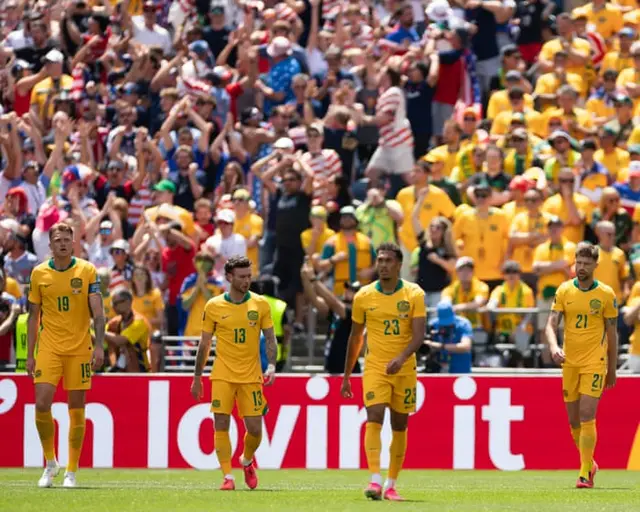
The swagger Australia offered in their opener against Turkey was gone and for much for the game in Seattle they looked second best and shellshocked Australia looked like a bunch of bananas in their all-yellow strip against the USA, and it is tempting to call this comprehensive 2-0 defeat a banana skin in the Socceroos’ World Cup campaign. In truth, however, this was less a slip up than a humbling, and the visitors proved ripe opposition as the hosts came and took what they wanted. After the celebrations against Turkey, and the optimism of the past week, this was a jarring correction for Australia and their 10,000-strong travelling fans. The Socceroos looked second best and shellshocked for most of this early afternoon fixture. The swagger they offered against Turkey appeared to be luggage lost somewhere between Vancouver, just a few hours’ drive to the north, and their training base in Oakland. Compared to the Socceroos’ opening match, this opposition was improved – seemingly winning every 50-50 contest, all the time faster and more physical – but at the same time this Australian team was one that was hard to recognise. Before kick-off, Nishan Velupillay was out on the field in slides familiarising himself with the imposing Seattle Stadium alongside Mo Touré when the team news landed. The Melbourne Victory forward was named a surprise starter, along with Mat Leckie from crosstown club Melbourne City. It was a selection that raised eyebrows. Out was Nestory Irankunda, star of the previous week’s clash against Turkey. He walked into the dressing room wearing dark sunglasses, making his mood difficult to interpret. The other goalscorer in that 2-0 win, Connor Metcalfe, was also moved to the bench. Coach Tony Popovic had been rewarded for his risk-taking in Vancouver. The same cannot be said against the USA. Leckie and Velupillay not only struggled to make an impact going forward, they were unable to protect the fullbacks behind them. Down Australia’s left, Weston McKennie was a constant menace, assisted by Sergiño Dest. The raids made even Jordy Bos, so comfortable last week against Turkey, look vulnerable. The fullback picked up a yellow card in a miserable first half, and was manhandled by the American right flank, with Alex Freeman also looking assured at full-back. When the half-time whistle went, Bos’s frustrations almost boiled over, as he argued with the Americans as he wandered off. Despite the Americans’ threat down their right, the opener came from the opposite side. A belated Socceroos press gave Antonee Robinson time to measure a pass to Folarin Balogun, who accelerated past Alessandro Circati. His square pass across the six-yard box was awkwardly toed into the net by an unfortunate Cameron Burgess. That was the trouble for Australia. Bos, Circati and Burgess were three who looked among the Socceroos’ most accomplished against Turkey. In Seattle, the Americans began the humiliation of the Socceroos from the top. The second goal may have been fortunate – a deflected shot wrong-footing Patrick Beach before the headed finish by Freeman – but it was no less than the USA deserved and came just before half-time. Popovic appeared to recognise the error of his ways with a triple substitution at half-time, including the introduction of both Irankunda and Metcalfe. Christian Volpato came on for his World Cup debut not long after, and soon had the Socceroos’ best chance. In an improved second half, Volpato – whose commitment to Australia has been questioned – appeared to show more fight than anyone, at one time urging the yellow stripe in the stands behind the goal for more noise to aid a comeback, however unlikely it appeared. Metcalfe and Irankunda were also involved heavily, the latter proving relentless for the American defence, as he went toe-to-toe with Crystal Palace defender Chris Richards on more than one occasion. The signs of life however came too little, too late, and proved to be ultimately too faint. A couple of decent shots saved well by American keeper Matt Freese and a Jason Geria effort blocked in a goalmouth scramble was as close as they came to a goal in the second half, even if the Australians enjoyed more of the ball and field position. The latter stages were hard to watch, as the game descended in a physical tit-for-tat with the result beyond doubt. Fortunately for the Socceroos, the thumping is not fatal. Yes, they gave up a golden opportunity to book their place in the round of 32, but they remain well-placed to progress through Group D. Those three points secured against Turkey will prove invaluable in their quest for a knockout berth, but they may now need to avoid defeat against Paraguay in San Francisco next week – depending on what happens later on Friday (Saturday AEST) in the group’s other match. The first tiebreaker in the group stage is head-to-head, if points are level. So while the Socceroos can no longer catch the Americans, and are guaranteed to leave their home base of San Francisco if they do progress, they remain a likely qualifier in either second or third position. Unless they can drastically improve on this performance in Seattle, however, the Socceroos may not be in North America for much longer.

FIFA.com19 Jun 2026
Elliot Anderson is England’s spirit animal – and is now indispensable

World Cup News

Elliot Anderson is England’s spirit animal – and is now indispensable

With Declan Rice nursing a knock, his midfield partner is the reliable rock to which team’s fate is inescapably yoked Elliot Anderson is running. It’s the 88th minute against Croatia, and the game is won, and the game is done, and this is the 60th game of his season and there are deeper challenges to come. But as long as the ball is loose, he’s going to chase it down: first Josip Sutalo and then Josko Gvardiol, a simple recycling of defensive possession rapidly mutating into an unpleasant ordeal. As the ball is worked across defence, Anderson single-handedly follows it all the way across the pitch, over to the far touchline, where he eventually forces a rushed pass and a turnover of possession. And in an opening win defined by mood swings and tectonic shifts, in a team savouring the wealth of options and contingencies at its disposal, it’s worth dwelling on just how quickly Anderson has become indispensable. Declan Rice is carrying a knock and looks a little short of gas. Harry Kane will almost certainly not have the legs to play eight full games plus extra time. The wingers, the centre-half pairing, the full-backs are not yet set in stone. Beyond Jordan Pickford, virtually every area of this team is operating in a kind of managed flux. In the midst of which Anderson has assumed the role of its spirit animal, its mathematical constant, its barometer, the reliable rock to which – for better and worse – England’s fate over the coming weeks will be inescapably yoked. In short, if you want to know how England are doing in the coming weeks, you basically just need to watch him. Central to Anderson’s role, paradoxically, is the fact that it is not always a central role. Indeed, if you look at his heat map from the Croatia game the most striking element was how much of it he spent in wide areas: linking play with the full-backs, creating overloads and triangles, playing the first-time long ball over the top that appears to be a specific and very deliberate tactic. In essence, it works like this: Reece James gets the ball on the right touchline. Draws the pressure from the opposing winger. Retreats towards his own goal, waits for Anderson to run towards him, and then plays a little sideways pass inside. Anderson then launches it first touch, rugby-style, into the right channel for one of the forward runners to chase. A simple move, but one that requires coordination, the physical strength to hold off the challenge, and a clean ball contact. Done right, it successfully provokes the opposition press, drags them out of position, forces them to turn and run. In the 36th minute, we got a glimpse of what happens when it’s not done right. Anderson fluffed his lofted pass, Croatia won back possession and a few seconds later Martin Baturina had equalised. But then, shortly after half-time, the same move worked to perfection: James inside to Anderson, Anderson first-time up the touchline, and with the Croatia defence scrambling Jude Bellingham converted beautifully. Even here there are caveats to offer. Anderson’s pass was almost intercepted by Gvardiol, and probably intended for Noni Madueke rather than Bellingham in any case. Clearly, Thomas Tuchel has drilled this move in advance against teams enterprising enough to press England high. But what happens against opponents who either do not press, or press better than Croatia, or who are wise to the tactic and lurk in ambush? And really, these are questions that strike at the broader theme of what Anderson’s function in this team should really be, how best to use a player who in terms of skill set may well be one of the complete young midfielders English football has ever seen at his age. Anderson can genuinely do it all: pass, tackle, screen, jockey, cross, shoot. He’s good in the air, strong in duels, delivers a mean set piece, will quite literally run all day. Is there a realistic role in this team that does not, in some way, sell him short? Curiously, as the game opened out in the second half we got an answer of sorts. Rice went off; first Bellingham and then James slotted in to replace him; Anderson moved over from the right side of midfield to the left. As a right-footer, the first-time ball over the top from Nico O’Reilly was no longer an option. But instead, he offered much more of an individual threat. He bombed on into the area. He pressed much higher than in the first half. Partly, of course, this was a shift dictated by the momentum of the game. But it was a reminder, if anyone ever needed it, that this is a midfielder with so many different tools to his game. It was interesting to watch an interview Anderson did with the BBC last month, in which he explained how his role has evolved since his days as a winger or No 10 at the Newcastle academy, and how he sees his role on the pitch now. “Six or eight, I really don’t care,” he said. “Getting on the ball and finding the attacking players, getting them the ball early in the pockets and letting them do their stuff.” This is, of course, why Tuchel adores him: the ability to take the ball, ride the challenge, move it on early and forwards. All the same, it is worth asking whether punting long balls up the channels is in fact the best use of him. In hotter conditions, against the weaker opponents who will sit back, and the stronger opponents who will try to dominate midfield, where poise and control of the ball will be critical, England will need to show different sides to their game, measure the risk and reward a little more judiciously. Ultimately, this comes down to an assertion of principle. Do you want to keep the ball in midfield, or get it out of there as quickly as possible? And in the deployment of Bellingham and James to replace Rice in the second half, the decision to leave Kobbie Mainoo on the bench and Adam Wharton at home, Tuchel has made his priorities subtly clear. He appears less concerned with midfield control than midfield mobility, as preoccupied with physical resilience as technical ability. Anderson can do it all. But sometimes being able to do it all can be a double-edged sword. The roads are littered with prodigious young midfielders who seemed destined to rule the world and eventually had to settle for being quite good: Eduardo Camavinga, Saúl Ñíguez, Rúben Neves. Even Gavi and Warren Zaïre-Emery, now 21 and 20, have already lived through at least one cycle of boom and bust, struggled to reconcile their developing game with the explosion of teenage hype they inspired. Anderson is 23, but a comparatively late developer with just two seasons of regular top-flight football and one major tournament game behind him. Already, Manchester City are circling and a nine-figure transfer feels inevitable. This is a player about to arrive in a very big way. And perhaps this is what makes him so compelling to watch right now. You know that on some level he must still be raw and fragile, and yet he never really looks it. You know that his importance is colossal, and yet he never seems fazed by it. You know at some point he will have to stop running. And yet, what if he never does?

FIFA.com19 Jun 2026

Who are Morocco's players to look out for against Scotland?

World Cup News

Who are Morocco's players to look out for against Scotland?

After beating Haiti in their opening game, Scotland face a step up in class against Morocco, who are unquestionably a rising force in world football. The Atlas Lions became the first African and first Arab nation to reach a World Cup semi-final in 2022 and have built on that momentum. They are ranked sixth in the world and showed that is no anomaly with an impressive display versus Brazil on Saturday, earning a deserved 1-1 draw against the five-time world champions. BBC Sport takes a look at five key players Scotland need to watch out for. Club: Lille Age: 18 Position: Midfielder Caps: 4 Goals: 0 The teenage playmaker only won his first cap shortly before this tournament but announced himself on the world stage with a midfield masterclass against Brazil. He combined effective defensive work and elegant ball-carrying with metronomic distribution, completing 60 of 66 passes and running rings around Casemiro, who was taken off at half-time. But the performance came as no surprise to head coach Mohamed Ouahbi, who said afterwards: "We knew perfectly well what kind of player he was, that's why we had so many meetings to get him to choose Morocco". Bouaddi was born in France to Moroccan parents and was playing for Les Bleus' under-21 side only three months ago. He switched allegiance last month. Though only 18, Bouaddi has already made 96 senior appearances for Lille. The 6ft 1in player is a prodigy in every sense. He took the equivalent of his A-levels a year ahead of his peers and is combining football with a degree in mathematics, reasoning that keeping his mind alert helps him "understand the game quicker". Club: PSV Eindhoven Age: 25 Position: Attacking midfielder/Forward Caps: 31 Goals: 10 Morocco had success against Brazil by deploying Saibari as a false nine – a ploy which paid off as he put his side ahead with an intelligent run into space and a nonchalant chip over Alisson. Whether or not he plays the same role against the Scots, Saibari is a major threat and arrived at this tournament as Eredivisie player of the year after a career-best 19 goals in all competitions in 2025-26. Though born in Spain, he moved to Belgium at an early age, spending time in the youth academies of several Belgian clubs before making his PSV debut in 2020. The 25-year-old was involved in a bizarre incident in January's Africa Cup of Nations final, when he and several Moroccan ball boys tried to prevent Senegal goalkeeper Edouard Mendy from retrieving a towel to dry his rain-soaked gloves. He later apologised to Mendy and was given a one-match ban, with another game suspended. Club: Al Hilal Age: 35 Position: Goalkeeper Caps: 91 Clean sheets: 52 Bounou made several important saves to preserve a point for his side against Brazil, in the process becoming his country's oldest player to feature at a Wo3rld Cup. Known as 'Bono', he played a key role in Morocco's run to the semi-finals in 2022, saving two penalties in the last-16 shootout win against Spain. He was awarded the prestigious Order of the Throne by King Mohammed VI for his heroics in Qatar. Bounou was born in Montreal but grew up in Casablanca and made his name during 11 seasons of club football in Spain. A two-time Europa League winner with Sevilla, the former Girona and Zaragoza goalkeeper joined Al-Hilal in Saudi Arabia in 2023-24. Diaz's perfectly weighted through ball for Saibari's opener on Saturday was arguably the pass of the tournament, bisecting Brazil's backline in a moment of individual brilliance. The 5ft 7in player made headlines around the world when he missed a casually-taken 'Panenka' penalty in the Africa Cup of Nations final against Senegal in January - although he had scored five goals in the first five games of the continental tournament. He was born in Malaga to a Spanish mother, while his father was born in Melilla - a Spanish city on the North African coast - into a Moroccan family. Diaz joined Manchester City as a 16-year-old in 2015 and made 16 appearances - earning a Premier League winner's medal in 2017-18 - before joining Real Madrid seven years ago. Club: Manchester United Age : 28 Position: Defence Caps: 45 Goals: 2 The Manchester United full-back has played in six different positions for club and country over the past two years, including an attacking midfield role, although he is most likely to start at left-back for the Teranga Lions. Mazraoui was a key member of the Morocco side that reached the World Cup semi-finals in 2022. After he was substituted in the last-four defeat to France, it emerged he had been suffering from inflamed heart tissue after contracting Covid-19 during the tournament. This article is the latest from BBC Sport's Ask Me Anything team. Everything you need to know about the World Cup

FIFA.com19 Jun 2026
Players are human beings and social media comments reach us. But the focus has to be on the pitch | Rodrygo

World Cup News

Players are human beings and social media comments reach us. But the focus has to be on the pitch | Rodrygo

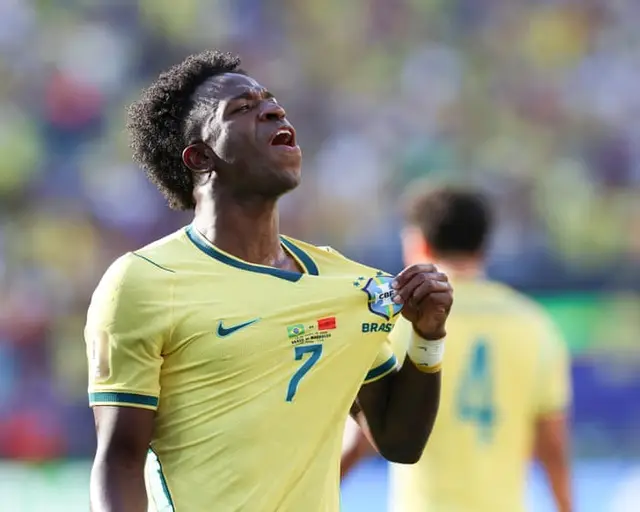
The pressure of wearing the Brazil shirt can be heavy but also creates a positive kind of responsibility Playing in a World Cup is a huge experience; when you’re with the national team, your entire focus is on the squad’s schedule – the hotel, the training centre, the stadium – basically, everything revolves around the matches. I lived that routine daily at the 2022 World Cup and realised the immense dedication the tournament demands. In this 2026 edition, as fate would have it and as I am still recovering from my injury, I’m discovering a different side of the World Cup: a World Cup of reunions, with countless events happening simultaneously across the cities and countries, creating opportunities for conversations and extraordinary experiences. Over the course of two afternoons in New York I ran into true legends, icons, and friends I’ve made through football. They were precious moments where I could listen, exchange ideas and receive support from stars such as Marcelo, Kaká, Paul Pogba and Zinedine Zidane. What started as a scheduled appearance for a shared sponsor turned into a casual, friendly chat from different generations united by the passion football ignites. We were right there, close to the fans. Five guys representing Brazil and France, greeted by hundreds of fans from all over the globe, all hoping for a brief moment of proximity, a photo, or a wave. And yes, I have idols too; I managed to get an autographed shirt from Zidane, my former coach and a giant in the history of the sport. Sharing that space in the centre of the event arena next to the Brooklyn Bridge, we talked about past experiences, the energy that spreads everywhere during the World Cup, and, of course, the matches that had already taken place. Naturally, everyone expects the best from the Brazilian national team, and in football “the best” means victory. But it is important to remember the opening draw against Morocco was the first step on the journey; Brazil fell behind in the game and securing a draw was important for the road ahead. The World Cup presents challenges unlike any other competition. Scenarios shift constantly, and almost nothing is set in stone. If things don’t go as planned in the first game, it doesn’t mean the rest will follow the same pattern. By the same token, a big win does not guarantee the next match will be any easier or that performance levels will remain consistent. It is a sprint-paced marathon with stages that feel independent of one another, creating opportunities for change throughout the journey that makes up the whole. There are eight decisive matches on the road to the title and, in the group stage, not every setback means that you are going home. A single team can be several different versions of itself over the course of the tournament – and that is one of the factors that makes the World Cup incomparable. When we are on the pitch for a World Cup match, our eyes and minds have one undisputed priority: to perform our best. We have done everything possible to arrive in the best possible physical, technical, tactical, and mental shape. Everyone there defends the team and the country with everything they can. Before and after matches, opponents are fellow professionals and friends. But once the game kicks off, everyone focuses on their job and gives their all to help the Seleção advance. You can’t predict the result, but you can guarantee dedication and the right attitude by leaving everything on the pitch. The pressure of wearing the Brazil shirt can be heavy but also creates a positive kind of responsibility. That pressure exists solely because of the greatness of our football, the titles we’ve won, and our historic standing in the sport. The fans’ mood often hinges on the result, which is only natural in a country so used to winning regularly. So, as a player you have to realise that a barrage of criticism isn’t the end of the world, just as a massive wave of praise doesn’t mean everything is sorted out and that you will win the tournament. It is crucial to distinguish facts and balanced analysis from comments born of raw emotion and frustration. Players aren’t immune to what is said on social media. I believe in using a filter: a process of separating what is relevant, what deserves a response or consideration from what is simply garbage, intended to cause hurt and completely detached from reality. A World Cup player’s daily routine involves dedicating a vast amount of time to the profession. Yet, the player is a human being who communicates – even if only online – with friends, family, professional contacts and fellow players. Consequently, social media comments can easily reach them through any of these channels. Among the messages received, there may be content intended to cause distress or trigger stress. A football player is a human being who can be affected by such photos, videos or comments – just like anyone else. We do not go out of our way to seek them out or read them; most players do not actively look for comments and have a support team that handles the filtering process. At times, though, the sheer volume means some of it reaches us. Then the focus must remain on performance on the pitch. It is up to us to ensure that our on-field performance is what truly speaks loudest.

FIFA.com19 Jun 2026
Lionel Messi’s family ask for ‘humanity’ as his father receives medical treatment

World Cup News

Lionel Messi’s family ask for ‘humanity’ as his father receives medical treatment

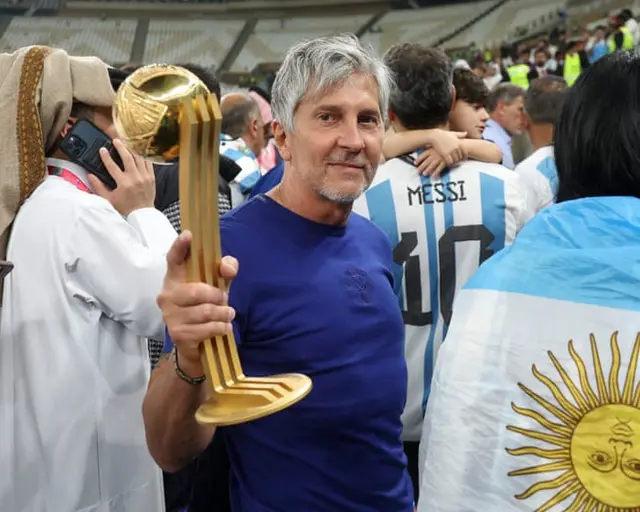
Jorge Messi, 68, ‘recovering and progressing favourably’ ‘At times like these, we ask for responsibility,’ says family Lionel Messi’s father is undergoing medical treatment for an undisclosed illness and his family asked the media for “humanity” on Thursday amid rumours about Jorge Messi’s health while his son competes at the World Cup. “Jorge is going through a health situation,” the Messi family said in a statement. The family did not specify the illness that the 68-year-old Jorge Messi is suffering from. “He is currently under medical observation, recovering and progressing favourably within his current condition,” the statement said. Messi said after Argentina’s 3-0 victory over Algeria in the team’s opening World Cup match that he was going through a difficult personal situation. He did not elaborate. The family statement, released by Messi’s media office, came on the same day that reports of Jorge Messi’s death circulated in Argentina. “At times like these, we ask for responsibility, prudence and humanity,” the family said. “A person’s health and the peace of mind of their loved ones should not be the subject of speculation or irresponsible media interest.” The statement said any further developments would be communicated by the family.

FIFA.com18 Jun 2026
Barry’s blunt England home truths give TV viewers a glimpse of dressing-room vibe

World Cup News

Barry’s blunt England home truths give TV viewers a glimpse of dressing-room vibe

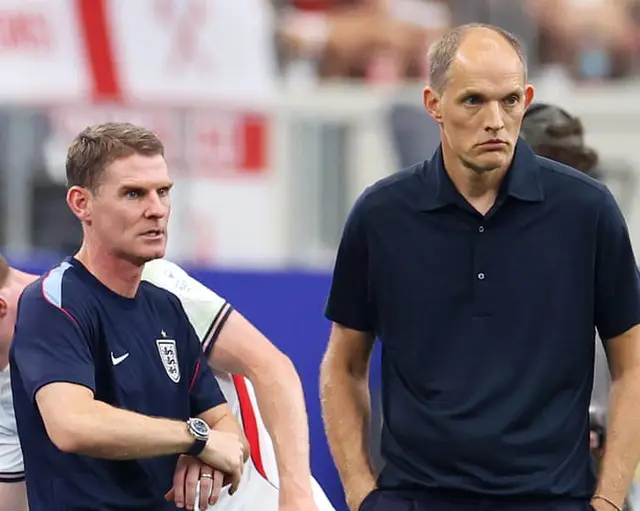
Assistant manager’s half-time interview on ITV offered an unexpectedly honest insight into the in-game mood in the camp England’s players have been effusive in their praise for Thomas Tuchel’s half-time talk, but the half-time talk that ITV viewers in the UK got was very different, in the form of a refreshingly frank interview with his assistant, Anthony Barry. In-game interviews of staff are another novel broadcasting feature of this World Cup, like the innovative use of refcam, but, rather than fob off a reporter with some meaningless platitudes about the lads giving it 110%, Barry gave an honest assessment of the team’s failings up to that point. What Barry served up was not the usual scripted optimism but a raw autopsy of England’s opening-half paralysis, pinpointing that the team were suffering from an excess of nervous energy in what he described as a “complicated and confusing” 45 minutes. He criticised the mentality of the players for falling into “fearful patterns”, and making the wrong decisions – as he put it, “Playing longer when we should play short, playing short when we should play long, and not playing through the gaps, not allowing us to accelerate our game the way we wanted to.” Barry was honest enough to admit that even the gift of an early penalty had not settled the team. Saying that nervous energy was “maybe expected in the opening game of a World Cup”, he nevertheless lamented that the early goal did not free the team up “to play more like ourselves”. He didn’t offer a smile for the cameras. He finished with the blunt assessment: “We conceded the second goal late on, and now we have to speak about that at half-time,” leaving viewers with the distinct impression of a man heading down the tunnel with a clipboard full of problems to solve. During his playing days as a midfielder, Barry knocked around the lower leagues with spells at Yeovil Town, Chester City, Fleetwood Town and Forest Green Rovers, but if he isn’t a particularly familiar face to TV viewers – yet – he is very much a familiar face to Tuchel. After launching his coaching career in 2015 and working with Wigan, Barry joined Chelsea in 2020, where he served under Tuchel before following the manager to Bayern Munich in 2023. Alongside these club roles, Barry built an impressive international resume assisting the Republic of Ireland, Belgium and Portugal, before stepping in to the England assistant manager role. His on-screen diagnosis of an England performance that delivered an inspiring result but which was far from flawless mirrored Tuchel’s assessment after the final whistle. The German said “sometimes you want it too much and you overthink it” before noting that there were far too many backward passes for his liking. “I told them to calm down,” Tuchel said of his half-time talk. “To calm down, calm their nerves. And encourage them to do it our way.” Armchair viewers of England’s World Cup campaign look as if they could get to enjoy an unprecedented insight into what the management team are about to tell the players in dressing room.

FIFA.com18 Jun 2026
What's going on with stoppage time at the World Cup?

World Cup News

What's going on with stoppage time at the World Cup?

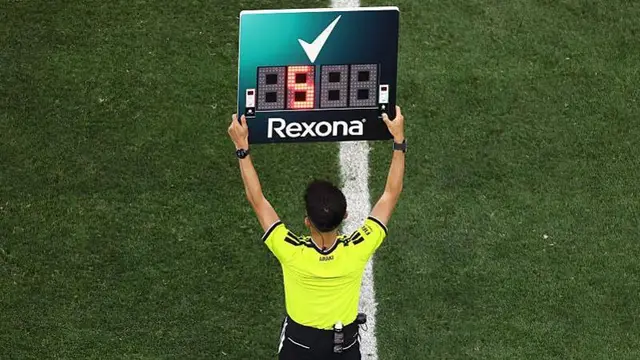
Even factoring in the three minutes for the hydration break, the added time has been surprisingly low - sometimes only five or six minutes going up on the board. In Qatar, matches were lasting on average more than 100 minutes. But at this tournament - ignoring the time for hydration breaks - matches are clocking up 96 minutes. "The goal we want to achieve is to increase the tempo of the match," Collina said ahead of the finals. Collina introduced a number of measures, such as putting five-second countdowns on goal-kicks and throw-ins. Tactics were introduced to try to limit how teams would break up games, by placing a 10-second clock on substitutions and forcing players who require treatment to stay off the field for one minute. The changes have, so far, been well received in the United States, Mexico and Canada. But do the stats show that Collina's masterplan is actually working? Collina's philosophy was pretty simple. If you stop players taking too long over the mundane tasks, that time could be given back to the game without adding it on at the end. "The objective is to eliminate, as much as possible, the disruption of the tempo of the match," Collina explained. This was never supposed to be about awarding loads of corners, or being strict on substitutions. The aim was to change behaviour or, as Collina put it, "players will respect the limit". Only one goal-kick has been changed to a corner, when DR Congo took too long during their 1-1 draw with Portugal on Wednesday. There have been no cases of a substitute not being allowed to enter the pitch because the substituted player has taken too long to leave the field. So you have to forget about the old way of doing things, like adding 30 seconds for each sub. Now players leave the field within 10 seconds. For that reason, you might see substitutions take place in stoppage time and no more additional time added. It at least feels like there have been fewer stoppages for injuries, while referees have been quick to tell some players they must go off even if they don't have the physio on. The threat of playing with 10 men for at least a minute appears to be working as a deterrent. The video assistant referee checking corners does not seem to have impacted games, though Fifa has many more video match officials and enhanced technology which would not be available to the domestic leagues. With goalkeeper tactical time-outs banned too, games appear to have a had a better flow to them. VAR, timewasting and subs - World Cup law changes explained Previously, the target was to get to 60 minutes, but that has proved very difficult to achieve. Even in Qatar, with all that added time, Fifa could only get up to 58:03 of actual football. First off, the automatic six minutes applied for hydration breaks has been removed. This is effectively not part of a regular match time. The average length of matches at this World Cup is 96:08 - just over six minutes additional across both halves. In Qatar, it was 102 minutes 43 seconds for the first round of games - more than double the stoppage time. Yet in Russia it was 96 minutes 54 seconds, only slightly higher that this summer's edition. All three tournaments had four on-field VAR reviews. So, games are shorter at this World Cup than at either of the previous two. But is this strategy backed up by the average ball-in-play time? In Russia, it was 54 minutes 50 seconds. With so much stoppage time, it should be no surprise that went up to 58 minutes eight seconds in Qatar There has been a small reduction to 57 minutes 22 seconds at this World Cup. Does that mean it has not quite worked. The best way to truly judge it might be to look at the relative ball-in-play time. What percentage of the length of a match is football being played? That is where we see this World Cup is the most effective - 59.38% of the match time has seen the ball in play. Qatar, with the games being so long, was below this at 56.86% and Russia at 56.25%. It is early days for Collina's masterplan, but so far it appears to be working. Whether the same impact can last 380 Premier League matches might be more of a challenge. Play BBC Sport's new World Cup predictor game Everything you need to know about the World Cup

FIFA.com18 Jun 2026
Marsch bullish before Qatar match as Canada prepare to welcome back Alphonso Davies

World Cup News

Marsch bullish before Qatar match as Canada prepare to welcome back Alphonso Davies

Bayern Munich star set to return for co-hosts Teams set to meet in Vancouver for crucial match Asked how he’s handling the scrutiny of coaching a World Cup co-host – where even apparently insignificant comments can end up in the headlines – Jesse Marsch was quick to flash a grin. “Maybe we’ll get through this one without creating news cycles,” Marsch quipped a day before his Canada team welcome Qatar to Vancouver for a pivotal Group B clash. The teams are level on one point each after the first round of games, leaving the group wide open. Marsch and midfielder Ismaël Koné refused to look beyond Thursday’s match though. Koné pushed back against one reporter’s insinuation that the players are more anonymous in Vancouver than in Toronto, the site of their draw against Bosnia and Herzegovina last week. But training in British Columbia since Monday has allowed Marsch and his men to ease the pressure of being co-hosts. “The bigger the event, there’s going to be more distractions,” Marsch said, “so we’ve tried to minimize that. But at the same time, it’s really difficult to prepare for everything, the madness that surrounds … a World Cup.” Perhaps one injury update has allowed Marsch to breathe a little easier. Alphonso Davies has trained this week and is available to make his debut at this World Cup, at the stadium where he started his club career. Davies, a regular starter at Bayern Munich when healthy, is Canada’s best player. He is also the face of the program, cropping up (along with Jonathan David) whenever Canadian broadcasts hit a commercial break. On the field, Davies will help Canada’s build-up play. He offers an outlet out wide, freeing up space for Koné and Stephen Eustáquio to pull the strings in the middle of the park. While that points to a more proactive approach than Canada managed against Bosnia and Herzegovina, Koné emphasized that the result matters far more than the style – especially for a nation still searching for its first men’s World Cup win. “I think there will be a lot of people who are proud and who will support us,” Koné said. “So we’ll want to make a good game, but first of all, it’s to earn three points. We’re in a tournament, every point is important. So we’re going to go get them. If it goes well, we can try to have fun, but most importantly, for 90 minutes, we will try to make sure we get out of this match with victory.” While they have never faced Canada, Qatar have become familiar to Concacaf nations after participating in the 2021 and 2023 installments of the Gold Cup. That means they’ll be used to the travel across North America – they played their World Cup opener in the San Francisco Bay Area – and won’t be afraid of the physical style that’s often synonymous with Concacaf soccer. Marsch offered plenty of respect to Qatar. Perhaps he was mindful of the media storm he set off last week when he remarked on US players’ attitudes to their national anthem. “Look, whether it’s been coaching in the Premier League, the Champions League, the different countries I’ve worked in, the one thing you get with me is I kind of just answer questions with what I think,” Marsch admitted. “That’s not normal. I understand that in this business, a lot of people watch their words a lot more carefully. I choose to think about the teams that I coach and the players that I work with, and try to represent everything that we want to be at all times.” In general, Marsch said the atmosphere at camp in Vancouver has been “calmer” than the build-up to Canada’s opener. With a historic first point secured, all focus is now on the team reaching the knockout round for the first time at a men’s World Cup. With Davies back and others like Koné and David proven game-changers at this level, all that’s left is the work on the field – with an assist from tens of thousands of supporters. “I know this is a football town, Vancouver,” Marsch said. “We’ve seen it many times before, and we expect this place to be rocking, man. I mean, red everywhere, rocking, supporting these guys, supporting their players, their team, their country. These guys will be ready to perform, and we want to make sure that Qatar feels not just the team but the crowd. So show up, be loud, use the echo in the stadium, and make sure that we have a 12th man.”

FIFA.com18 Jun 2026
From frustration to party time: Mexico ready for lift-off after steady start

World Cup News

From frustration to party time: Mexico ready for lift-off after steady start

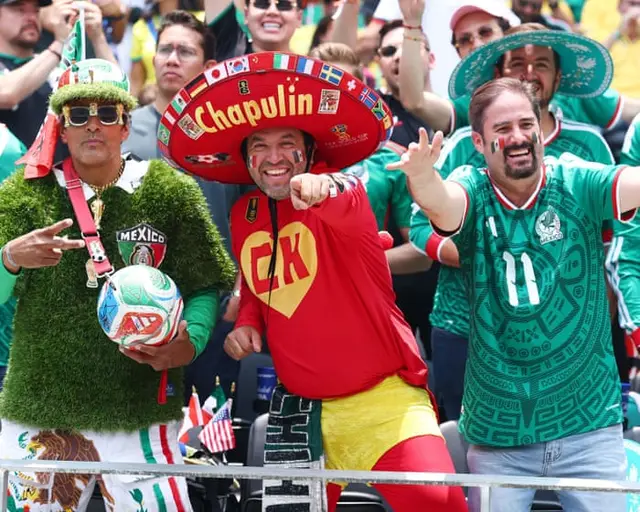
The opening night against South Africa was met with mixed feelings but Thursday night’s South Korea clash promises to spark feelgood factor The mood in Mexico City last Thursday night, after a 2-0 win over South Africa in the opening game of the World Cup, was gleeful. Fans crowded around the Angel of Independence, and Calle Río Sena was not merely rammed but carried the smell of urine and spilled beer that tends to characterise mass celebrations. The big roundabout at Insurgentes, where the night before a Beatles tribute act had entertained students, was packed with green shirts. And yet there was a sense that something was missing. This was in Roma Norte, a relatively wealthy area an hour or so north of the Azteca, and it was notable how many of the shirts seemed box-fresh. A significant proportion of those there were Mexicans who lived in the US. A persistent theme over the first few days of the tournament is how the fans who regularly go to Liga MX games have been priced out. A few minutes from the stadium, in a simple bar just off Avenida del Imán, where the tables were upturned barrels and a sweating teenager grilled burritos on a hot plate, the mood was slightly more ambivalent. Couples danced in the street outside, and there was a general sense of relief. After a group-stage exit in 2022, Mexico can at least now be relatively sure of making the last 32. And there was delight for Raúl Jiménez who, in his fourth World Cup, finally scored his first goal. But there were also two gripes. Firstly, and probably most significantly, that it felt an overly Mexican event. For a World Cup, there was not much evidence of the world. Yellow shirts in the stadium were notable for their paucity – which, given cost, perhaps is not surprising. One South African family, who lived in the US, described paying $1,000 each for their tickets. A number of Mexicans have spoken over the past few days of wishing they could have hosted Scotland or the Netherlands, or that Ireland had qualified. There is a desire for that mixing of fan groups that represents the World Cup at its best. Colombia have since begun to offer at least some of that in Mexico City as their fans arrive for the game against Uzbekistan. The big hope, though, is for Thursday night in Guadalajara, where Mexico face South Korea. Fans of the two countries have shared a warm relationship since the 2018 World Cup, when South Korea’s unexpected 2-0 victory over Germany in their final group game put Mexico into the last 16. Amid the celebrations in Mexico City, South Korea’s ambassador was carried shoulder-high along the street in front of the embassy as local fans chanted, “ ¡Coreano, hermano, ya eres mexicano ! ” – “Korean, brother, you are Mexican now!” The chant has been resurrected in Guadalajara, where South Korea beat Czechia 2-1 in their first group game. When a group of Korean fans visited the wrestling, the arena DJ played Gangnam Style to welcome them. Mexican social media has been flooded with videos of Guadalajarans and Koreans performing PSY’s horse dance together. The other concern surrounds how Mexico played. Their early dominance against a weirdly passive South Africa perhaps created unjustified expectation, but in the 17 minutes between Sphephelo Sithole’s red card and the second goal there was booing from the stands. It was not universal, by any means, but it was discernible, stemming from a longer-term frustration at Javier Aguirre’s perceived negativity. One change will be forced on Aguirre with the captain César Montes suspended after his late red card in the opener. Edson Álvarez, who spent last season on loan at Fenerbahce from West Ham, looks likely to replace him in the heart of the back four. But there could be two other changes, with Jorge Sánchez seemingly set to come in for Israel Reyes at right-back and the 17-year-old Gil Mora, who came off the bench against South Africa, perhaps replacing Brian Gutiérrez at the front of the midfield. A final training session in Mexico City on grass that, at Aguirre’s insistence, replicates the turf in Guadalajara was interrupted by a storm, meaning the squad was delayed in setting off for the flight to Guadalajara on Tuesday. About a dozen fans turned out to see them off. One of them, María Isabel Castro, clutched a homemade sign reading: “Effort and courage, always forward, may God always watch over and protect you.” She felt Mexico had been insufficiently “brave” against South Africa and was frustrated that Aguirre had insisted on closed training, accusing him of shutting out fans who cannot afford tickets. Much of the buildup to the opening game centred on protests from a wide cross-section of society, from teachers to retired judges to the families of Mexico’s 134,000 disappeared, and the possible disruption that might cause, and there was also anxiety about how Mexico might perform. The buildup to their second game, though, has tended to focus on the party most seem to be expecting in Guadalajara. Working from home has been mandated, and schools closed in both Mexico City and Guadalajara. It feels as though for many in Mexico, last Thursday was a ceremonial occasion and this Thursday is when the World Cup really begins.

FIFA.com18 Jun 2026
England v Croatia: World Cup 2026 – live

World Cup News

England v Croatia: World Cup 2026 – live

⚽️ Kick-off: 3pm local time/4pm EDT/9pm BST/6am AEST ⚽️ Player guide | Bracketology | Golden Boot | Email Scott It’s day seven of the 2026 World Cup, and finally England are on their way. They are Tom’s 26. Hear the roar, of the red, white and … ah who remembers that cheesy old song anyway? Point is, after an interminable wait, England are at long last getting down to business. Whether they’d have hand-picked Croatia as their first opponents is a moot point. On the one hand, England are a young and vibrant team, the sap rising, while most of Croatia’s first choice are in their 30s and their captain and talisman Luka Modric is now into his fifth decade. But on the other, this is a team that reached the final in 2018 and the semis last time round, and all of that Croatian experience has got to count for something. Continue reading...

FIFA.com17 Jun 2026