


AccaMate logo
FIFA World Cup 2026 logo

FIFA World Cup

2026 — The Tournament Of A Lifetime

11 June – 19 July 2026

Host nations

Canada flagCanada
Mexico flagMexico
USA flagUSA

Countdown to World Cup

--Days
:
--Hrs
:
--Mins
:
--Secs

World Cup News

The latest stories, squad announcements, build-up coverage and tournament analysis — direct from FIFA.

Scotland bid to exorcise World Cup ghosts by breaking group stage barrier

World Cup News

Scotland bid to exorcise World Cup ghosts by breaking group stage barrier

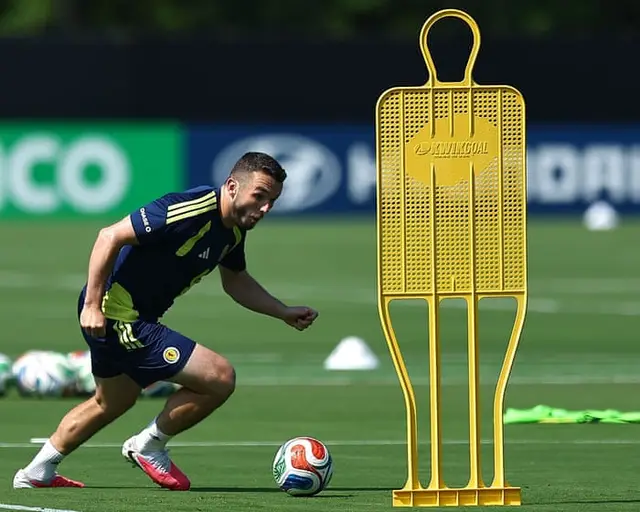
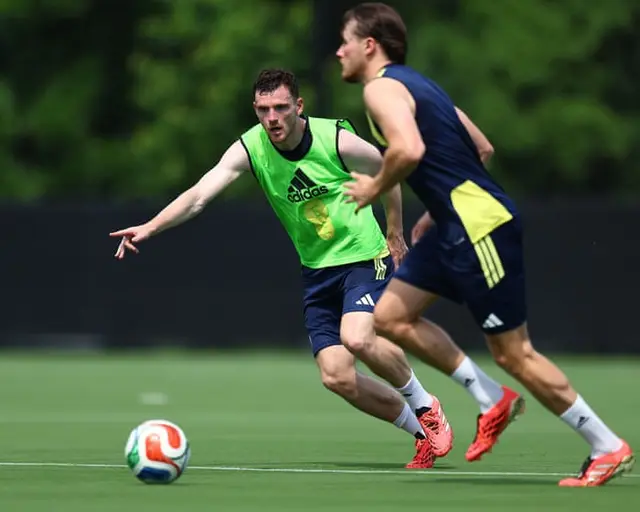
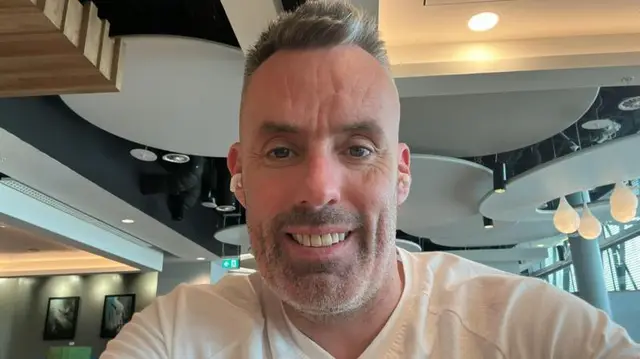
Steve Clarke’s team start against Haiti in Foxborough with growing optimism of ending their pattern of failure on the biggest stage It is not only ghosts from Costa Rica, Peru, Iran or Zaire that haunt Scotland as they prepare for a long-awaited World Cup return. Instead, there is a broader pattern of failure that Steve Clarke and his class of 2026 need to extricate the nation from. From 23 games on football’s biggest stage, the Scots have won only four times. The expansion of the World Cup should assist them, a team who now and correctly regard merely qualifying for major tournaments as insufficient. Scotland were unbeaten in 1974 yet took an early path home from West Germany. More than 50 years later, a comfortable win over Haiti should be enough to seal progression to the last 32. It is impossible to shake the notion that Scotland’s World Cup fate is dependent on game one in Boston against a side who lack nothing in national cause. Haiti’s pace and physicality will cause some tartan tremors. Nonetheless, taking on the 83rd-ranked team in the world with history-making on the line is an appetising deal. The past is significant in assessing how Scotland might handle the future. It will barely matter to Andy Robertson, John McGinn and Scott McTominay that 16 June 1990 and a 2-1 success over Sweden marks the last time Scotland tasted World Cup victory, but scars from Euro 2024 are still visible. Scotland landed in Germany adamant lessons had been learned from the previous tournament staging, when tanks were emptied during a draw at Wembley and not replenished by the time Croatia swaggered towards a win at Hampden Park. Rather than display progression, Scotland froze; an opening game thrashing by Germany preceded a decent draw against Switzerland before Clarke and his team exited in meek fashion at the hands of Hungary. In recent days Clarke has dropped his stoical approach. He pined for the World Cup as a player but never took the call. Clarke encountered stress as the European Championships of 2021 and 2024 proved anticlimactic. The manager’s sunny disposition will remain if Haiti are vanquished. Falling short, in what would deliver a grim glance at World Cups of old, will unleash ferocious criticism of Scotland’s manager from way beyond Massachusetts. Now is the time for Scotland to meet huge expectation and move discussion on from the spine-tingling November occasion when qualification was sealed with the 4-2 dismissal of Denmark. “We had that amazing night six months ago but that is gone,” says Kenny McLean, who scored Scotland’s fourth goal from the halfway line. “We are here now and we need to focus on the here and now. We know how special this can be for us. We know we are in a good place to create more memories for us and for the country and our families. “We know it is all about what we do and we think we have everything in place to be as good as we can be and create history. We know that fans are flooding into the country and we know the excitement is there.” Or as a Boston radio station put it on Friday morning: Scots have flooded their city with smiles, kilts and bagpipes. Grim results from the past should not disguise the fact any World Cup is a better place with Scotland in it. Scots are, however, expected to be outnumbered by fans of all three of their Group C opponents. Morocco and Brazil lie in wait post-Haiti. Scotland’s relationship with the World Cup requires counselling. The country opted not to feature in the 1950 edition, when apparently in a huff over losing a home international to England. In 1954 Scotland arrived in Switzerland with only 13 players and little by way of organisation. “We didn’t even have Scotland tracksuits,” said Willie Fernie, part of that squad, afterwards. “We had to bring our own training gear. And what a peculiar lot we looked among the world’s best, with the green of Celtic and the white of Preston and the blue of Dundee contrasting with the beautifully turned out teams of Europe and South America. We looked like liquorice allsorts.” Uruguay duly trounced Scotland 7-0. There was ignorance and arrogance among Scots back then. The same applied in 1990, when Scotland fell to an embarrassing defeat to Costa Rica. Eight years later Scotland slumped to defeat by Morocco in Saint-Étienne and departed the World Cup scene for almost three decades. There is cause for optimism now. Scotland have enjoyed five-star facilities at their training base in North Carolina. They will be armed with information on Haiti, a dangerous but hardly elite opponent. Scotland’s players speak regularly of lingering anger from Germany two years ago, which, it is reasonable to think, will incentivise them in the United States. “There are no excuses,” says McGinn. “We have to give everyone involved huge credit. They’ve put a lot of effort in. We’ve had the luxury of not having a playoff and had time to analyse where is best for us to be successful. We have come to a world-class facility and we have so much to help make us better. Credit has got to go to the manager and the staff. It’s a very professional environment.” It is also one including match winners, McTominay chief among them, with his post-Manchester United career ascent such that a prominent World Cup role feels appropriate. Scotland should not be expected to beat Morocco. Brazil are, well, Brazil. The mission for Clarke is to ensure Scotland are playing with house money after game one. They have to break their own tournament mould and relish the position of favourites. The reward for that is bigger than ever.
FIFA.com12 Jun 2026
Scotland played Traitors to give players voice before World Cup opener, says Robertson

World Cup News

Scotland played Traitors to give players voice before World Cup opener, says Robertson

Captain said game helped pass time in training camp Scotland play 83rd-ranked Haiti on Saturday in Boston Andy Robertson has revealed an unorthodox way Scotland have prepared for their World Cup return, with the captain organising a game of Traitors among the squad during their buildup camp in the United States. Scotland’s meeting with Haiti in Boston is their first World Cup game since 1998. Much has been made of Scotland’s togetherness in the lead up to this tournament. Robertson did not explain who among his teammates was a faithful and who a traitor, but did explain why the game was introduced. “It was something we had done before and decided to do again because we can spend a lot of time in our rooms or on our own,” the 32-year-old said. “It is not easy being away from your family, your kids. It was something to try and get people out of their rooms, give quieter people a voice and give newer players a voice. So those were the ideas behind it. “Whether it has worked or not, I am not sure, but we certainly enjoyed it. That was last week, that is what took up our time after training was done. It is just about trying different ways of making time pass quickly because we knew these two weeks would probably drag. You just want the first game to come. So that, along with other things, helped to just quicken the time. It hasn’t felt too long that we have been away.” Scotland’s preparations for Haiti have been boosted by Scott McTominay’s availability. The midfielder sat out training on Thursday due to a stomach complaint but returned to the field on Friday, with Steve Clarke insisting the Napoli midfielder is in “perfect” condition. The manager, however, moved away from the sense of McTominay being a talisman within his squad. “I think I have 26 superstars here,” Clarke said. “To try and put so much on to one person is not fair. Everything over the last seven years has been the squad, the team, everyone being together and playing their part at certain times. We are delighted with Scott’s abilities and what he brings to the team but another 15 will have to do the same if we are going to have a positive tournament.” Clarke again urged caution in respect of judging Haiti, the 83rd-ranked team in the world. “It is important we respect the opposition,” said the 62-year-old. “We have watched Haiti very closely over the last six months, since the draw was made. We respect their abilities on the pitch. “Since they qualified they have improved the squad by bringing players in that have made them better. We think we know how they are going to play but obviously any team can become different. They have very dynamic players, especially the attacking players, so we have to be careful.”

FIFA.com12 Jun 2026
Scotland fan in race to make kick-off in Boston after visa u-turn

World Cup News

Scotland fan in race to make kick-off in Boston after visa u-turn

ShareSaveAdd as preferred on GooglePaul O'HareBBC ScotlandA desperate Scotland supporter is on a race against time to reach Boston after his US visa was approved on the eve of Scotland's World Cup opening match. Kenny Smith from Inverness was one of the many fans who saw their their Esta travel permits withdrawn without explanation last week. But after his travel was approved at the US embassy in London on Friday morning, airport delays caused him to narrowly miss his connecting flight in Dublin. He will spend the night there and hopes to arrive in Boston at 14:45 EST on Saturday, just hours before kick-off at 21:00 (02:00 BST). "Now it is mission critical," he said. Smith, who is lead singer with folk rock band Torridon, described the turn of events as "unbelievable". "It took ages to get the bags off. I missed my check-in by 15 minutes," he said. "I am booked on tomorrow and due to arrive in Boston around 14:45." Smith, who joined the US embassy queue at 07:30, told BBC Scotland News there were several Scotland fans lined up. At the desk the official behind the glass who approved his visa said: "I am so sorry you had to go through this." Smith said: "I could have cried - and I did later. I said 'I could cuddle you just now'. "He said a fist bump would do so we fist bumped on the screen and off I went. "I have never had a feeling like it in my life. I am going to Boston." Smith said the "rollercoaster" experience since his visa was revoked last week had given him chest pains. The security firm boss said he was failed by the system but finally got a result thanks to the people, including politicians and fellow fans, who rallied to his cause. Smith said: "I can't keep track of the messages. It has been absolutely incredible." He hopes other Scotland fans in the same situation manage to get the green light to travel to the US, which is co-hosting the tournament with Canada and Mexico. Smith has been following Scotland home and away since he was 16. He was too young to attend the 1998 World Cup in France and vowed he would be at the next one. But he never imagined it would be almost three decades later. Scotland will face Haiti on the opening match in the Boston Stadium in Foxborough before taking on Morocco at the venue at 23:00 BST next Friday. The final group match in Miami - which kicks off at 23:00 on 24 June - will pit the national side against five-time winners Brazil. Earlier this week a Scotland football fan told BBC Scotland News how he found out an hour before flying that his travel permit had been revoked. Michael Wright ended up having to send his brother through the security gates at Manchester Airport on his own when his visa status switched to "travel not authorised". Other members of the Tartan Army previously told how they could lose out on thousands of pounds in travel costs due to the ESTA changes. In order to travel to America, applicants must complete a form, pay a fee, and receive approval before travel. An approved Esta is usually valid for two years and allows multiple short visits. UK citizens with certain criminal convictions or immigration issues are usually not eligible. In December, the White House said it wanted to make social media checks part of the process of applying for the permissions. Anyone who does not qualify for an Esta has to apply for a US visa instead, but this can be a lengthy progress.

FIFA.com12 Jun 2026
World Cup refcam offers new perspective to hint at future of football broadcasting

World Cup News

World Cup refcam offers new perspective to hint at future of football broadcasting

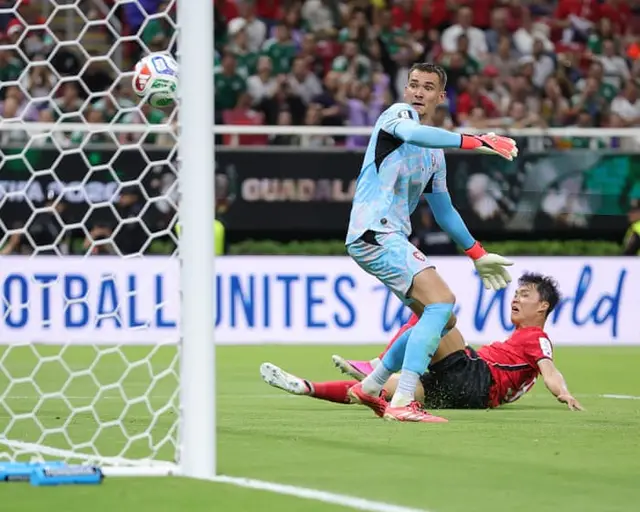
Usage in opening matches focused on replays of goals from a unique angle, offering the viewer greater depth to watch from home Not all of Fifa’s innovations at this men’s World Cup have been an instant hit with fans. But amid the clutter of the opening day, one success did seem to emerge – the new and improved refcam view. As part of their matchday equipment a small, high-definition “stabilised” camera is attached to the referee’s headset. Before the tournament, the Italian veteran referee Pierluigi Collina, chair of Fifa’s referees committee, said: “We think that it is a good chance to offer the viewers a new experience … from an angle of vision which was never offered before.” The Raúl Jiménez goal for Mexico against South Africa was shown from the perspective of Wilton Sampaio having to keep up with the pace of the move by these elite‑level athletes, and rapidly follow a beautiful cross in, emphasising how much of the action at a moment such as that is going on behind him or outside his peripheral vision. Replays of near misses – such as Mexico hitting the post near the end of the first half at the Azteca – bring home how close referees have to stay to the action, and really emphasise the fine margins at play. Ladislav Krejci’s opener for Czechia, as seen from refcam, showed just how much visually the referee Amin Omar had to take in, as players converged on the ball at the edge of the six-yard box and the officials made a snap judgment on whether a player in an offside position was impeding the goalkeeper Kim Seung-gyu’s view. Of course, VAR is lurking in the background, but the refcam demonstrates just how fast the game is played at the top level in a way that a view from a higher‑angle camera, or even sitting in the stands, doesn’t necessarily fully convey. Whether this newfound perspective will inspire television audiences to feel a sudden wave of benevolence towards the immense pressure officials face, remains to be seen – we are yet to have a howling officiating error, but with 102 more games to go in this format the chances of there not being one along the way seem pretty slim. What is clear, though, is that this is yet another way that the presentation of the beautiful game on television is taking its cue from the video games industry. Ironically, given the split between Fifa and EA Sports over the long‑running football simulation series, the governing body’s graphic and interactive designers for the 2026 World Cup are very much reading from a gaming script. The glossy opening lineup graphics featuring digitised players posing in hyper-real montages and data-heavy overlays that sweep across the screen are nothing if not reminiscent of the loading screens and heads-up display menus in games. And first-person perspective is the way millions of players experience games such as Fortnite and Call of Duty. The refcam isn’t perfect – the stabilisation technology has still got some mileage for improvements for sure – but it is, so far, an interesting new way for armchair fans to experience what it is like to be right in the centre of the action on one of the world’s largest stages. Among all of Fifa’s recent misfires, it might have just given us the future of football broadcasting.

FIFA.com12 Jun 2026
The World Cup is a chance for non-sports fans like me to embrace the beautifully inconsequential game | Myke Bartlett

World Cup News

The World Cup is a chance for non-sports fans like me to embrace the beautifully inconsequential game | Myke Bartlett

What joy it is to invest deeply into how well a nation you’ve never heard of moves a ball around a field If you’re not a football fan, it’s possible your life online has suddenly become quite alienating. Friends who may once have seemed sensible, sensitive, even artistic, have been inexplicably converted into people who name-drop wingers and centre backs and post about staying up late to watch Côte d’Ivoire play Ecuador. I was once like you. How I mocked grown men – and occasionally women – on TV panel shows, discussing football like it mattered. Talking about sport with the same intensity philosophers might debate existence (or Star Wars fans the latest film). Having unexpectedly sporty children has changed me. I understand now the appeal and importance of sport is that it doesn’t matter. Sport is something into which we can invest our most intense passion and emotion, in 90-minute instalments, without it having any real effect on our broader lives. In that light, the World Cup has arrived at just the right time. As the news cycle doom-spirals us all into oblivion, what a joy it is to be consumed by something trivial for a few weeks. So let’s put aside our usual tribalism and invest deeply in how well a nation we’ve never heard of can move a 23cm ball from one end of a field to the other, without drifting offside. If only every international conflict could be resolved so quickly and entertainingly. You may worry you don’t know where to start. The truth is, it’s not really important who’s playing. Even a newbie can become invested in a game in 30 seconds. Pick a team whose jersey you admire. Choose the player with the best hair. Or indulge in a spot of patriotism and back your home side. It really doesn’t matter. Even the quality of play barely matters. A bad game can be just as entertaining as the best. I’ve coached kids sport games where the passion, drama and intensity would rival that of a Champions League final. Our brains, it seems, are wired for competition. For some of us, politics becomes a kind of sport. That can lead to misery. In football, we have the comfort of rules. There are limits. No doubt the world would be in a much better place if certain leaders could be red-carded. But it’s not competition that makes the beautiful game so beautiful. It’s cooperation. Teamwork. The fast passes that generate a goal. The tight defence rescuing a loose shot. The moments of physical poetry where talented people connect with other talented people to defy the odds. That cooperation extends outside the game, because, like it or not, for the next few weeks we are all living in the World Cup community. Your level of engagement is down to you, but I have fond memories of how the last Women’s World Cup opened up conversations that would never have existed with someone on the bus, a grumpy bloke at the dog park or the owner of our local bottle shop. Suddenly everyone is talking to each other. I had forgotten what it was like to share things with strangers. There are arguments for bread, not circuses. For us to stay angry about injustices and spend every waking moment tracking global issues we are, for a large part, powerless to address. But even the most committed of us is likely aware of the need for a safe space. We all need a little corner of the world where the big things are, however briefly, invisible. There is a reason so many of us re-watch our favourite films and TV shows. But those are happy places we visit alone. There aren’t many places left where we still meet en masse. Much of pop culture has become a solitary pursuit – we so rarely watch the same television at the same time or listen to the same music. Football is a place that brings us all together. There is a sense that we are living in divided times, sealed off in silos and echo chambers. Occasionally, something joyful and pointless will seep through the cracks. For the next few weeks, let’s get together to celebrate the extreme highs and extreme lows of something supremely unimportant. Football doesn’t matter and, right now, that makes it more important than ever.

FIFA.com12 Jun 2026
Is Fifa allowed to make AI athletes? – video

World Cup News

Is Fifa allowed to make AI athletes? – video

Does qualifying for the World Cup mean you now support the Knicks?From World Cup promos to NBA Finals ads, AI imagery is becoming more common in sports promotions. Many athletes are under contracts that permit the use of their likeness, but in an age of hyper-real AI, do new rules need to be put in place?

FIFA.com12 Jun 2026
'Another hard luck story' - Scotland at Italia 90 World Cup

World Cup News

'Another hard luck story' - Scotland at Italia 90 World Cup

Luciano Pavarotti provided the most dramatic of soundtracks with the aria Nessun Dorma - which translates to none shall sleep - from Giacomo Puccini's Turandot. In the opera, suitors of a princess are given three riddles to solve to win her hand. There's a catch, though - failure equals death. While not quite vying for a royal bride, the comparisons with the Italia 90 World Cup anthem and Scotland's campaign are clear. The riddles? How to beat Costa Rica in the opening match and how to get enough points from subsequent games against Sweden and Brazil to qualify for the knockout stage. In a welcome plot twist, even a third-placed finish might be enough. Surely a happy ending would befall the Scots this time? Instead, they made their mark with gusto, Juan Arnoldo Cayasso's goal early in the second half the only one of the game. "This touches a raw nerve," 1990 Scotland head coach Andy Roxburgh told BBC Scotland. "Their coach, Bora Milutinovic, has become a good friend of mine. He said to me, 'You hadn't a clue what we would do'. They played a lot of closed-door matches and practised tactics endlessly. He knew everything about us because all our warm-up matches were on public display. "We could have won 3-1 or 4-1. Maurice Johnston had a couple of chances that normally would have ended up in the back of the net.'' Johnston, though, was thwarted by Costa Rica goalkeeper Luis Gabelo Conejo. Former Scotland midfielder Stuart McCall recalled: "There was an old story that we'd found out that they had a really small goalkeeper, hence we started with big Alan McInally up front and put in loads of high balls. But he was 6ft 3in and outstanding! Plucking balls out of the air in the 18-yard box." McCall also remembers being showered with Scotland scarves as he left the pitch as Tartan Army ire rained down. Roxburgh added: "I remember the next day there was a headline somewhere of 'Stop the world, we want to get off' and it was all about how I should be sacked." Roxburgh acknowledged the pressure was already building on Scotland. It was the same for Sweden, their next opponents, who had started with defeat by Brazil. The game on 16 June in Genoa was key for both teams. "On the way to the stadium, we saw a big sign, which read, 'Don't worry Andy, your P45 is in the post'. I even laughed myself," he says. "But I remember standing in the tunnel and seeing the boys standing tall, while the Swedes looked nervous. I thought, 'I'm glad I'm with the team in dark blue'." McCall agreed, adding: "I've played a couple short of 1,000 competitive matches and I genuinely believe two of those were won in the tunnel. One of them was when I was at Bradford and we beat Wimbledon to stay in the Premiership, the other was that night against Sweden. "We had Roy Aitken at the front giving it all the Braveheart stuff, Alex McLeish with his red hair and freckles, Jim Leighton and Robert Fleck had their teeth out. You looked across at the Swedes, tanned Adonises. They looked like athletes, we looked like savages the way we were shouting and bawling." The Scots struck the first blow early, McCall getting on the end of a Dave McPherson flick-on after 11 minutes. "I was always deadly from a few inches," he joked. Johnston converted from the spot to earn a 2-0 lead and Glenn Stromberg's goal four minutes from time was not enough for Scotland to come unstuck. Pride restored and the hope of qualification hauled back from the realms of a long shot. While the Swedes faced Costa Rica, Scotland lined up to play Brazil four days later in Turin. With four of the six third-placed teams making the last 16, a point would be enough. Even defeat may not be fatal. "Playing for a draw would have shown the wrong attitude," Roxburgh said. "[Aitken] had a header cleared off the line by Branco. Some people say that stirred the Brazilians up - the game had gone flat and then suddenly they realised we wanted to win." McCall added: "I remember arriving in the stadium and both buses arrived together. The Brazilians were being mobbed by all these dancing beauties and we had the Tartan Army offering us swigs of lager. "We held our own against them, though; there was nothing in the game." But, with nine minutes to play and Scotland on track for qualification, substitute Muller nudged in after goalkeeper Jim Leighton parried a shot. Minutes later, the Scots came agonisingly close to a leveller, only to be denied by a moment of brilliance. "I knocked the ball down to wee Mo and he hit it terrifically on the half volley about six or eight yards out," McCall recollected. "But Taffarel made an unbelievable save and tipped it over the bar. It was typical Scotland. Another hard luck story.'' A hard luck story with an epilogue as it turned out. All was not lost yet. With just two points from three matches, it was still possible the Scots could qualify if results in other groups went their way. That meant an agonising 24-hour wait. "We'd moved to a quiet town," McCall explained. "We had to kill time going for a walk, having a coffee then watching those games, but none of the results went our way and we were out." In true operatic style, the metaphorical Fat Lady had sung and, as far as Scotland were concerned, it was the same old song. Goalkeepers: Leighton (Aberdeen), Goram (Oldham Athletic), Gunn (Norwich City) Defenders: McLeish (Aberdeen), Aitken (Newcastle United), Gough (Rangers), Malpas (Dundee United), Gillespie (Liverpool), Levein (Heart of Midlothian), McKimmie (Aberdeen), McPherson (Heart of Midlothian) Midfielders: McStay (Celtic), Bett (Aberdeen), MacLeod (Borussia Dortmund), McCall (Everton), Collins (Hibernian), McAllister (Leicester City) Forwards: Johnston (Rangers), McCoist (Rangers), Durie (Chelsea), McInally (Bayern Munich), Fleck (Norwich City)

FIFA.com12 Jun 2026
Iran to become first World Cup team to play in country with which it is at war

World Cup News

Iran to become first World Cup team to play in country with which it is at war

Belligerent backdrop to tournament tests Fifa’s ‘football unites the world’ slogan Iran will present a major challenge to Fifa’s “football unites the world” slogan on Monday by becoming the first country in World Cup history to compete on the soil of a host nation with which it is at war. The national team’s opening match against New Zealand in Los Angeles will kick off amid continuing hostilities between Iran and the US that have intensified in recent days, as a fragile ceasefire has failed to hold and attempts at reaching a negotiated settlement have sputtered. The belligerent backdrop makes a mockery of the message of unity being peddled by Fifa’s president, Gianni Infantino, analysts say. “Despite Fifa’s fever dreams that this could be an apolitical World Cup, it is the most politically combustible World Cup ever, and the Iran-United States-Israel war sits right at the centre of it,” said Jules Boykoff, a politics professor at Pacific University in Oregon and a former professional footballer. “There’s never been a World Cup where one of the hosts is openly threatening war crimes against one of the participating nations, and that participating nation, in turn, is bombing other participating nations. The levels of newness is off the charts.” Iran’s players will take the field at So-Fi stadium following months of speculation over whether they would be allowed to participate at all, after Donald Trump suggested it would be safer for them to stay away. Doubts about their involvement were dispelled only this week after squad members were granted US visas, although several officials have been denied entry, including the president of Iran’s football governing body, Mehdi Taj, because he once belonged to the Islamic Revolutionary Guard Corps. The uncertainty has upended preparations and created organisational headaches that could complicate the team’s hopes of progress in the tournament. Amid doubts about their reception in the US, the squad’s training headquarters was switched from Arizona to Tijuana, in northern Mexico, where the players arrived this week after three weeks at a camp in Turkey. The team will travel to Los Angeles on the day of the match and return to Mexico immediately afterwards to avoid staying in the US overnight. The pattern will be repeated for subsequent games – against Belgium, in Los Angeles, on 21 June and Egypt, in Seattle, five days later. The Egypt fixture has already drawn controversy after local authorities designated it the city’s Pride match to coincide with that weekend’s LGBTQ Pride festival, prompting protests from both Iran and Egypt, where homosexuality is criminalised. The outlook has been further clouded by an ideological tug-of-war between Iran’s Islamic regime and its opponents about who the team represents and where its loyalties lie. In ordinary circumstances, the players could expect fervent backing in Los Angeles, home to a large ethnic Iranian community that has earned the city the nickname of “Tehrangeles”. But fervent opposition to Iran’s theocratic rulers among many expats could dilute support. A major salvo in what looked like a battle for the team’s soul came this week in the form of an officially sanctioned World Cup video posted on social media, depicting the players as representatives of the regime’s Shia Islamist ideology. It shows footage of the players to the soundtrack of a religious eulogy that pays homage to the imams Ali and Hussein, the two most revered figures in Shia Islam after the prophet Muhammad, and refers to the seventh-century Battle of Karbala. Alex Vatanka, the head of the Iran programme at the Middle East Institute in Washington, criticised the video. “The World Cup was a chance for Tehran to speak to Iranians as a nation. Instead, it chose to speak to them as an Islamist ideology,” he wrote, calling the video “a major own goal”. Reza Pahlavi, the son of Iran’s deposed last shah, Mohammad Reza Pahlavi, attacked efforts to portray the team as emissaries of regime ideology. He has promoted himself as an alternative to the ruling theocracy and posted a video highlighting its persecution of footballers. “Today, many Iranians no longer see the national team as a team that represents the nation,” the video’s female narrator says. After lobbying from the Iranian football federation, Fifa has banned displays of national flags predating the 1979 Islamic revolution, depicting a lion and the sun, symbols of the monarchy, which are still flown by many critics of the regime. Pahlavi attacked the ban, and some regime opponents vowed to defy it by smuggling in the old flag under the official one. Iranian officials have said the team will stop playing if banned flags are displayed or anti-regime slogans are chanted during a match. Mahmood Ebrahimzadeh, a former Iran international now living in Maryland, predicted that many US-based Iranians would withhold support. “I would say the majority don’t want to support the national team,” said Ebrahimzadeh, who heads an organisation of retired Iranian athletes living in exile. “As a soccer player, it’s unfair. “Everybody is expecting those players to speak out for the people against the government. But they are not strong enough in education to speak about human rights. And the country is in a very hard situation with the war against America and Israel, so its hard right now to use football to speak out.”

FIFA.com12 Jun 2026
Palestinian football chief says US denied him visa to attend World Cup

World Cup News

Palestinian football chief says US denied him visa to attend World Cup

Jibril Rajoub attended opening match in Mexico but becomes latest football official hit by US visa issues, he says The head of the Palestinian Football Association has said he is unable to travel to the US with other federation heads attending the 2026 Fifa World Cup because he has not been issued a visa. Jibril Rajoub went to the opening match between Mexico and South Africa in Mexico City on Thursday. But he is among several people accredited to attend the World Cup who have been denied visas or have yet to receive them from the US. “I don’t believe that it’s fair to use or to abuse and deny the right of all footballers all over the world to attend,” the veteran Palestinian political figure said. The Palestinian team did not qualify for the World Cup but Fifa typically invites the heads of football associations from around the world to the event held every four years, which it frames as a celebration of global unity. Fifa’s president, Gianni Infantino, said last year: “Everyone will be welcome in Canada, Mexico and the United States for the Fifa World Cup next year. We are working exactly for that.” The US, however, has refused entry to delegates from several countries, including a referee from Somalia and a photographer travelling with Iraq’s team. Infantino said this week that Fifa had been trying to resolve visa issues but could not overrule the US government. “We need to respect that we are not the kings of the world who can rule over governments and police forces,” he told reporters on Wednesday. The US state department had no immediate comment on Rajoub’s visa, but last year it implemented new restrictions on Palestinian passport holders, including on anyone who had been employed by the Palestinian Authority. It revoked a visa to allow Palestinian president, Mahmoud Abbas, to travel to the UN general assembly last September. Rajoub and other Palestinian football officials have long argued that Israel violates statutes by allowing teams from settlements in the occupied West Bank to play in Israel’s national league. They have pushed Fifa to impose sanctions on Israel, also decrying restrictions on the movement of Palestinian players and how war in the Gaza Strip has damaged or destroyed 80% of sports facilities and killed at least 565 players there, according to the association. Last month, Rajoub refused to shake hands with the head of Israel’s football federation at Infantino’s behest because he said the gesture would not heal wounds but instead whitewash Israel’s actions. Rajoub pointed out that when Russia hosted the 2018 World Cup, it did not implement comparable visa restrictions for people who were invited to the tournament.

FIFA.com12 Jun 2026
What are World Cup's red card suspension rules?

World Cup News

What are World Cup's red card suspension rules?

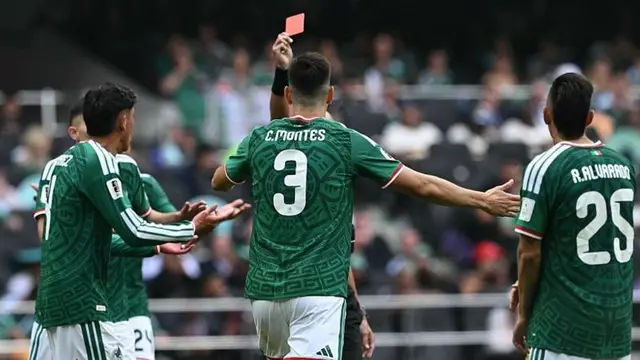
Players receiving a red card in the 2026 World Cup will receive a one-match suspension. This applies to both straight red cards and red cards that are the result of the same player being cautioned twice. During the opening game of the tournament, three red cards were shown. It means that South Africa's Sphephelo Sithole and Themba Zwane will miss their side's match against the Czech Republic, while Mexico defender Cesar Montes will miss their meeting with South Korea. Players can also receive suspensions for an accumulation across multiple matches. Should players received two bookings, they will be handed a one-match suspension. However, yellow cards are wiped following the conclusion of the group stage. They are wiped again following the conclusion of the quarter-finals. Contact formContact formPlayers who will miss next World Cup match because of red cardSphephelo Sithole (South Africa) This article is the latest from BBC Sport's Ask Me Anything team.

FIFA.com12 Jun 2026
Dzeko's last dance could be Bosnia's new beginning

World Cup News

Dzeko's last dance could be Bosnia's new beginning

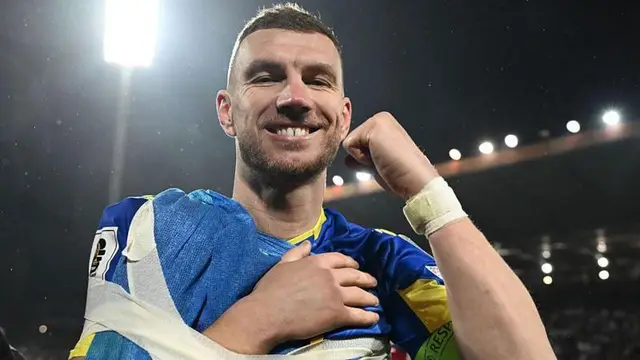
When Edin Dzeko decides the time is right to retire, the highlights reel of his career will be extensive. Two Premier League titles headline an impressive collection of honours won with the likes of Manchester City, Inter Milan and Wolfsburg. Yet the enduring image of the 40-year-old's career may prove to be an altogether more vulnerable one. Moments after Bosnia-Herzegovina had beaten Italy on penalties to qualify for only their second World Cup, Dzeko celebrated cautiously while nursing his arm in a sling. It's the kind of wear and tear you might expect for a man who for almost 20 years has carried the hopes of a nation still deeply affected by past horrors. "His career is connected to the country's own image - resilience, persistence and proving people wrong," Bosnian journalist Sasa Ibrulj says of Dzeko. Placed in a relatively even group with Canada, Switzerland and Qatar, the final chapter of Dzeko's story as a player could be the beginning of a new one for his country. His team's campaign begins against co-hosts Canada (Friday, 20:00 BST). The anatomy of a Golden Boot winner - and who could win it in 2026? Dzeko was six years old when the Bosnian War began in 1992, a conflict that cost the lives of around 80,000 fellow Bosnian Muslims. The Srebrenica Genocide perpetrated by Bosnian Serb forces was the largest massacre in Europe since the Holocaust. His family remained in Sarajevo during the near four-year siege of the city, as Serbian snipers targeted civilians including children. He moved to live with his grandparents after his parents' house was destroyed. "It was terrible," Dzeko told the Guardian. "The whole family was there, maybe 15 people all staying in an apartment about 35 metres square. It was very hard. We were stressed every day in case somebody we knew died." A young Dzeko often played on a local football pitch, but one day his mother made him stay at home; that day a shell hit the field and killed several children. After the war, Dzeko began his football journey with local club Zeljeznicar, but in his early career went largely misunderstood. He was nicknamed Kloc - local slang for lamp-post - because of his lanky appearance, and Zeljeznicar directors could not believe their luck when Czech side Teplice offered to buy him for 25,000 euros. Years later, Dzeko became the first player to score at least 50 goals in the Premier League, Bundesliga and Serie A, but he did not forget his roots amid superstardom. He has made several donations to aid renovations at Zeljeznicar, and in 2009 became Bosnia's first Unicef ambassador. "People remember that he did not come from privilege or from a powerful football system," says Ibrulj. "What makes him different is that people in Bosnia have never experienced him as distant or untouchable." Dzeko's friend, Mirza Trbonja, told AFP: "When he comes, you need a lasso to catch 10 minutes with him. When someone asks him for a photo or autograph, he never refuses." Dzeko made his international debut in 2007, and now holds the records for the most appearances (148) and most goals (73) for Bosnia. After losing to Portugal in the play-offs for both the 2010 World Cup and Euro 2012, Dzeko helped Bosnia qualify for their first major tournament since independence. The 2014 World Cup in Brazil proved to be the first and last for Bosnia's so-called golden generation, as play-off heartbreak struck again for Euro 2016, 2020 and 2024. Then, 12 years later, Bosnia overcame their play-off demons by beating Wales and then Italy on penalties having trailed to both. Ibrulj says: "2014 felt historic because it was the first generation that truly gave Bosnia international sporting legitimacy after independence. "This second qualification feels even heavier emotionally. Bosnia spent more than a decade failing to return, and over those years there was disappointment, pessimism and a growing feeling that the country had missed its moment. "For many younger supporters, this is the first team that feels like their team in the same way older generations emotionally belonged to the side of Dzeko, Miralem Pjanic and Emir Spahic." For musician Alen Dokic - who has produced a World Cup song under the alias Doppelganger - Bosnia's qualification is an example of 'Bosanski Inat', a cultural mindset of defiance and overcoming adversity. "Never forget, never forgive - this is one of the mottos that reminds us who we are, what we have been through, and how resilient we Bosnians are," says Dokic. Dokic, born in Rome to Bosnian parents, is part of a Bosnian diaspora thought to be as large as two million people. Sergej Barbarez's World Cup squad mixes experience with youth and vibrance. Seventeen of the 26 players were born outside of Bosnia & Herzegovina. "It's a unique dynamic of players growing up all over the world but coming back to represent Bosnia," says former Bosnia goalkeeper Asmir Begovic. Esmir Bajraktarevic, scorer of the penalty that sent Bosnia to the World Cup, is one such player. The 21-year-old was born and raised in Wisconsin after his parents fled Srebrenica. "That common interest, common goal, the passion of representing Bosnia plays a big role," he says. "What the country has been through, there's still lingering effects from the conflict and the past. "When everyone comes together in Bosnia, it's a pretty unique feeling and really special. For a country so small to compete at this stage is a really big thing." After the Italy match, thousands of fans took to the streets and partied until dawn. "This is still a country shaped by political division, economic uncertainty and the long shadow of war, so moments of collective joy carry unusual weight," says Ibrulj. Who are the oldest players to feature at a World Cup? Despite the lack of investment and sporting infrastructure in a nation of three million people, the future of the national team looks bright. It feels fitting that Dzeko should captain Bosnia as they enter a new era. "For younger players he became a constant. Coaches changed, federations changed, generations came and went, but Dzeko remained there," says Ibrulj. "In a country where people often struggle to trust institutions, figures like that become larger than sport itself." After a video of Italian players allegedly celebrating the fact that they would face Bosnia instead of Wales in the play-off final went viral, Dzeko showed his leadership qualities. He implored supporters to respect the Italian anthem, reminding them that Italy were the first side to visit Bosnia after the war. "He is someone who has big pressure and expectation on him," says Begovic. "He galvanises everybody. When I played with him he certainly wasn't the most vocal of leaders but he definitely led by example and I think a lot of people fed off that." But Dzeko isn't going to the World Cup to cheerlead from the sidelines. After scoring a late equaliser against Wales before setting up the equaliser against Italy, the 40-year-old clearly still has plenty to offer. "I didn't think I would be playing at 40 - 10 years ago I would've said 'no', but I'm listening to my body and doing a lot of work before and after training to help my body," says Dzeko. "I am so happy I can do it [go to the World Cup]. It is so amazing for the young players. They don't know it yet, but it will change their lives for sure." Listen to the latest Football Daily podcast SoundsGet football news sent straight to your phone

FIFA.com12 Jun 2026
Entertaining, even educational: Mexico’s World Cup opening ceremony delivers

World Cup News

Entertaining, even educational: Mexico’s World Cup opening ceremony delivers

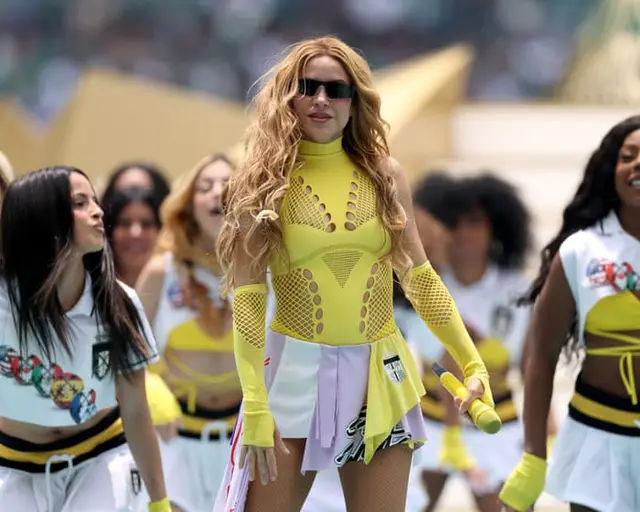
The show featuring a host of Latin American talent raced along and was over in a flash, leaving those at the Estadio Azteca wanting more ITV’s Mark Pougatch could barely contain his excitement. “Let’s be honest, opening ceremonies aren’t very memorable,” he offered, clearly intent on whipping up viewers into a frenzy of anticipation before events in the Estadio Azteca got under way. A few minutes later, he was at it again. “Nothing is happening,” he shrugged, when the opening ceremony didn’t kick off bang on time. “This is why they don’t live long in the memory.” No one was going to accuse him of overselling Mexico’s big night, but then perhaps he was underwhelmed by the lineup. With the global star power reserved for the final’s half-time show – which features Madonna, Coldplay and BTS – the Mexican ceremony stuck fast to relatively local talent. It kicked off with Maná, the most successful Latin American rock band of all time, who – to judge by the 1992 hit they performed, Oye Mi Amor – have sold 45m records by sounding not unlike The Police. They were pretty good, as was Venezuela’s Danny Ocean and the Mexican singer-songwriter Belinda, both of whom broke out one of the 18 (eighteen!) official World Cup songs: Ocean’s Partidazo was a nippy bit of reggaeton, Belinda’s Por Ella a sweet collaboration with veteran cumbia band Los Ángeles Azules, the latter a disconcerting sight for British viewers on account of the fact that their bass player looked as if he was being impersonated by Paul Whitehouse. You couldn’t fault the ceremony for its brevity: it zipped along at a remarkable clip. Indeed, you could possibly have done with a bit more of J Balvin, who was charismatic and self-deprecating enough to turn up in a cardboard car to perform his 2017 hit I Like it, one of the few latterday Latin pop hits to make a splash in the UK. That notwithstanding, the big draw for anyone not immersed in Latin American music was Shakira and the Afrobeats star Burna Boy – who presumably even Mark Pougatch has heard of – performing yet another official World Cup song, Dai Dai. You used to know where you were with the official World Cup song. It came out, no one cared – at least in England, where none of them have ever even made the Top 20 – and it was swiftly consigned to the dustbin of history. Who today recalls Ricky Martin’s La Copa de la Vida or indeed The Time Of Our Lives by Toni Braxton and operatic man-band Il Divo, the latter a musical cocktail only a lunatic would order? But in 2026, it’s showing signs of mission creep: you can’t move for the bloody things. There is the official Fifa anthem, Desire, sung at the finals draw in December by Robbie Williams and Nicole Scherzinger but subsequently given a reboot. It’s now a frankly terrifying-sounding collaboration between Andrea Bocelli, David Guetta, K-pop singer EJAE and Megan Thee Stallion. There are 16 versions of the official theme, each remixed by a producer from one of the host cities. And there are the aforementioned 18 official World Cup songs, collected together on an album featuring not only Ocean and Belinda, but an online influencer called IShowSpeed and country pop star Jelly Roll. The latter caused consternation with his official World Cup song Lighter, which featured a lot of Bible-belt-pleasing lyrics about religious redemption and feeling “like a broke-down Chevy” and absolutely no references to the World Cup or even football: a suitably America First approach to the whole business. If nothing else, it casts Dai Dai in a more forgiving light: a coolly minimal Afrobeats track that you could actually imagine listening to for pleasure, which given that it’s hard to imagine listening to Toni Braxton and Il Divo without crying for death’s merciful release, counts as a win. Shakira gyrated her famously non-lying hips, Burna Boy occasionally forgot to put the microphone up to his mouth on cue – mysteriously, his voice rang out loud and clear regardless – and the whole business was over in a flash. Cautioned to expect the worst, the viewer was instead presented with something genuinely entertaining, even educational: a pleasant surprise.

FIFA.com12 Jun 2026