AccaMate logo
FIFA World Cup 2026 logo

FIFA World Cup

2026 — The Tournament Of A Lifetime

11 June – 19 July 2026

Host nations

Canada flagCanada
Mexico flagMexico
USA flagUSA

Countdown to World Cup

--Days
:
--Hrs
:
--Mins
:
--Secs

World Cup News

The latest stories, squad announcements, build-up coverage and tournament analysis — direct from FIFA.

Egypt’s World Cup ended in heartbreak but they gave the country reason to smile | Karim Zidan

World Cup News

Egypt’s World Cup ended in heartbreak but they gave the country reason to smile | Karim Zidan

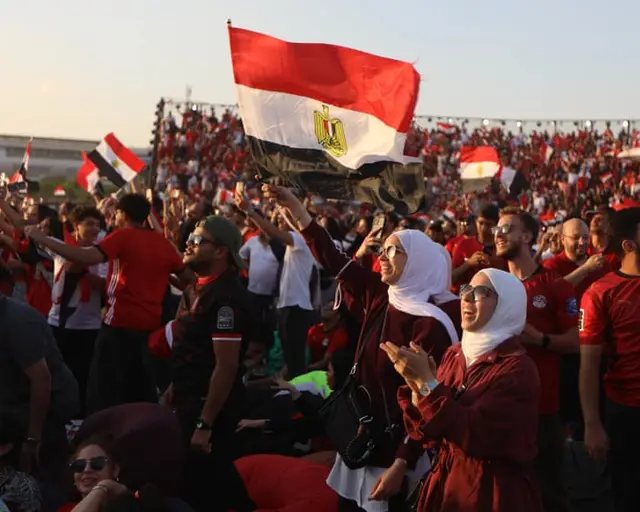
For Egypt this World Cup was about more than football – it was the first glimpse of collective joy that Egyptians have enjoyed in 15 years For nearly 15 minutes on Tuesday it seemed Egypt were about to complete one of the great World Cup upsets. The Pharaohs were up 2-0 against Argentina, the world champions. The goalkeeper, Mostafa Shobeir, had earlier saved a penalty to deny Lionel Messi an equaliser. Then, late in the second half, Argentina staged a remarkable comeback. Inspired by their talisman, they scored three goals in 13 minutes to book a spot in the quarter-finals, ending Egypt’s magical run. The dramatic match transformed Egyptians’ triumph into heartbreak, and then into anger over what many regarded as a refereeing decisions that favoured Argentina. Yet amid the frustration, there was also a kindling sense of pride. When the Egypt team returned to their hotel in Atlanta, they were greeted by legions of fans who gathered to show their appreciation. It was an emotional reception, the players standing and applauding in a shared moment of gratitude – a reminder that, despite the heart-wrenching end, this team had given Egyptians their first glimpse of collective joy in 15 years, dating back to the 2011 Egyptian revolution. Over the past several years, Egypt has been gripped by one of the worst economic crises in its modern history. A mounting debt burden, fuelled by the government’s lavish spending on mega-projects, unleashed a cascade of economic consequences including runaway inflation, persistent shortages of foreign currency and a currency that continues to lose value against the dollar. For ordinary Egyptians, the consequences have been stark. As wages have failed to keep pace with rising prices, the cost of everyday essentials has become increasingly unaffordable, squeezing household budgets. More than 70% of Egypt’s 118 million population rely on the government’s bread subsidy programme, making it the largest food subsidy program in the Middle East and north Africa. With no prospects and little hope, Egyptians such as myself have traditionally turned to football for our fleeting moments of joy. Egypt has a storied footballing history. They were one of the founding members of the Africa Cup of Nations (Afcon) and won the inaugural title in 1957. The country had just emerged from the Suez crisis and Egypt – newly free and independent – lifting that trophy became a powerful symbol for a burgeoning Africa. Egypt have won the event a record seven times but not since the Arab spring, which was the year that Mohamed Salah first appeared on the national team. In February 2012 riots occurred after an Egyptian Premier League match between Cairo’s Al Ahly, the most successful club in Africa, and Al Masry in Port Said. Seventy-four people were killed and more than 500 wounded. Some were beaten to death with clubs and sticks; some were stabbed; others were trampled. Officials refused to open the stadium gates, trapping fans inside and causing a stampede. A parliamentary inquiry blamed fans and police inaction. In response to the worst tragedy in Egyptian football history, the government shuttered the league for two years. This had a miserable effect on the national team. Since the revolution, Egypt have reached the Afcon final twice, in 2017 and 2021. The country hosted the tournament in 2019, only to experience a shock last-16 defeat by South Africa in a campaign overshadowed by controversy, including allegations of sexual harassment against the forward Amr Warda. Two years later, the Pharaohs, captained by Salah, lost the final to Sadio Mané’s Senegal in a shootout. Egypt’s World Cup resume was also a sore point for fans. Despite participating as far back as 1934, the team had never won a World Cup match until last month, when they defeated New Zealand. That is what makes this Egypt team so remarkable. They navigated the group stage unbeaten and reached the last 16 for the first time. Yet their greatest accomplishment was giving the nation a rare reason to celebrate together. They did so with an infectious exuberance, dancing with supporters in the streets after matches, Salah belting out songs with a boombox in hand, and reminding everyone that, for Egypt, this was never just about football. As one of only two teams – with Morocco – to reach the last 16 from outside Europe and South or North America, Egypt also carried the hopes and dreams of a wide range of peoples, whether across the African continent or the Arab world. In Libya, hundreds gathered at Martyr’s Square in the capital Tripoli, where they sang Egyptian songs and waved the country’s flag after Egypt’s victory on penalties against Australia. In Lebanon, celebrations spilled into the streets, with Lebanese and Egyptian flags raised as people danced and partied in various cities. The Egyptian Committee for the Reconstruction of Gaza organised public watch parties for displaced Palestinians families to watch Egypt’s games. The committee provided screens, seating and electricity in places such as Gaza City to allow a rare moment of distraction. Children draped themselves in Egyptian flags while others gathered in crowds to cheer on Salah and the Egyptian squad. In their eyes, Egypt’s victories were their victories. (The director of the committee, Mohammed Fawaz al-Wahidi, was killed in an IDF strike hours after Egypt played Argentina.) Egypt’s coach, Hossam Hassan, held the Palestinian flag at Dallas Stadium after Egypt’s win against Australia. “I’m dedicating this victory to the Egyptian people and Palestinian people, those kind and honourable people,” he said. The performance days later against Argentina cemented Egypt’s transformation from a team trapped in football purgatory to a talented side who inspire their countrymen and can stand toe-to-toe with some of the best. After Egypt’s loss, the country’s football federation (EFA) released a statement thanking the Egyptian people for their “unwavering support, loyalty and belief” throughout the tournament, which it said had been “a source of immense pride and motivation”. The performances, it said, “had reflected the spirit and character of our nation”. The EFA also said it would not “remain silent regarding the refereeing decisions witnessed during the match”. Egypt’s success does not erase or conceal the country’s political or socioeconomic challenges but the unity and collective joy that have swept across the streets have been extraordinary to witness. For a moment, millions of Egyptians found common ground in hope, celebration, and national identity. For a time, Egypt had finally broken the curse of the Pharaohs.

FIFA.com09 Jul 2026

The US delivered their best modern World Cup performance – and also let themselves down

World Cup News

The US delivered their best modern World Cup performance – and also let themselves down

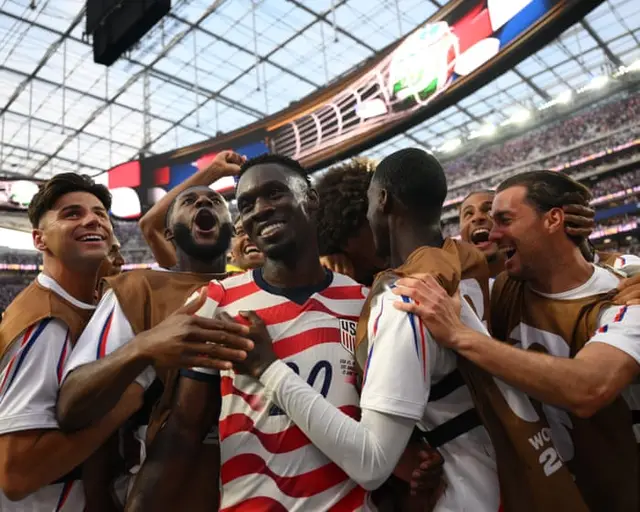
Mauricio Pochettino’s team delivered several thrilling performances on home soil. The way it ended was somewhat less exhilarating So now what? How are we supposed to think about this supposedly golden generation of the United States men’s national team who have fallen short of expectations at this World Cup on home soil? How do we come to terms with the sense that this team beat Paraguay 4-1 in their opener – the most impressive performance in the program’s history – but also lost dismally against Belgium by the same scoreline in the last 16? And what of Christian Pulisic? The golden boy who was largely absent – either physically or in terms of his influence on the proceedings – but for 45 manic minutes to start off this tournament? If he didn’t lead the team on the field, he was certainly its face off it, appearing in endless commercials – outnumbered only by the omnipresent David Beckham, who last kicked a ball on American soil 14 years ago. Pulisic hardly dislodged the legends forged at the last World Cup in the US, who were decades overdue for their displacement. Neither did his feted teammates, some of them the stars of their own advertising blitzes. On Monday, so many of Pulisic’s peers were well below their personal par of the last few weeks as well– Weston McKennie and Tim Ream and Sergiño Dest and plenty of others. How are we to process that this group both proved that it is undoubtedly the most talented and pedigreed generation this program has ever produced, and also utterly imploded in the face of its first serious test in the knockout stages? The core of this team is unlikely to get better by the next World Cup in 2030, when Antonee Robinson will be 32; Tyler Adams, Pulisic and McKennie will be 31; and Dest 29. These are not the ages at which the modern soccer player tends to improve. The window on this generation hasn’t closed quite yet. But the opportunity to leverage this moment to make that long-awaited breakthrough into the American mainstream very much has. This summer, the USMNT had a chance to finally be embraced by the nation in a permanent way – and they faceplanted. It hardly helped when Donald Trump interfered to undo Balogun’s suspension for the Belgium game – or at least claims he did, an assertion delicately disputed by Fifa – and ruined the excellent vibes with his drenching loser stink. Until then, you could almost physically feel a country falling in love with this group. The USMNT claimed the whole Balogun brouhaha had no effect, and that may well be true – we’ll never really know. The Belgians and the rest of the world nevertheless dunked on the US when given the chance to equate the loss of a team to a personal defeat for Trump. That, too, will be the lingering recollection. First, that this edition of the USMNT badly let down the nation when the country was dialed in – to the tune of 42 million TV viewers, more than any college football or NBA finals game ever, and more than any baseball game this century – and prepared to tag along on a deep run in this tournament. And at the same time, they delivered the best World Cup performances in their modern history, winning a single knockout game – just as the US did in 2002, when it was a 32-team tournament and they reached the quarter-finals of the World Cup. That’s the central awkwardness here. The commanding wins over Paraguay and Australia, in which the US controlled the games and asserted themselves and fashioned the better of the chances, really were unprecedented. Time has sanded down the memory of 2002, when the Americans were fortunate to cling on to their upset over Portugal in their opener, were equally lucky to draw with the hosts South Korea, and were fairly rinsed by an already-eliminated Poland. Then came the 2-0 win over Mexico, a result that was perhaps a tad flattering. In 1994 and 2010 and 2014 and 2022, the US hardly marched through the group stage – let alone win it with a game to spare, as they did for the first time in 2026 – and then went out right away. Usually in losses that were lopsided in all but the score. Real growth was demonstrated in this tournament. For a few weeks, we saw the future we had long been promised, the answer to the age-old question of when we would finally be good at men’s soccer. We witnessed a USMNT that, on the sport’s biggest stage, bullied teams with less talent (Paraguay, Australia, Bosnia and Herzegovina), and that matched up well with a team of roughly their own level (Turkey) with a bunch of reserves. And then it all disintegrated when we most needed it to hold together. That’s the legacy of the 2026 US World Cup team. They soared as high as we always hoped they might, and to an altitude far above any predecessors. And then stalled in mid-air, smashing a deep crater into how we will remember this campaign. Leander Schaerlaeckens is the author of The Long Game: U.S. Men’s Soccer and Its Savage, Four-Decade Journey to the Top, or Thereabouts , which is out now. He teaches at Marist University.

FIFA.com09 Jul 2026
Refereeing at this World Cup has been fine, we don’t need input of Tuchel and Trump | Chris Foy

World Cup News

Refereeing at this World Cup has been fine, we don’t need input of Tuchel and Trump | Chris Foy

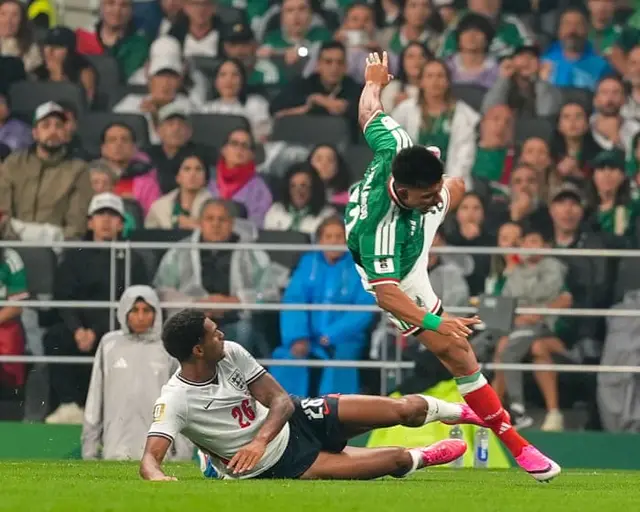
Give or take the odd error, officials have got it right on most occasions, while VAR has helped them when they haven’t Thomas Tuchel was critical of the refereeing at the World Cup after England’s win against Mexico, describing it as unreliable, erratic and not good enough. His comments struck me as reverse psychology – the referees have generally been OK, with some positive decisions made, but there have also been occasions when they have not got things right. Like everyone, referees cannot be perfect. Egypt claimed they were victims of an injustice against Argentina on Tuesday but the decisions to disallow an Egypt goal and let Argentina’s winner stand were correct. On the first one there was a foul by Marwan Attia on Lisandro Martínez in the attacking possession phase – a shirt pull and studs on Martínez’s right foot – and there is no time limit or ceiling on the number of passes to be taken into account. One important factor is the ball kept moving forward, with no lateral or backwards passes, until the ball was in the net. It could have been one of the goals of the tournament but the simple fact is it was right to disallow it. For Argentina’s late third goal Egypt felt there was a foul by Julián Alvarez on Mohamed Salah. People are drawing comparisons between that and the earlier incident because there is boot-on-boot contact, but it is a different situation. Alvarez plays the ball and there is then slight contact which does not meet the threshold for a foul or video assistant referee intervention. The VAR did make an important intervention in the Mexico-England match – Jarell Quansah’s tackle on Jesús Gallardo was a red-card offence and I was surprised this was not picked up on-field by the referee, Alireza Faghani. After the VAR rightly recommended a review we got the correct outcome. Tuchel was upset at a number of decisions that night. It was never going to be an easy assignment for the referee, what with the hype, weather conditions and the game being at the Azteca Stadium. But some of the players did not help by taking very little responsibility. They were feigning injury, showing dissent and questioning nigh-on every decision – and when the Quansah challenge happened the whole Mexico bench emptied out angrily. England reacted, and that got messy. To hear England are considering an appeal against Quansah’s red card is surprising, but the Folarin Balogun situation has completely changed things. Historically there has been no scope for an appeal against a red card at a tournament, with a one-match ban automatically applied. I had never heard of Article 27 of the Fifa disciplinary code, which Fifa says it used to suspend the USA striker’s sanction. Balogun’s sending-off was certainly supportable with the help of the video assistant. When I saw his challenge on Tarik Muharemovic of Bosnia and Herzegovina in real time I wasn’t sure whether it was a red-card offence, but it was for me on a replay, even if there was no malice. The clue was where the ball was, because it was not at a playable distance. When you consider a possible red-card offence for a challenge, there are two key elements to think about: excessive force and endangering the safety of an opponent. With Balogun’s challenge the point of contact was on the calf, continued down the calf on to the achilles and caused an ankle roll. That could have caused serious injury. The intervention of Donald Trump and Tuchel’s comments mean there is heightened noise around refereeing. As a referee you have to ignore that, and in elite officiating sports psychologists are there to help. I was never the best at getting rid of a bad decision – it would stay in my system for three to four days – but that’s different from letting it affect your performance. You have to be boring, and focus on the here and now. There have been 13 red cards at this World Cup, after four at each of the previous two, but I don’t think there can be too many complaints. Player safety is paramount and Quansah and Balogun are a good example of where to draw the line. VAR has been used correctly for red cards not given on the field. That is not to say that VAR interventions have been perfect – far from it. Vinícius Júnior’s disallowed goal for Brazil against Scotland, for example, was one where I felt the on-field decision of goal was right. It was minimal contact and not all contact is a foul, because contact is a normal part of football. This was not a clear and obvious error by the referee. In those circumstances a “check complete” would be appropriate and you don’t need to re-referee. I thought Harry Kane should have had a penalty against the Democratic Republic of the Congo because contact was made on the England captain by the goalkeeper, Lionel Mpasi. But because it wasn’t a clear and obvious error I also felt it was the right decision by the video assistant to stick with the on-field verdict. Where VAR was right to intervene on a penalty decision was to give France a spot-kick after Désiré Doué was fouled by Paraguay’s Diego Gómez. I was surprised that the referee, Ilgiz Tantashev, didn’t give that one on the field. That game was another tough assignment, but the referee needed to be a lot stronger throughout. I was shocked that no Paraguay players were cautioned. Referees go out to manage a game but sometimes you have to draw a line and get the cards out. There were a number of incidents where Tantashev should have shown a yellow card, and because he didn’t Paraguay gained confidence. At one point his control of the match was put in jeopardy. Pavlovic’s boot was higher than Declan Rice’s when the England midfielder was booked early in the Mexico game. All I can think is that the video assistant and the referee both felt that it was six and two-threes; that Vite had put his head down and that Pavlovic had put his boot up – and that therefore it didn’t meet the threshold. Chris Foy is a former Premier League referee.

FIFA.com08 Jul 2026
Genius Jude Bellingham becoming one of England’s leaders

World Cup News

Genius Jude Bellingham becoming one of England’s leaders

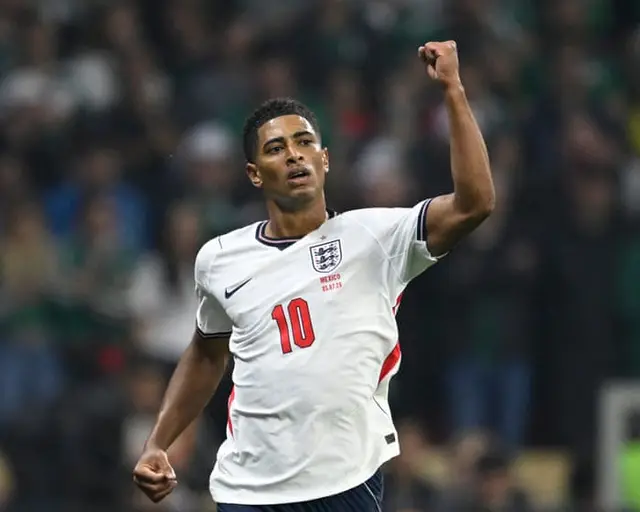
The boy who has it all has ambitions to play James Bond but for the time being he is more reminiscent of Novak Djokovic There has never been an English footballer quite like Jude Bellingham. He has the cockiness and explosiveness of a teenage Wayne Rooney and the vision of Paul Scholes, but that doesn’t come close to covering it. There are endless layers to Bellingham, the boy who has it all. He can be the No 8, the No 9 or the No 10. He has the flair of a Glenn Hoddle and the chest-out bravado of Paul Gascogine, but he also has the bravery of Bryan Robson, the rampaging qualities of Steven Gerrard and, as Mexico discovered at the Estadio Azteca, the ability to morph into the world’s best defender and drag his team out of the mire with a goal-saving challenge. More? Bellingham has film-star looks, can charm like David Beckham and, given how much he has achieved, does not sound ridiculous when he says his post-retirement ambition is to play James Bond. The 23-year-old’s world is bigger than most of us can begin to understand. He made his debut for Birmingham City when he was 16 and was so good they retired his shirt number. He was outstanding on his tournament debut for England, scoring against Iran at the last World Cup. He is a European champion with Real Madrid and, because of his precociousness as a teenager, can leave you thinking he is wise beyond his years. Perhaps that has made us expect too much from him. There are times during games when he can infuriate his fans. He flew out of the traps at Euro 2024, thundering in a header when England beat Serbia in their opening game, but consistency eluded him. The big moment, the “Who else?” overhead kick against Slovakia, came at the end of an otherwise poor performance from Bellingham, who often struggled to hide his frustration on the pitch and sometimes appeared not to be on the same wavelength as the team’s other big players. But Bellingham was 20 at the start of that tournament – his birthday is 29 June. He was a kid, albeit one with the world at his feet. The problem, if that is the right word, is that from the outside there appeared to be contradictions to his character. Here was a megastar who oozed intelligence in interviews with English broadcasters after Madrid’s Champions League games. He was insightful, engaging and capable of razor-sharp tactical analysis, and yet he also remained slightly unknowable. Bellingham is distant from mainstream written media, has spent much of his career outside England and came across as an unsympathetic figure at Euro 2024 whenever he tried too hard to be the hero or wasted energy on arguing with referees. It turned into something of a PR crisis, fuelled by Thomas Tuchel’s infamous “repulsive” comment last year. Perhaps some of us misunderstood Bellingham’s personality. For a while I worried there was a risk of him holding England back. Looking back, I misjudged Bellingham. Although it is true that Tuchel wanted to establish a hierarchy that had Harry Kane and Declan Rice as the leaders of England’s dressing room, it was a mistake to think it would be productive to attempt to change Bellingham’s nature. The point is that ego is part of what makes him different and special. It does not, however, come close to making him a bad person or a bad teammate. It is not only Jordan Henderson who says Bellingham is a great kid. There are plenty of stories about him from people with no skin in the game who say how brilliant he is when he meets an awestruck young fan. But there are times when you see Bellingham struggle to contain that enormous will to win. He has been inspirational at this World Cup, scoring four goals in five games, but he almost boiled over when England were 1-0 down to the Democratic Republic of the Congo in the last 32. Bellingham does not really do stoicism. Part of the fascination is the nuance. Here we have a massive patriot who somehow manages to come across as quite un-English in how much he wants to win, how much adversity fires him up and how much he wants you to know that he really is the main character. That Djokovic streak was evident in the way Bellingham relished walking into the Azteca bearpit when England faced Mexico in the last 16 on Sunday. He ran to the corner and stood with arms outstretched after scoring the first of his two goals. He wanted the crowd’s animosity because it brought out the best in him. This was pure aura; this was Bellingham letting everyone know there was no way he was losing this game. Bellingham was immense on and off the ball against Mexico. During his rise there have been echoes of the tennis prodigy to him; the young star competing in an individual sport and forced to deal with the pressure of doing it alone. For England, the challenge has been harnessing that tendency to be a soloist, the yearning to be the match-winner, and make it an effective weapon in a team game. Tuchel has found the way forward. After a testy start to their relationship, he has given Bellingham clarity. He has understood this is a rare talent. He has his No 10. How ridiculous the pre-tournament notion that Bellingham could possibly not be a starter looks now. He has been in storming form since the first game, when he sparked the surge against Croatia with a spectacular solo goal at the start of the second half, and was in all-action mode against Mexico. There were the goals – the timing of the run to head in the first from a Bukayo Saka cross, the silky one-two with Kane for the second – but there was also the defiance. There was the heroic clearance to stop César Montes from equalising on the stroke of half-time. There were moments of outrageous skill and plenty of lung-busting runs as England held out with 10 men. This is no soloist. Bellingham does it all for the team. He has made vital interventions on multiple occasions – there were crucial last-ditch challenges against Croatia and Ghana – and has been a galvanising force, summed up by him giving Djed Spence a pep talk after the maligned full-back’s impressive cameo against Mexico. We are watching Bellingham become one of England’s leaders. He is still maturing and will not get everything right. There was a hilarious moment when Bellingham lost possession against Mexico and reacted like a toddler, repeatedly hitting the turf in exaggerated fashion, but that was because he thought he was on his way to scoring another stunner. It is part of the package. There is nobody quite as captivating wearing an England shirt. Expect another absorbing show against Norway on Saturday.

FIFA.com07 Jul 2026
‘A despicable woman’: Kylian Mbappé hits out at Paraguayan senator over racist attack

World Cup News

‘A despicable woman’: Kylian Mbappé hits out at Paraguayan senator over racist attack

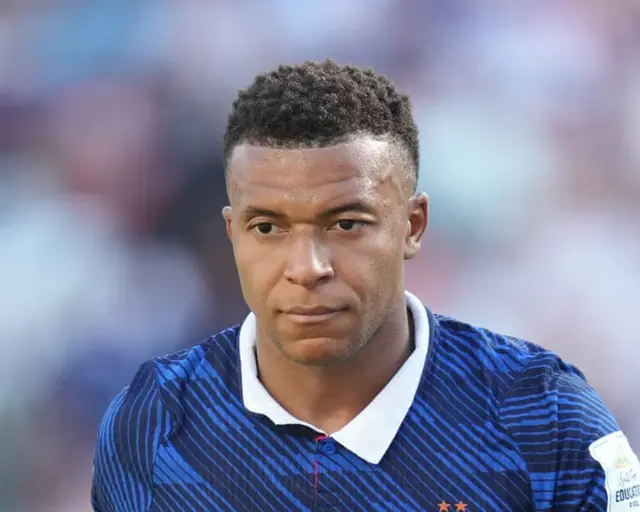
Celeste Amarilla called striker a ‘colonised Cameroonian’ French Football Federation to file criminal charges The France striker Kylian Mbappé has hit back at a Paraguayan senator, describing her ⁠as a “despicable woman” after she launched a racist attack on him. Mbappé’s ⁠penalty proved ​the difference in an ill-tempered match as France beat Paraguay 1-0 in Philadelphia on Saturday to advance ⁠to the quarter-finals. Celeste Amarilla wrote a long racist tirade on X, describing Mbappé as a “colonised Cameroonian, desperately trying to ⁠pass himself off as French,” and as a “brute who had not learned to ​write”. Paraguay’s players should have ‌slapped him after the ‌match, she added. Mbappé, the France captain, responded with a strongly worded statement defending ‌not only himself but also the Paraguay players. “Madame Celeste Amarilla, you are a despicable woman and unworthy of your position. You do not represent Paraguay, that country which has sweated passion and honour throughout the competition,” he wrote. “Through your recklessness and your brazen racism, the entire world ‌has already forgotten the journey and the historic effort that your players accomplished during this World Cup, making way for ​an incompetent woman who gives the worst possible image of her country. I will never allow people like her the freedom to spread their hatred and racism across the world.“ The French Football Federation (FFF) escalated the matter, announcing plans to file ⁠criminal charges, describing her remarks as “utterly abhorrent and unacceptable”. A statement said: “These remarks ​are criminal and reprehensible. ​They must be prosecuted here ​as elsewhere. The FFF is reporting the matter to the ​public prosecutor’s office ‌with a ​view to legal ​proceedings. These remarks bring shame upon those who make them and those who disseminate them. The players of the French national team represent France; it is our country that is being insulted.”

FIFA.com06 Jul 2026
‘Best host in the world’: Mexico keep spirits up after England heartbreak

World Cup News

‘Best host in the world’: Mexico keep spirits up after England heartbreak

Despite ‘a setback that will hurt for eternity’, co-hosts exit with heads held high after bringing pride, passion and soul usic pulsated from some of the bars on Monday morning on Calle Genova, a narrow thoroughfare in Mexico City’s heart that rarely lives in silence. The clock was yet to strike 11am, but, spilling out on to the street, a healthy crowd of patrons were picking up where they had left off. Perhaps they had never stopped at all. National team shirts were on full display and, had anyone lived under a news blackout for 15 hours, they may have drawn a wildly different conclusion about the previous night’s events. The truth was more evident to anyone who, upon returning from Estadio Azteca, made a beeline for Paseo de la Reforma. Long after Mexico’s last-16 victory over Ecuador this vast boulevard had been teeming, an affirmative national moment bringing 1.4 million people on to the streets. But it was virtually empty three and a half hours after England had shattered the dreams of El Tri , the clean-up operation from the evening’s mass screening already in full swing and remaining revellers confined to the sidestreets. Nonetheless, Mexico’s pain was mixed with smiles. The revelry did continue more modestly away from those quiet major arteries and reflections were largely upbeat. There was universal acknowledgment Mexico had wrung everything they could from a genuine World Cup classic; a bittersweet sense the team played well enough to earn more and might have done if Jordan Pickford had not been in sensational form for England. “A setback that will hurt for eternity,” wrote El Universal, one of Mexico’s biggest newspapers, paying tribute to “an epic performance against England”. The feeling lingered that Mexico had been architects of their own heroic downfall, particularly through the weak defending that allowed Anthony Gordon to win the penalty that effectively put the tie beyond them. The country’s president, Claudia Sheinbaum, sought to maintain the positive afterglow. “We showed everyone that Mexico is the best host in the world, with happy and united people,” she wrote on social media. It is a little more complicated than that given the kidnapping crisis, cartel violence and other social problems that bombastic sporting events reliably gloss over. But the first part of Sheinbaum’s statement certainly chimed with the sentiments of England’s fans, who reported being bowled over by their hosts’ warmth and graciousness in defeat. While Estadio Azteca more than justified the mythology that surrounds it by generating a fevered, crackling atmosphere on Sunday night there was no sense of genuine hostility towards their guests. Half-hearted chants of Puta towards a group of journalists entering the ground were as visible as any animosity became. Fans of both persuasions mingled on the concourses and in those bars off Paseo de la Reforma, the songs and group photos continued into the night. Just as that was a wrap for a slick but ultimately limited side, the final whistle called time on Mexico’s co-hosting of this tournament. If the huge share occupied by the USA constitutes the 2026 World Cup’s heart, Mexico has been its soul. Football matters here; it is engrained in society and not simply an entertainment accessory. It should be no denigration of the mostly successful American efforts to foster a pleasant experience for guests if, simultaneously, a stint in Mexico during the knockout stages felt invigorating for the spirit. Yet the Azteca will sit unused for the rest of the summer; so will the stadiums in Guadalajara and Monterrey, the latter a jaw-dropping location. The Azteca lacks the sheen and five-star accoutrements of its peers, but is all the more enchanting for that. Problems with access and surrounding infrastructure were largely ironed out as the tournament progressed so there was no reason this monument to football could not have outlasted its national team. Perhaps, to the enthralled long-haul visitor, less is more. There can be value in scarcity. But would it have hurt to give Mexico a stake in proceedings for at least one more week? There will be hope that the added visibility for Mexico’s players acts as a springboard. Nobody who watched the 17-year-old Gilberto Mora, who more than held his own against England and ran rings around Ecuador, believed they were witnessing anything but the birth of a star. Mexico sneaks below the radar because its league, which pays well and draws sizable crowds, offers a comfortable home for its talents. Players who do seek moves can be priced out by clubs that do not urgently need the money. Added mobility and exposure in Europe’s top divisions would help this football hotbed of 133 million realise its gargantuan potential.

FIFA.com06 Jul 2026
‘These guys are losers’: Brazil berated back home after defeat by Norway

World Cup News

‘These guys are losers’: Brazil berated back home after defeat by Norway

Carlo Ancelotti and his players have been lambasted for their ‘shameful’ and ‘embarrassing’ World Cup exit The wait for the hexa – the record-extending sixth World Cup – continues. Brazil’s 2-1 defeat to Norway in the last-16 of the World Cup means they have now gone six tournaments in a row without being crowned champions. Some in Brazil are calling it the reverse hexa . As you would expect, the reaction back home has been scathing. Neto, the former Brazil player who is now a pundit on Radio Bandeirantes, laid into the current crop of players. “It’s a generation that won fuck all,” he said. “There are six players who won one Copa América and that’s it. It was embarrassing from the beginning and everything that happened before that game. It was a shameful campaign and these guys are losers. It’s a generation of lies.” Carlo Ancelotti, who was praised for his interventions during Brazil’s 2-1 win against Japan in the last-32 stage, has not been spared. Cahê Mota, writing in Globoesporte, said the manager’s substitutions against Norway only made the team worse: “The Seleção are out of the World Cup and Ancelotti’s plan failed. Brazil bet on a booby-trap game: they gave the ball to Norway and bet on a transition at speed. It worked very little. The penalty missed by Bruno Guimarães would have given the game a different shape, but the Seleção bet big on a style that does not match its tradition and they did not know how to be lethal when they had chances. You can’t even regret it. You can’t say there was injustice. You can’t even say the defeat happened but we played like Brazil.” Brazil had just 34% possession against Norway, their lowest in a World Cup match since records began in 1966. Such a statistic is an embarrassment in the eyes of Mauro Cezar Pereira. “It’s shameful to see a Brazil team, which for years has relied on marketing ploys like ‘ joga bonito ’, having a strategy to give the ball to the opponent and only play in transition,” says Pereira, one of the country’s leading pundits. He believes that this “cowardly” style will “never” be acceptable to Brazilians, adding: “The poor quality of Carlo Ancelotti’s work is embarrassing.” There have been calls for Ancelotti to be sacked, with the country’s football association also taking flak for giving him a new four-year contract a few months before the tournament began. The manager’s handling of Neymar has divided fans. Neymar’s admirers believe that, had he started the match, he would have converted Brazil’s penalty in the first half and altered the course of the tie. His detractors, however, are convinced that introducing the country’s all-time record goalscorer was the change that cost Ancelotti the most. Neymar moved into the centre of the attack, pushing Vinícius Júnior and Endrick out wide. “That’s what decided the game,” says Mauro. “From the moment he entered, Norway had even more possession. They attacked more and built plays until they scored goals. With Neymar, Endrick and Vinícius, Brazil became even weaker in combat, in the fight for possession, and were definitely subjugated by the Norwegians. Suicide.” Neymar won his first cap in New Jersey in 2010 in a friendly against the USA. Now, 130 caps and 80 goals later, he has retired from international football. “I tried,” he said after the match. “It started here at MetLife Stadium and I finished here. It is now over.” Many in Brazil would like to see a full reset, with Neymar, Casemiro and his generation moving aside. The more optimistic fans want the country to produce midfielders and full-backs like they did in the old days. The immediate priority is the Copa América in two years’ time, which is also likely to be held in the US. If Ancelotti fares as badly at that tournament as he has done at this World Cup, do not expect him to see out his £8.5m-a-year deal.

FIFA.com06 Jul 2026
Uefa has put European football on war footing with Fifa over Balogun decision | Matt Hughes

World Cup News

Uefa has put European football on war footing with Fifa over Balogun decision | Matt Hughes

European governing body’s dramatic move could have major implications for the future of the sport Perhaps the only globally renowned figure who has been more conspicuous by his absence at this World Cup tournament than Donald Trump is the Uefa president, Aleksander Ceferin, although both men have more than made up for their silence over the past 24 hours. By endorsing a statement in which Uefa accused Fifa of crossing “a red line” in making the “incomprehensible and unjustifiable” decision to lift the USA striker Folarin Balogun’s suspension for the last-16 tie with Belgium on Monday, Ceferin has effectively put European football on a war footing with the world governing body, a dramatic move that could have major implications for the future of the sport. Much like Trump, and indeed Gianni Infantino, Ceferin is a hands‑on president and avid consumer of football media, so he will have known exactly what his organisation was doing. The latter pair have been at loggerheads since Infantino proposed the creation of an expanded Club World Cup in 2018, which finally came to pass in the US last year, with much of the current tension between Fifa and Uefa based on the former’s desire to expand the Club World Cup from 32 to 48 teams for the next staging of the tournament in 2029. With Uefa making almost €5bn (£4.27bn) from the Champions League each year, a figure set to rise by about 20% from next year based on media rights and commercial packages sold to date, Fifa wants a piece of the club action, given the vast majority of its four‑year revenues of $14bn (£10.5bn) comes from the World Cup. The most recent public sign of enmity between Uefa and Fifa came in Paraguay in May 2025 when European delegates – including Ceferin and the Football Association chair, Debbie Hewitt – walked out of the Fifa congress in protest at the late arrival of Infantino, who had been attending a summit in the Middle East with world leaders including Trump and Saudi Arabia’s crown prince, Mohammed bin Salman. Since that symbolic show of defiance there had been something of a truce, however, which insiders have attributed to the fact that both Infantino and Ceferin will be seeking re-election next year, and have agreed to keep infighting to a minimum. While Uefa has attempted to score some political points on the back of Fifa’s unpopular running of this World Cup – announcing low ticket prices for Euro 2028, making clear it will not introduce hydration breaks and appointing the Somali referee Omar Artan to take charge of the Uefa Super Cup after he was prevented from officiating at the World Cup by the US Department of Homeland Security – the detente has just about held. But the fragile peace was shattered by Fifa’s decision to lift Balogun’s ban in the middle of the tournament, which Uefa said undermined “the integrity of the game” and “the credibility of the competition”. While much of this dispute is personal and political, there is also genuine disbelief at Uefa’s headquarters in Nyon at how the Fifa administration appears to be run. For all the many criticisms of Uefa, it is an intensely process‑driven, bureaucratic organisation, while in using article 27 of its disciplinary code as a get-out to clear Balogun and Cristiano Ronaldo last year, Fifa gives the impression of making policy on the hoof. After issuing their condemnatory statement on Monday morning, Uefa officials were locked in crisis talks for much of the day, with another indication of the ill-feeling towards Fifa shown in the fact that so few have travelled to the World Cup. Despite sharing a tendency to globe-trot and their mutual self-interest, Ceferin and Infantino are rarely seen in the same place at the same time. Following the controversy in Paraguay last year, Ceferin did not attend the Fifa congress in Vancouver this year, while Infantino made his brief appearance at the AGM of the lobby group European Football Clubs in Rome last year when Ceferin was absent. Having expressed its outrage, Uefa’s next steps on the Balogun matter are unclear, and will in part depend on the outcome of Belgium’s appeal against Fifa’s decision. Sources at the Royal Belgian Football Association have told the Guardian they are not expecting another U-turn, and as a result are exploring other legal options, including taking Fifa to the court of arbitration for sport in Lausanne after the tournament. While most of Europe’s biggest clubs, and as a result much of the EFC, are in favour of expanding the Club World Cup for self‑interested financial reasons, Ceferin remains personally opposed due to concerns that a 48-team competition would entrench further the dominance of the elite, as well as posing a threat to the pre-eminence of the Champions League. With Fifa preparing to open negotiations with the six continental confederations, domestic leagues and player unions next year over the shape of the global calendar after 2030, there are a number of crucial areas in which Uefa could make life awkward for them. Determining the date of the 2034 World Cup in Saudi Arabia is looming large, and a Uefa-led protest involving the European national associations, domestic leagues and player unions would at least give them some leverage in negotiating with Fifa. Although with Trump and Prince Mohammed seemingly in Fifa’s corner, it may not be a fair fight.

FIFA.com06 Jul 2026
Belgium are looking for a new beginning at the World Cup against USA | Jonathan Wilson

World Cup News

Belgium are looking for a new beginning at the World Cup against USA | Jonathan Wilson

Parts of 2018’s Golden Generation still remain, but there are more than enough good players in this Belgian side to give the US headaches The whiff of unfulfilment lingers around Belgium. The Golden Generation – and the fact it never quite achieved what it might have done – has dominated coverage of their last three tournaments.This perhaps isn’t quite fair – either on those who were part of that group or those who have followed. Beating Brazil in the quarter-final to reach the semi-final in Russia 2018 was a fine achievement, but that side featuring Vincent Kompany, Eden Hazard, Thibaut Courtois, Romelu Lukaku and Kevin De Bruyne then lost 1-0 to France in the semi. The squad was good enough to win a tournament, but that was as close as they came. Courtois, Lukaku, De Bruyne, Axel Witsel and the right-back Thomas Meunier have all endured since 2018. The 2026 Belgium squad is not, as 2022 felt, the Golden Generation redux, just a little bit older and a little bit more tired. A new wave is emerging and, while the likes of Leandro Trossard, Youri Tielemans, Jérémy Doku and Charles De Ketelaere may not have quite the star quality of the previous generation, they’re still decent players – perhaps not World Cup winners, but certainly not to be dismissed. And remember, this is Belgium, a country of just under 12 million; it’s not realistic to think it can consistently produce potential world champions. This squad seems cursed to be judged against the standards of two World Cups ago, somehow blamed for not being as good as their predecessors and at the same time damned for those predecessors’ failure to convert talent into silverware. A key member of the emerging generation is Diego Moreira, whose introduction from the bench after 63 minutes for Hans Vanaken, a 21-year-old replacing a 33-year-old, was one of the major reasons for the transformation of the 3-2 win against Senegal. Suddenly Belgium had a pace and invention on the left that Doku had not been able to provide. Where Doku had put in just two crosses, Moreira managed five. Although Liège meatballs are his favourite food, Moreira wanted to play for Portugal. His dream, he has said, was to play alongside Cristiano Ronaldo – although he may look at this tournament and reflect he had a lucky escape. Moreira was born in Liège but qualifies for Portugal through his father, the former Standard midfielder Almami Moreira, who was capped for Portugal at youth level but played senior international football for Guinea-Bissau. Diego’s grandfather was also a footballer, the German forward Helmut Graf, who was part of the Standard side that lost to Barcelona in the 1982 Cup-Winners’ Cup final. Moreira moved to Portugal to be closer to his father when he was 15, joining Benfica a year later after Standard managed to block an initial switch. He never started a league game there though and was one of the many young talents swept up by BlueCo Chelsea before being offloaded to the junior partner in their multi-club ownership, Strasbourg. He’s been a regular there over the past two seasons and now, at 21, it feels as though he is properly established, part of the emerging future of Belgian football alongside the likes of Joaquin Seys, Nathan Ndoye and Matias Fernandez-Pardo. It’s unlikely Moreira will start against the USA on Monday, despite how disappointing Doku has been so far, but his performance against Senegal means there’s no reason for Rudi Garcia to have any qualms about bringing him on. Garcia’s substitutions against Senegal were notably bold as, needing two goals, he withdrew Doku and De Bruyne, high-profile figures who might be considered the most obvious source of creativity. On instead came Nicolas Raskin and Dodi Lukébakio, and with them memories of the 1986 World Cup. Back then, infighting between Anderlecht players led to defeat to Mexico in their first game. Belgium then ground out a 2-1 win over an Iraq side who had had a man sent off early in the second half. At which the coach Guy Thys dropped five senior players and brought in the likes of Stéphane Demol, who was 20, Patrick Vervoort, who was 21 and Georges Grün, who was 23. It wasn’t an immediate success, as Belgium drew 2-2, but there was a renewed sense of spirit and purpose. That draw got Belgium through to a last-16 tie against the Soviet Union, in which the 20-year-old Enzo Scifo, a prodigy whose place in the team had never been in doubt, got the first equaliser in a game Belgium eventually won 4-3 after extra time. Spain were seen off on penalties in the quarter-final, leading to a meeting with Argentina in the semi-final and an inevitable Diego Maradona-inflicted exit. The win over the Soviet Union in the last 16, though, had changed the mood. A victory over the USA might achieve something similar. It’s not even so much about this tournament any more, or how far Belgium might go. It’s more about creating something new, shaking off the weariness and sense of underachievement that has dogged Belgian football since that semi-final in St Petersburg, and opening the door to a freer future. This is an extract from Soccer Desk: World Cup edition, a newsletter from the Guardian US that will run regularly during the tournament. Subscribe for free here.

FIFA.com06 Jul 2026
Burn’s blocks, Pickford’s punches: the data behind England’s defensive heroics

World Cup News

Burn’s blocks, Pickford’s punches: the data behind England’s defensive heroics

While England conceded twice to Mexico and survived a siege at Azteca, numbers show a performance of true grit Was this England’s best performance since 1966? On the surface, England conceded 20 shots in their 3-2 win against Mexico at the Azteca Stadium – which sounds alarming. Yet if you drill into the numbers, the 19 non-penalty shots they faced were collectively worth only 1.09 expected goals (xG). Thomas Tuchel’s men defended superbly. It was inevitable that they would need to once Jarell Quansah was sent off in the 54th minute. A defensive reshuffle led to England ending the match by fielding substitutes in John Stones, Djed Spence and Dan Burn alongside Marc Guéhi and Ezri Konsa in a back five. They withstood intense pressure. Mexico attempted 52 crosses in the match, with Roberto Alvarado alone responsible for 23 (19 more than England). But while Bukayo Saka provided an assist with the only successful cross by anybody on his side, Mexico created little of value with their passes from wide areas. This was because it was usually the head or foot of an England player that got to the ball first. The team made 49 clearances, their second most in a World Cup match without extra time since records began. Over half of their tally occurred after Raúl Jiménez made the score 3-2 from the penalty spot. England made 37 clearances in the second half – 20 after the clock showed 81 minutes had elapsed. It was a tremendous team effort to see out the result, with nine men making at least one clearance in the final nine minutes plus stoppage time. Arguably the most important players in this regard were the subs. It wasn’t just that Burn, Spence and Stones made numerous clearances, interceptions and blocks during their collective 100 minutes on the pitch, it’s that they did very little else. Their task was almost solely to withstand the rolling waves of attacks. “I’m known for my height and the way I defend, that’s blocking shots, blocking crosses, I was really trying to grind it out,” Burn said after the match, with an air of understatement. Where Burn used his head, Jordan Pickford relied on his fists. The Everton goalkeeper punched the ball clear 18 times in the most recent Premier League season, less than once every other match. He recorded five in the period after England went down to 10 men in this game, dominating his penalty area to heights rarely seen from anyone. Not since 1974 has a goalkeeper made more punches in a World Cup match. Similar defensive prowess is likely to be required in the quarter-final. Erling Haaland has scored five headed goals in 12 matches in World Cup qualifying and the tournament itself, as many as he managed in league and Europe for Manchester City last season. Norway will look to find their talisman with crosses but Tuchel’s defence proved against Mexico they will relish the battle. While the jury may be out on whether this was England’s best match in 60 years, the figures show the defensive performance was undeniably outstanding.

FIFA.com06 Jul 2026
Jordan Henderson out of World Cup with broken wrist sustained in post-match celebrations

World Cup News

Jordan Henderson out of World Cup with broken wrist sustained in post-match celebrations

Unused substitute Henderson fell over advertising board Midfielder given oxygen and taken to hospital A historic night for England as they beat Mexico 3-2 in their World Cup last-16 tie was soured by an injury sustained by Jordan Henderson after falling over an advertising board in the post-match celebrations. The former Liverpool captain, who was an unused substitute, was taken to hospital and it was confirmed later that he had broken his wrist and that he is out of the tournament. Shortly after the full-time whistle, as England’s players went to celebrate in front of their fans, medical staff were seen rushing to the vicinity. Henderson was given oxygen and carried off on a stretcher. Jude Bellingham told the BBC: “He’s in a bit of bother but our medical team have got everything under control probably. Best not to give too much detail when I don’t know too much what is going on. Everyone was there to support him and even that was a beautiful thing to see.” Thomas Tuchel, the England head coach, said later: “Jordan injured his wrist, it just doesn’t fit to the evening that Jordan is not with us. I don’t know the procedure, the doctor told me he is in the hospital.” Henderson had been booked during a fractious game over a confrontation on the sidelines. His sole appearance in the tournament came as an 84th-minute substitute against Panama. England defeated Mexico with two goals from Bellingham and a penalty from Harry Kane, hanging on to win after Jarell Quansah had been sent off for catching Jesús Gallardoan with his studs early in the second half.

FIFA.com06 Jul 2026
Norway’s crown prince joins thousands of fans in Oslo to celebrate historic World Cup win

World Cup News

Norway’s crown prince joins thousands of fans in Oslo to celebrate historic World Cup win

Haakon joins in with trademark rowing celebration Norway to face England in last eight after beating Brazil Incredible scenes played out across Norway after their history-making 2-1 victory over Brazil on Sunday. Outside the royal palace in Oslo, Norway’s Crown Prince Haakon joined a sea of thousands of fans seated on the ground for the football team’s trademark row after the national team secured their best placing at a World Cup. They will meet England in the quarter-finals on Saturday. Over 100,000 fans are estimated to have hit the streets of the capital, while thousands of others took part in jubilant celebrations in towns and cities across the country. One fan dressed in Norwegian colours was seen crowdsurfing in an inflatable boat. Norway’s star man, Erling Haaland, who scored both goals against Brazil in the contest at New York New Jersey Stadium, summed up the national sentiment. “It’s the sickest night,” he told broadcaster NRK. “Yes, maybe in Norwegian history.” The Manchester City striker also outlined his hope that his country will learn from Brazil. “We must cultivate the same pride in playing for Norway,” Haaland said, adding that he wants all young children who start playing the sport in Norway to want to play for their national team. Ståle Solbakken, the national team head coach, said he is concerned for the state of Norwegians’ health amid all the celebrating. “It was Erling who said it last time, that Norway has changed for ever. Now there will be another week of partying,” he told NRK. “Then there will be a Saturday game. So I fear for people’s health.” Widespread football and Haaland mania will also be a welcome distraction for both the Norwegian government and the royal family after being engulfed in headlines over the crown princess Mette Marit, who recently had a lung transplant, and diplomats’ alleged relations with the late sex offender Jeffrey Epstein, not to mention Marit’s son Marius Borg Høiby’s recent rape conviction. Karl-Petter Løken, secretary general of the Norwegian football association, was ecstatic. “It doesn’t get any better than this,” he said. “It is incredible for all of Norway and for everyone who loves Norwegian football.” The team’s performance has gained admiration – and even support – from neighbouring rivals Sweden after their team went out to France last week. Writing in Swedish newspaper Aftonbladet, one commentator said: “There are matches, there are wins – and there are also monuments.” The team, he added, had “raised a new Norwegian national monument”.

FIFA.com06 Jul 2026