
World Cup News
We should have carried on pushing - Guehi
Defender Marc Guehi says England should have "carried on pushing" after Anthony Gordon put the Three Lions ahead against Argentina.
FIFA.com16 Jul 2026

FIFA World Cup
11 June – 19 July 2026
Host nations
 Canada
 Mexico
 USA
USACountdown to World Cup
The latest stories, squad announcements, build-up coverage and tournament analysis — direct from FIFA.
World Cup News
Defender Marc Guehi says England should have "carried on pushing" after Anthony Gordon put the Three Lions ahead against Argentina.

World Cup News
Comments England were on the cusp of reaching their first men's World Cup final since 1966. They were 1-0 up against reigning world champions Argentina when the clock inside Atlanta Stadium ticked to 84 minutes - and then it all went horribly wrong. Enzo Fernandez equalised with a thumping strike in the 85th minute before Lautaro Martinez headed a 92nd-minute winner - both goals coming from assists by Lionel Messi. Just like that, England's World Cup dreams lay in ruins. They had worked so hard to take the lead through Anthony Gordon in the 55th minute - and then sat back and paid the price. The decision by England boss Thomas Tuchel to go defensive backfired spectacularly. Instead it is Argentina who go through to Sunday's showpiece against Spain at New York New Jersey Stadium (20:00 BST kick-off). But should England have gone for the kill when they went 1-0 up? They did not - and had just 12% of possession from going ahead to conceding the second goal. Tuchel only sent on forwards Marcus Rashford and Ivan Toney deep into stoppage time, while defenders Ezri Konsa, Dan Burn and Nico O'Reilly were introduced after the Three Lions took the lead. "We have crumbled," former England captain Wayne Rooney told BBC Sport. "It started from the manager and the decisions he made. It was too passive. "Against this team, the world champions, you will not get away with it. This has been the biggest test and we have failed it." So why did England sit back when in control against Argentina? And are Tuchel's second-half tactics to blame for England's failure to make the final? Tuchel retains FA backing despite England defeat 'Coaching catastrophe' - SuttonEngland have showed character at this World Cup, coming from behind to defeat both DR Congo at the last-32 stage and Norway in the quarter-finals. "The difference is hanging on against Norway or Mexico [in the last 16], they have not got the quality this Argentina team have got in terms of the ability on the ball and the ability they have to punish you," former England captain Alan Shearer told BBC Sport. "Tuchel played his cards very, very early and it has backfired." England looked to have taken full control of the semi-final against their old foes when Gordon put them ahead 10 minutes into the second half. England's fans celebrated wildly - but then the Three Lions opted to sit back and defend. "The fact that England got themselves in front and then basically handed Argentina the initiative... that was a coaching catastrophe from Thomas Tuchel," Chris Sutton, a Premier League winner with Blackburn in 1994-95, told BBC Radio 5 Live. "You can't expect to defend for 30 minutes against the quality Argentina had. "It's all on the coach where I am concerned. He made the changes. He was negative, so the question which I'm going to ask is 'how can you trust Thomas Tuchel to take this team forward?'" England have come undone against Argentina in the past. Who can forget Diego Maradona's infamous 'Hand of God' goal at the 1986 World Cup or the 1998 World Cup defeat that burns so deep. England, however, have no-one but themselves to blame for Wednesday's loss. "Norway and Mexico panicked against England," former England goalkeeper Joe Hart told BBC Sport. "I didn't see one bit of panic from that Argentina side. I saw belief, I saw the realising they could free up the great man Lionel Messi in the pocket, and they were running all over England. "Gareth Southgate took a lot of criticism for the big moments with England, when they had the lead in big games and shut up shop. I don't see that anything has changed in that big moment out there." So what were the changes that frustrated England fans so much? Leading 1-0, many expected Tuchel to go for another goal - but instead the German made three defensive changes. He brought Konsa on for Gordon in the 72nd minute - switching to a back five - before bringing on further defensive reinforcements 10 minutes later in Burn and O'Reilly. Tuchel sent on forward Rashford and Toney in added time, but it proved too little too late. "I felt the changes we made at 1-0, that if Argentina scored we wouldn't make extra time," added Rooney. Former England defender Micah Richards told BBC Sport: "When England scored that first goal they should have gone for the second. "Yes, you respect their quality, but dropping deep allowed Argentina to get into their flow." Former England goalkeeper Paul Robinson, speaking to BBC Radio 5 Live, said Tuchel went too deep too soon, "I think he has got that wrong," added Robinson, who won 41 caps for England between 2003 and2007. "He has got a lot of decisions right, but I think trying to defend a lead against this team was a wrong choice." Even Argentina goalkeeper Emiliano Martinez admitted there was a change in momentum after the opening goal as England sat back and looked to defend. "Sometimes when you are winning, you have to go forward," added Martinez. "You can't change the gameplan. I think they did it and they sent on extra defenders." Tuchel, of course, has improved on England's showing at the 2022 World Cup, when they reached the quarter-finals before bowing out to France. But this England team is sprinkled with exceptional individual talent like Harry Kane and Jude Bellingham. England captain Kane, who will be approaching his 36th birthday at the next World Cup, suggested his side could have done more. "When we went 1-0 up we seemed to try and hold on, which at this level is not enough," said the England captain. "[I am] just gutted because we've worked so hard to be here and the lads have given every last bit of running, blood, sweat, tears. "We pressed them well, we put them under loads of pressure high up the pitch which then allowed us to win balls and control the game a bit better. "After the goal, whether it was them putting more men forward or us not being able to match them man for man, it was just wave after wave. "The lads were putting blocks in but, in the end, it just wasn't enough." What information do we collect from this quiz?'Tuchel got it wrong - he has to accept that'Asked in his post-match news conference if he made wrong decisions against Argentina, Tuchel defended himself and said: "No, I believe it's just the nature of the game. As soon as you lose you get criticised, it's just what it is. "In the moment, no regrets. The team gave everything and we were very, very close. "We played one of our better matches, maybe our best match in the circumstances. "The team was top, we couldn't get over the line. "I think we saw the mentality throughout the match and the strong group. We played the matches how they were, we played against strong teams in the group, travelled a lot of miles, played at altitude, we played with 10 men, we played in the heat and we overcame every obstacle. "We were very close today. It's not the moment to analyse the full tournament." Despite reaching the semi-finals, Tuchel's tactics and choices will be criticised for days to come after failing to make the final, despite taking the lead. "I love Thomas Tuchel," added former England defender Richards to BBC Sport. "I love how brave he is. Tonight, on the biggest stage, he got it wrong, and he has to accept that."

World Cup News
England midfielder Jude Bellingham says his head is 'fuzzy with disappointment' after their semi-final defeat to Argentina.
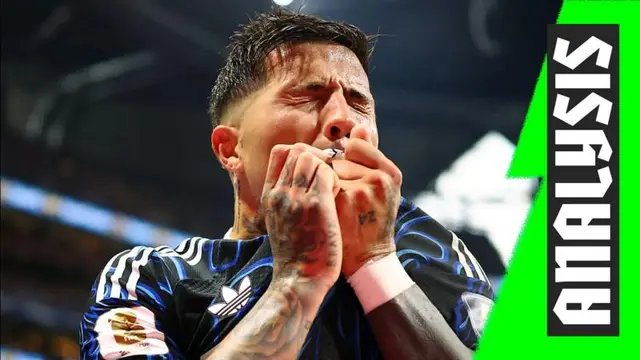
World Cup News
BBC Sport World Cup pundits Wayne Rooney, Joe Hart and Micah Richards look at how Argentina took advantage as England took their "eye off the ball" in their World Cup semi final in Atlanta.
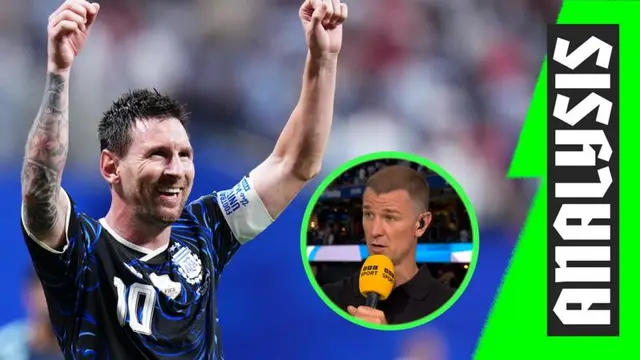
World Cup News
BBC Sport World Cup pundits Wayne Rooney, Joe Hart and Micah Richards believe England showed too much respect to Argentine and Lionel Messi which lead in their World Cup semi-final 2-1 defeat.
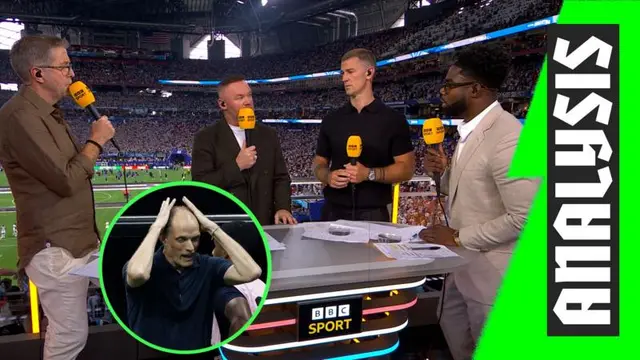
World Cup News
BBC Sport World Cup pundits Wayne Rooney, Joe Hart and Micah Richards believe England head coach Thomas Tuchel's tactical decisions cost the team in their 2-1 World Cup semi-final defeat by Argentina.

World Cup News
England’s destiny is tournament heartbreak. The only question concerns when it comes and how the fates will contrive to make it as painful as possible. This was an implausibly brutal new low. Thomas Tuchel’s team had fought fire with fire on an occasion that was overloaded with shredded nerves. The first half was a physical fight; it was gripping all the same. And the possibilities seemed endless for England when Anthony Gordon put them in front shortly after half-time. A first appearance in the World Cup final since 1966 looked on. Argentina were not finished. There has been a feeling during this tournament that they are beatable, and yet nobody has beaten them. There is a reason for that. Their champion courage. They dug deep into it in the closing stages to complete one of their greatest fightbacks. That it came against England, the old enemy, made it even sweeter. The regrets belonged to England. Tuchel sought to preserve what he had in the final quarter with a switch to a back five, Ezri Konsa coming on for Gordon and playing as the right‑sided centre-half. The head coach had successfully seen out the 3-2 win against Mexico in the last 16 with five defenders on a night when his team were down to 10 men. There was no repeat here. The frustration was that the tactical shift invited Argentina to press on to the front foot. Tuchel played with fire. Argentina dominated the closing stages. It was their attack versus England’s defence and the equaliser was well signposted. That it came as late as the 86th minute only added to England’s devastation. They were so close. Enzo Fernández scored it with a fierce drive after Argentina had worked a short corner via Lionel Messi and England were floored before they could stagger on into extra time. They thought they had escaped when Alexis Mac Allister sent a low shot against the post. It was the second time he had hit the woodwork. But Messi recycled the move on the right, jinked and crossed deep. Lautaro Martínez was unmarked and when the Argentina substitute headed home England were primed to do likewise. It has been a strange tournament for Tuchel and his players, the feeling difficult to shake that the results up to this point had outstripped the performance levels. They did not do enough when it mattered the most against Argentina, especially in creative terms. They barely threatened Emi Martínez’s goal. And when defensive resilience was demanded towards the end, it was not there. Argentina deserved to advance to the final against Spain on Sunday. For England, there was only the beginnings of a familiar inquest. It was a night when the history framed everything. Nobody could ignore it and not only because of how loudly the Argentina supporters chanted the line about Las Malvinas in their World Cup song. The echoes could be felt from the pitches of Mexico 86, France 98, and Japan & South Korea 2002 – the most recent tournament clashes between the nations. The nervous tension pulsed and the first half was best summed up by the expected goals statistic: England’s stood at 0.05; Argentina’s was 0.03. The first effort on goal of any description did not arrive until the 33rd minute, John Stones heading well wide from a Declan Rice free‑kick. Fernández fizzed a drive high on 38 minutes. The tackles flew in and tempers were rarely far from boiling point. A snapshot of the first 45 minutes? It was when Messi got the better of Djed Spence in the 37th minute and then evaded challenges from Harry Kane and Gordon. A split second later, in came Elliot Anderson to halt him with a body check. The England midfielder, who revelled in the intensity of the contest, was booked. It was a long way from being the only tactical foul. England felt they shaded the war of attrition in the first half. They just had to stay patient and wait for their moment. It came in the 55th minute, shortly after Jordan Pickford had denied Julián Álvarez at the other end. One of Tuchel’s main moves at the start was to play Morgan Rogers at right midfield. The idea was to add a bit more physicality. But Rogers is a creative force and he was at the heart of the breakthrough. After Kane’s searching ball up the inside right was repelled only in part by Nico Tagliafico, Rice went wide to Rogers and it was just a lovely cross from him. Gordon worked the position on Nahuel Molina and the cool close-range finish had England in dreamland. At that point England had the belief and, in Spence, a man on a mission. The left-back had started with a determination to take on his opponents, to surge forward. He was fearless. And as Argentina tried to respond to the Gordon goal, they were denied when Spence crashed into a saving slide tackle on Giuliano Simeone. Spence celebrated it like a goal. Pickford did well to keep out a close-range header from the substitute Nico González before the second-half hydration break but the tide had begun to turn. The feeling only intensified after England emerged for the final quarter in the back five. It was all Argentina. Mac Allister hit the post with a header when he had to score and Fernández forced Pickford into another save. Argentina would not be denied. England are coming home. Football is not coming with them.
World Cup News
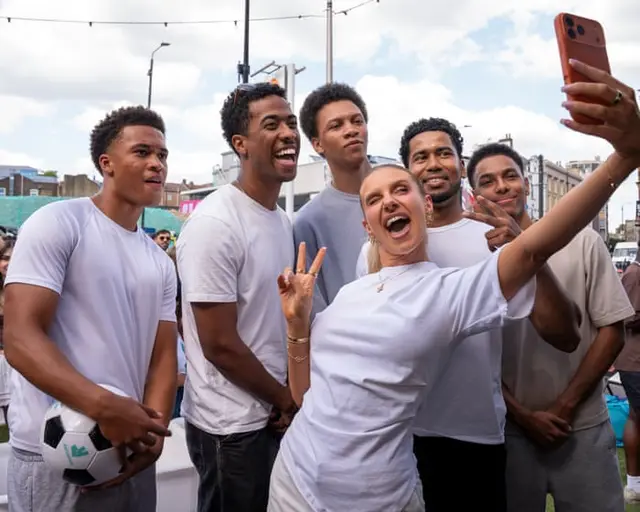
The match-winning England striker is ‘a good ambassador for young people’, says one contestant All together now, with arms in the air: One Jude Bellingham, there’s only one Jude Bellingham … Unless, that is, you happened to find yourself in Shoreditch, east London, on Wednesday, where a dozen young men who looked vaguely like the England midfielder gathered for a lookalike contest almost as competitive as the one currently continuing in the US. For England football fans who dream of cloning their rampaging match-winner, the event might have offered a glimpse of a fantastical future. Bellingham has scored six goals in as many games in the competition, and another one of him in England’s midfield would surely not go amiss. For everyone else, just hours before England were due to face Argentina in the semi-finals in Atlanta, it offered a glitchy megaphone, a scrum of influencers with cameraphones and an opportunity to kill some time before they decamped to the pub for an evening of stress and alcohol. The prize for the Jude-iest Jude? Not, this time, a gold trophy of two figures holding the globe, but a Deliveroo voucher to the value of £1,966 – an always-welcome reminder of the six long decades since England last got its hands on the World Cup. Could this year be any different? The Bellinghams were bullish. “Yeah of course. Come on England. It’s coming home,” said 19-year-old Zane Proctor, a Manchester university student who had found out about the event on Instagram. “I was in the local area and thought, why not?” He probably wasn’t the closest doppelganger, he admitted, but as a big Bellingham fan had wanted to take part. “I feel like he’s a really good idol,” he said. “He is criticised a lot by the media, and I feel like his response to the media is very inspirational for young and upcoming players. So beyond the football, beyond all the goals, I feel he is a really good ambassador for all the young people who look like me, and not even that look like me, to all the young kids that watch on TV. I feel like he is a really good person to look to.” Despite being repeatedly complimented on his resemblance to the player during the month he has spent studying in Britain, Gabriel Mian, 20, from Orlando, had stumbled across the event by accident. “I had to come to the station anyway, and some people told me I had to go [to the competition],” said Mian, who is staying in nearby Brick Lane. “So I just walked up and now l am here, I guess.” Bellingham, of course, might be said to have his own near doppelganger already in the form of his 20-year-old younger brother Jobe. He has replicated his career closely – having already played for Birmingham City, Borussia Dortmund and England’s Under 16s, like Jude – and even uses his first name rather than surname on his shirt to avoid confusion with his older brother. Jobe Bellingham, alas, was not available in Shoreditch on Wednesday. Instead, 24-year-old Marcus Legemah, a master’s student at University College London, was awarded the lookalike crown by popular acclaim, or at least a half-hearted cheer. Is he often told he looks like Bellingham? “Yeah, but it’s normally just drunk people in the pub,” he said. “More since Jude has been playing well. So this tournament, it’s happened.” He was given his prize by “our very own Erling Haaland lookalike” – a bloke with blond hair in a pony tail – to a few optimistic cries of “Kiss! Kiss!”, referencing the real life pair’s affectionate friendship. What was the characteristic he most closely shared with Bellingham? “Sadly, apart from looks I don’t think there’s much,” said Legemah. The victory, nonetheless, “means everything”, he said. “I’m so excited. Now I can can celebrate the final with some friends, with pizzas and beer.” As for who will win the World Cup, however, he has confidence worthy of England’s No 10. “I think we are going to win. You have to have the confidence. I think it’s coming home.”
World Cup News
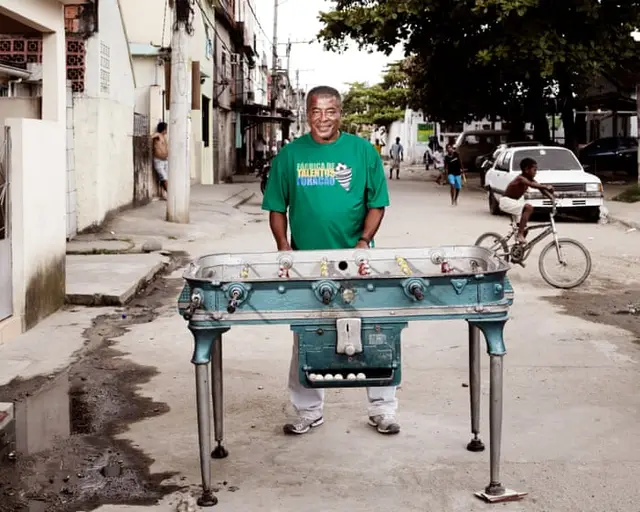
‘Nowadays Jairzinho works with kids in the favelas of Rio where the unwritten rule is that you have to be out by 5pm. I asked for 10 more minutes and when I turned round, a guy had pulled a gun on my crew’ I’m not a mad football fan. What I most love about the game is its universal appeal – it’s all about a ball crossing a line, and a goal is a goal whether it involves two jerseys in a park or the one that determines the outcome of a World Cup. But when I realised in 2007 that only 58 people had ever scored a goal in a World Cup final and that only 34 of these men were still alive, I thought it would be a great idea to photograph them. It quickly became apparent that book sales alone would never finance the project – there were only two English players, the rest were in Europe or South America. But a successful pitch to a film producer won me the opportunity to travel to 13 countries with a documentary crew. Over the course of four years, we interviewed every member of the exclusive World Cup club, and I made portraits of them all. This is Jair Ventura Filho, better known as Jairzinho, who scored the third goal for Brazil when they took the title in Mexico City in 1970, beating Italy 4-1. Nowadays he works with underprivileged kids in the favelas of Rio de Janeiro. This portrait was taken in a favela in the Manguinhos neighbourhood, where he runs a football school. The favelas are these amazing shantytowns where the police have no jurisdiction. There’s an unwritten rule that anyone who doesn’t live in the favela has to be out by 5pm. We had to hire security from the local drug lords – they were basically just kids, and by mid-afternoon they’d got bored and left. We did the shoot with Jairzinho at a public football ground and it was only as we were leaving that I spotted this beautiful old football table outside a bar. It felt like a gift, and Jairzinho really liked it. I said: “We’ve got to do this, can I have 10 more minutes?” When I’m doing documentary photography, I don’t like things to look artificially lit, but I had my assistant Stevie holding a small light. I shoot on a Hasselblad with a digital back and always use a tripod. I learned quite early on that if the camera stays in the same place and I’m looking down into the viewfinder and talking to the person I’m photographing, they don’t change their behaviour, which is not the case if you’re moving around and lift the camera to point directly into their face. As I set up the shot, I became aware of a guy approaching down the street on a bicycle – not the kid you can see in the photograph. He came sneaking through the image and disappeared behind me, where Dan the director, Gretha the producer and a few other members of the crew were standing with our local fixer, waiting for us to finish. I was concentrating on Jairzinho, but could hear an increasingly heated conversation going on. Eventually, Dan said, “Michael, I think we ought to go.” When you’re photographing someone famous, they never give you enough time – you just keep going until they’ve had enough. Jairzinho seemed fine, so I carried on for a few more minutes, until I was sure I had the frame. Then I turned to see the man on the bike had pulled a gun on Dan and Gretha. Dan said: “Do you get it now?” It seems this guy had taken exception to our presence in the favela. The rest of the crew and the fixer had cleared off, but Stevie, Jairzinho and I had been too focused on what we were doing to notice. Dan and Gretha could easily have insisted we leave immediately, but I really appreciate them giving me the time to get the shot I wanted. We didn’t hang about. Apart from the composition and the fact we managed to shoot in a favela, which is so characteristic of Rio, what I love about this picture is the fact that the chaos going on behind the camera isn’t at all apparent in the portrait. That’s often the case with photography. Born: Wakefield. 1966 – although I was born there by mistake, I’m actually from Belfast. High point: Winning stuff is great and seeing work published internationally is great, but the high points are when you really feel you’re completely immersed in what you’re doing. Top tip: If you’re going to make a living you are going to have to do what you’re told, but always make sure you’re also doing your own stuff. Work that really excites you, not what you think you should be doing. That’s where you’ll produce your best work and it will make you better at everything else. See more images from “I scored a goal in the World Cup final” here
World Cup News
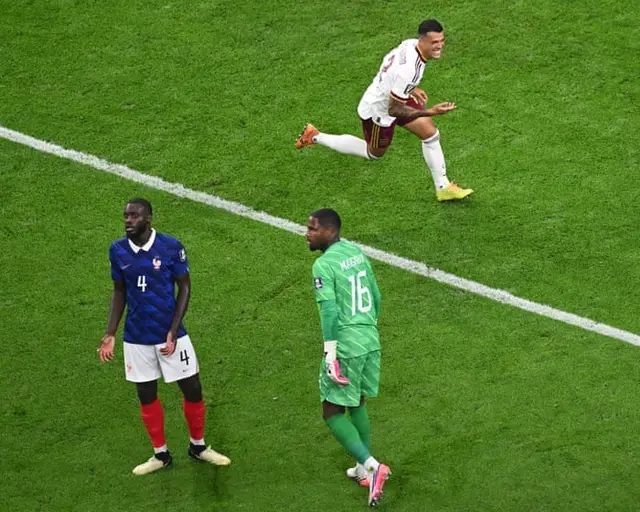
Let this be a lesson for everyone foolish enough to cast Spain as underdogs. How they enjoyed dishing it out here, reducing France to passengers and surely guaranteeing nobody will make the same mistake twice. They will be favourites to win Sunday’s final, whether that turns out to be a rerun against England or a time-bending meeting of Lamine Yamal and Lionel Messi, and those minded to back against Luis de la Fuente’s side will need a mightily compelling reason. France never came close to finding one. Kylian Mbappé had one last go in added time, shooting harmlessly over, and his forlorn expression upon glancing up to check the clock said more than enough. He knew the game was up but, in truth, that had barely been in question since midway through the first half. Spain smothered France but outplayed them too, picking their moments to penetrate and adding a beautifully worked goal from the rampaging Pedro Porro. It was ultimately a triumph of function over form. That is not to play down the magic that sparkles from Lamine Yamal’s boots or the fizzing invention of Dani Olmo, who was behind most of Spain’s best attacking work. The point is that their collective swamped the individual flair of France, whose front four had run amok earlier in the tournament but were reduced to faulty, spluttering components by a superbly oiled machine. Spain knew they would need to assert control and deny France any oxygen on the transition. They were perfectly happy to let long stretches pass with little happening, popping the ball between their constantly available midfielders and breaking up play by fair means or foul if they were caught out. It did them no harm that France operated with a bewildering lack of intensity and they were given a leg-up for their opener, too. The first half had dripped with mutual respect until Lucas Digne, tasked with defending Marc Cucurella’s cross from the left, nodded the ball up in the air and shaped to smack it clear. He was oblivious to the onrushing Lamine Yamal, who nudged it past him and was sent flying. Iván Barton, the referee, hardly needed to think twice about awarding a penalty but there was still the question of whether the video assistant referee would intervene. Lamine Yamal, launching himself through the air, had used his upper arm to make contact but was deemed to have connected legally above the sleeve line. Such debates were of no interest to Mikel Oyarzabal, who dispatched comfortably. From there Spain produced a masterclass. France did not create a chance before the interval, unless one is generous enough to note Unai Simón dashing from his box to clear ahead of Mbappé. In the end Didier Deschamps, two wins from undisputed greatness having led another team to the business end, got the big calls wrong. He recalled the fit-again Aurélien Tchouaméni but the midfield barely strung anything together. Bradley Barcola was preferred on the left to Désiré Doué but showed no composure on the rare occasions he made ground. It hardly helped that William Saliba departed through injury shortly after Oyarzabal’s spot-kick. Nor did it assist that Adrien Rabiot, booked early for a foul on Olmo, was a walking yellow card from that moment and made way at half-time. The introduction of Manu Koné made only a modest difference; France were outnumbered in the middle, any supply to Michael Olise stifled and the playmaker forced to seek influence in uncomfortable areas. By the end Olise, a star for most of the summer, was watching from the sidelines as Rayan Cherki was tasked with summoning a miracle. Nothing came off on those rare occasions when France could mount a sustained threat, Ousmane Dembélé enduring a particularly sub-par afternoon summed up when he overcooked a simple pass for the overlapping Jules Koundé. By contrast Spain mixed care with precision. Add a little flair and you have the recipe for their second goal, forged when a tumbling Olmo managed to return Porro’s pass into his path. A chasm had appeared in France’s left side, pressure on those swarming white jerseys nonexistent. Porro surged into it and gave Mike Maignan no chance. The outcome was beyond doubt. A narrow offside call denied Lamine Yamal, heavily involved if not quite central to proceedings, a third goal. The substitute Ferran Torres headed wide and the lack of belief from France, who cut the figure of a team that could not comprehend their fate, was palpable from the stands. Mbappé awoke with an angled effort that Simón batted behind, shortly afterwards seeing Cucurella deflect a shot wide, but France were never allowed a serious opening. Under Deschamps’ successor they will have to seek the kind of long-term identity, which mixes discipline and diligence with daring, that Spain laid down so devastatingly here. Mbappé, whose eagerness to wash away the near miss in 2022 had been manifestly clear over the past month, must stew for another four years. In the meantime Spain, pulsing with assuredness and belief, will take some stopping.
World Cup News
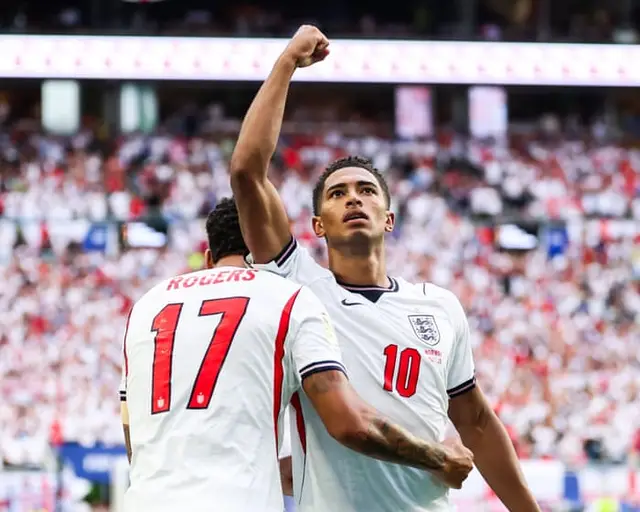
Bellingham has transcended the hostility he has faced from press and pundits to become the emotional and symbolic focal point of the team Months before the World Cup, the familiar chorus of antipathy that had followed Jude Bellingham almost since his emergence on the international stage grew louder. A number of writers, pundits and former professionals questioned whether one of England’s most gifted footballers might prove detrimental to the squad’s harmony. The clearest expression of these arguments appeared in a Daily Mail article in November 2025 beneath one of the most ignominious headlines in English footballing history: “Leave Jude at home.” Amid a wave of criticism directed at Bellingham, Ian Wright felt compelled to defend him on an episode of Stick to Football. Once clipped, his remarks spread rapidly across football’s social media ecosystem and beyond, both because of Wright’s candour, and for placing the hostility directed at Bellingham within a historical tradition of policing Black men’s behaviour. “Someone like Jude, for some reason, frightens these people,” Wright said, before adding: “It’s something you’re taught as a Black man … to keep your head down and be, for want of a better word, a humble fucking slave.” There are, of course, perceived footballing transgressions that have set Bellingham on an unavoidable collision course with English football’s established order. His first “mistake” was to see Birmingham City retire his shirt number before he had turned 18. His second was to reject England’s elite clubs in favour of Borussia Dortmund. Real Madrid then paid an initial €103m (£88m) for him, entrusting him with the No 5 shirt once worn by Zinedine Zidane. Throughout, Bellingham has appeared almost entirely devoid of the insecurity that has consumed so many English footballers abroad. But Bellingham’s success in Madrid has rarely been treated as a source of English pride; rather, it is read as an implicit challenge to the Premier League’s claim to occupy football’s summit. He is beamed back to us already belonging to the wider world. While these factors partly explain the hostility Bellingham provokes, Wright’s account of why he is read this way is ultimately more convincing. There is a cultural specificity to Bellingham’s comportment that, while immediately familiar to many Black Britons, is read elsewhere as an aggravating factor. As a child, my aunt would insist I walk with my shoulders back, and my head held high, so that I might project an image of myself others might else refuse to imagine. As an adult, I learned this advice was a repetition of words she had first spoken to herself after arriving from the Caribbean into a society that told her she did not belong. We don’t know whether Bellingham received similar instruction – perhaps we are simply witnessing the unshakeable self-belief of one of the world’s finest footballers – yet given how common this form of cultural inheritance is among Black families, it is entirely plausible that he did. English football repeatedly searches the emotional terrain of its history for meaning, obsessing over its solitary triumph and the countless moments of “almost”. It returns, too, to the players in whom it has recognised itself: Bryan Robson, David Beckham, Paul Gascoigne. Perhaps none has proved as enduring as the last of those. Jack Grealish was briefly cast as his spiritual successor, and before Euro 2020, Phil Foden dyed his hair the same peroxide hue Gascoigne wore at Euro 96, consciously placing himself within that same lineage. Bellingham exposes the limits of this process of recognition. England has long capped exceptional Black players. Yet whether through outright social refusal – as Paul Gilroy observed in “Race”, Sport and British Society, John Barnes’s exclusion from British sporting greatness became “a matter of national honour” for some England fans and notable pundits – the preference for Alan Shearer that consigned Andrew Cole to his shadow, or the sustained hostility directed at Raheem Sterling, the national side has until now never felt able to declare its defining figure a Black one. But in producing the greatest individual England tournament performances of recent memory, Bellingham has become tactically indispensable and the emotional and symbolic focal point of the national team. The spontaneous chorus of Hey Jude that now greets England victories offers its own evidence of this: a Black footballer whose name, features and heritage are no barrier to instinctive English identification. Each successive generation of Black people born and raised in England is shaped by the country as much as it reshapes England in return. While it would be irresponsible to insist that one footballer can resolve the tensions that so often place Blackness and Englishness in supposed opposition, Bellingham clearly sees no contradiction between the two. Perhaps his greatest significance lies in showing those who come after him that they need see none either. Calum Jacobs is the author of A New Formation: How Black Footballers Shaped the Modern Game and the founder of CARICOM magazine Do you have an opinion on the issues raised in this article? If you would like to submit a response of up to 300 words by email to be considered for publication in our letters section, please click here.
World Cup News
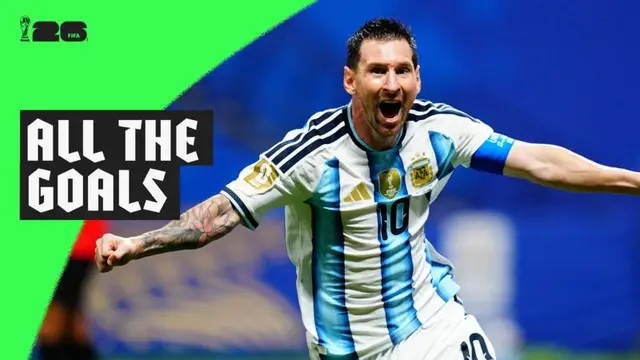
Watch all 19 of Argentina's goals at the 2026 Fifa World Cup 2026 so far, which have propelled them to Sunday's final against Spain.