
AccaMate logo
FIFA World Cup 2026 logo

FIFA World Cup

2026 — The Tournament Of A Lifetime

11 June – 19 July 2026

Host nations

Canada flagCanada
Mexico flagMexico
USA flagUSA

Countdown to World Cup

--Days
:
--Hrs
:
--Mins
:
--Secs

World Cup News

The latest stories, squad announcements, build-up coverage and tournament analysis — direct from FIFA.

Feeling lost without the World Cup? Six ways to survive the weekend

World Cup News

Feeling lost without the World Cup? Six ways to survive the weekend

What to watch on TV plus other ways to occupy your time now that the party is over The 2026 World Cup is over, and the millions of people who enjoyed it now find themselves presented with a yawning chasm this weekend. In the UK alone, ITV and the BBC broadcast approximately 275 hours of live coverage over the duration of the tournament, and something that colossal will be hard to replace. But fear not. Just because the football is over, we are still brimming with things similarly designed to take our minds off the screaming hellpit that is the world around us. Here’s a guide, hope it helps. The good news is that, while the World Cup is over, the Commonwealth Games have just begun in Glasgow with a wealth of sports to watch, including swimming, netball, boxing, gymnastics and bowls. The bad news, however, is that all of this will be crammed into a single hour of joyless highlights on Channel 5 at 10.30pm, because TNT bought the rights and you need a subscription to watch it. The same goes for the Tour de France, now that ITV’s 24 years of coverage has ended. If it’s normal, old-fashioned, free-to-air televised sport you’re after, you’ll have a harder time getting your fill. There’s a rugby league match on BBC Two this afternoon, and some cricket tomorrow, but other than that your best hope is to put ITV4 on today and just let its trickle of low-level sport wash over you. Highlights of Man Utd v Nottingham Forest from December 1979 at 6.20am. World rally highlights at 7.20am. Racing at Ascot at 9.30am. Then Formula E. To top it off, Sean Bean in Sharpe this afternoon and Tom Cruise, who gave the opening speech at the World Cup final, is back again in Top Gun at 10.05pm. That’s basically the same as the World Cup, isn’t it? Isn’t it? You should really go and watch The Odyssey. Christopher Nolan’s epic film is breaking box office records left and right, with tickets in his preferred format (70mm Imax) genuinely hard to come by. And, quite honestly, it isn’t so different from the World Cup. It is loud and long and exciting. It offers no end of topics to get mock-angry about (where were the Phaeacians? What happened to all the sex? What was Nolan thinking, infusing Judeo-Christian themes of guilt into an ancient poem whose climactic solution is an orgy of violent vengeance?). Also, it is essentially the story of a man who, in the cold light of day, looks back at a period of intense tribalism with a sense of newfound regret, and if that isn’t the post-World Cup mood writ large, I don’t know what is. Perhaps you have simply grown accustomed in the UK to staying on American time, and that habit is proving hard to shift. If that’s the case, then you have some options to prolong your new nocturnal hours. If you’re a Netflix subscriber, then WWE SummerSlam starts at 11pm BST on 1 August and will run for several hours. Also, the San Diego Comic-Con starts tonight, and runs on California time, providing you with the chance to stay up all night refreshing social media in the hope that you get to see a cool new trailer in real time. Alternatively, the Delta Aquariid meteor shower is likely to peak on the night of 30 July. It isn’t guaranteed that you’ll see it from the UK, but it’s that or going to bed like a loser. Go and drink something. Urinary tract infections are no fun, especially at this time of year. And watch an advert while you’re at it, just for the full FIFA effect. Most of the fun of the World Cup is all the second-guessing and conjecture that goes with it. Luckily, British political life is especially ripe for this exact thing at the moment. We have (another) new prime minister, providing us with endless potential for amateur punditry. Is Angela Rayner being played out of position? Has Ed Miliband still got the legs for international diplomacy? How many disappointing performances will it take before the country begins demanding yet another change of manager? Even better, the Clacton byelection is coming up, which is a great opportunity to get an office sweepstake going. Which of the 34 candidates will you draw? Binface? Farage? Baron Von Thunderclap? Abi Hookway from Channel 5’s Rich House Poor House? Woke Trump Carrzee? Laurence Fox? What excitement. This is the best news of all. It was reported this week that Donald Trump wants America to host the 2038 World Cup. He would be in his fifth term as president by then, too. Joy upon joy.

FIFA.com24 Jul 2026
Argentina behaviour after World Cup final was ‘intolerable’, says De la Fuente

World Cup News

Argentina behaviour after World Cup final was ‘intolerable’, says De la Fuente

Spain head coach hits out at ‘acts of aggression’ Spain’s head coach, Luis de la Fuente, has hit out at the “intolerable, unacceptable” behaviour of Argentina players in the immediate aftermath of Sunday’s World Cup final. At the forefront were Nahuel Molina and Leandro Paredes, who attacked Rodri and Eric García respectively at New York New Jersey Stadium as Spain’s players celebrated winning the World Cup for a second time in the country’s history. Paredes also confronted Spain’s Gavi. “At the time, I didn’t realise it. I was celebrating, hugging teammates,” De La Fuente told Spanish television. “But in any case, it is intolerable, unacceptable, it cannot be allowed. Players of that stature, whom I praised in the days leading up to the match and continue to praise, who are great players with a tremendous coach, surely they must have felt just as bad as we did seeing those reactions.” De la Fuente also praised the exemplary behaviour of his own players faced with these “acts of aggression” and “provocations” which he believes could have escalated into more serious incidents. Although the scenes were filmed and widely shared on social media, they have not yet resulted in any sanctions against the Argentina players. Fifa has opened an investigation into the incidents to determine whether there may have been violations of the world football governing body’s disciplinary code.

FIFA.com24 Jul 2026
Norway considers filing Fifa ethics complaint over Trump role in World Cup red card saga

World Cup News

Norway considers filing Fifa ethics complaint over Trump role in World Cup red card saga

Norwegian federation president: Fifa on a ‘slippery slope’ Trump called Infantino for review of Balogun’s red Donald Trump’s role in clearing Folarin Balogun from a mandatory one-game ban at the World Cup is set to provoke a formal complaint to Fifa ethics investigators. The Norway soccer federation said Thursday its board of directors will consider filing the complaint at its next meeting, likely on 6 August. “We need our leader in Fifa to say that this was an error,” Norwegian federation president Lise Klaveness told the Times in an interview published Thursday. After Trump called Fifa president Gianni Infantino, a one-game ban for Balogun’s red-card tackle against Bosnia and Herzegovina was deferred so he could play against Belgium with a quarterfinals place at stake. Belgium beat the US 4-1 after a chaotic 36 hours at the World Cup. The Belgium players were seemingly fired up by one of the all-time controversies in tournament history. Trump called the referee’s red card for Balogun after video review a “horrible” call and took credit for getting Fifa to review what should routinely have been a one-game ban. “We all know that this verdict was influenced from external forces and did not have the proper process,” Klaveness told the Times of the Fifa ruling that was unprecedented in the past 60 years at World Cups. “When you bend a rule like this, you’re on a slippery slope that will put the whole game at risk,” said the former Women’s World Cup player for Norway, who is an elected member of European soccer body Uefa’s executive committee. Klaveness is a lawyer and judge who has positioned the Norwegian federation as a conscience in world soccer since her election in 2022. “It is a worry for the game when you compromise fundamental rules of the game,” she said Thursday about not enforcing Balogun’s ban. Norway previously joined a London-based NGO’s complaint to the Fifa ethics committee alleging Infantino breached a statutory duty of political neutrality, including by creating a peace prize to award to Trump at the World Cup draw in December. The close personal and political ties between Trump and Infantino include the US president believing the soccer official could be a good pick as next secretary general of the United Nations, the New York Post reported this week. The human rights NGO, FairSquare, also has filed an ethics complaint about the Balogun incident to the International Olympic Committee, where Infantino is an elected member, about breaching its rules on political neutrality.

FIFA.com23 Jul 2026
Ruiz & Gavi's reward for World Cup win... 150kg of tomatoes

World Cup News

Ruiz & Gavi's reward for World Cup win... 150kg of tomatoes

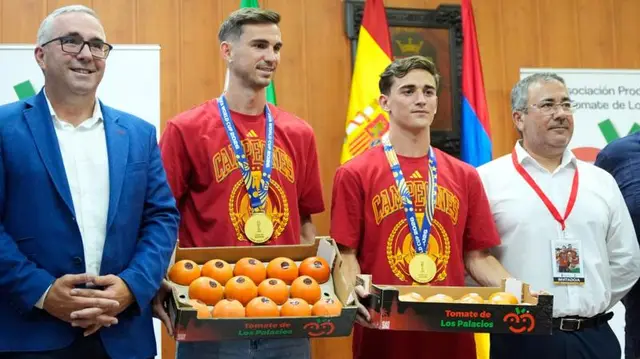
Winning the World Cup brings many rewards for players... but receiving your own body weight in tomatoes is surely one of the more unusual. That is what Spain midfielders Fabian Ruiz and Gavi were presented with when they returned to their hometown after being part of the Spain squad that triumphed in North America. The pair come from Los Palacios y Villafranca - a town to the south of Seville that has a population lower than 40,000 - and returned there on Wednesday for an official reception at the town hall. Paris St-Germain's Ruiz, who started the final against Argentina, and Barcelona's Gavi wore their gold medals as they were greeted by Los Palacios y Villafranca officials and a large crowd. As part of the occasion to honour their achievement, they both stepped on to weighing scales to establish the quantity of tomatoes they would each be given. Ruiz is to receive 85kg and Gavi 68.5kg in a tradition that local officials say "has become a hallmark of the municipality for honouring its great athletes". Former Spain winger Jesus Navas also attended as he was the first player from Los Palacios y Villafranca to win the World Cup, when he did so in 2010. Navas, the former Manchester City forward, and Ruiz also received the gift of tomatoes after Spain won Euro 2024. The town's sports pavilion is named after Navas and Ruiz and Gavi will now have football fields renamed after them as a tribute to their achievements. "In addition, the town hall will promote the construction of a monument dedicated to the three champions from Los Palacios," said a town council statement., external "In this way, the city council wants to pay permanent tribute to three athletes who represent the pride of an entire town and who, with their sporting and human trajectory, have become role models for several generations of children and young people." Paredes should not be suspended - Spain's Gavi

FIFA.com23 Jul 2026
‘A surprising success’: US, Mexico and Canada fans on hosting the World Cup

World Cup News

‘A surprising success’: US, Mexico and Canada fans on hosting the World Cup

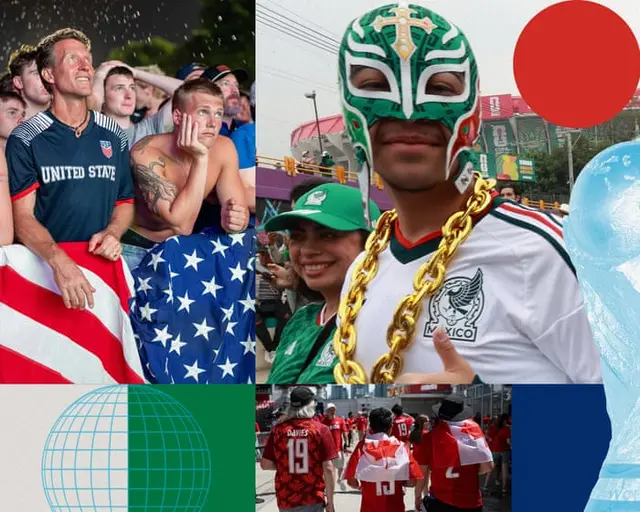
The joy, love, hope and fun provided by fans outweighed the commercialism, extortionate prices and ugly politics This summer has been so vibrant and full of life. I had my doubts but, as the World Cup approached and Boston got ready to host its first game, I started feeling the excitement and enthusiasm in the air. That mainly had to do with the huge numbers of Scottish fans who arrived for their match against Haiti. They were a delight, what with their shenanigans of putting cones everywhere, walking around in kilts and carrying bagpipes, jamming with the other buskers on the streets. They were such a fun bunch. I found myself getting hooked. Seeing people from so many different countries, kitted out in their jerseys, gave you the feeling that something was happening. Friends and colleagues who don’t follow the sport were as excited as me. I attended three games and my only complaint is the extremely expensive ticket prices. The fans who came only had wonderful things to say about American hospitality – but everyone agreed that the political situation in the country is terrible. It was heartening that the visiting fans were able to separate the administration from the people living here. Moon, Boston The mood was a bit sombre before the World Cup, with store owners complaining Fifa had locked them out and people downbeat about the incredibly high ticket prices. But once it started the cognitive dissonance did not stop people from going to the many watch parties in town, which were filled with fun and joy. We were priced out of the real thing but the party still went on, preferably without Fifa. In spite of everything done by Fifa, we sent out the message that people, and not institutions, own football. As for highlights, the incredible celebrations after Colombia beat DR Congo – which extended for hours after the game, well into the night, going on for blocks and blocks – will stay with me. I don’t think the city had ever felt more Colombian. Yes, and Merlin the duck. Eme Guitron, Guadalajara The first week set the tone: the notoriously fickle Vancouver weather was perfect, the pedestrianisation of Granville Street was a roaring success and it seemed as if everyone bought into the experience. I attended Egypt v New Zealand and it was a real bucket-list moment. It was a flawless experience from start to finish: public transport ran like a dream, the atmosphere at the fan parks and stadium was incredible, and it was a great game. I even managed to win a correct score bet! People really welcomed the world. They say “Canadians are born all over the world” and it was wonderful to see the various diasporas bring their colour and energy to watching the games on the big screens. We saw the best of Canada at the tournament: beautiful and welcoming. I have been banging the drum for Vancouver to friends and family for years. After seeing just how fantastic this city is, hopefully the rest of the world will travel here too. I will never forget watching my son open his first ever pack of Panini football stickers on the eve of the first game. Ben Lane, Vancouver I lived in South Africa when it hosted the World Cup in 2010. Fans were based in Johannesburg or Cape Town, with the World Cup central to everything for five weeks. You could feel it throughout the country. But this time the host cities were way too spread out. I was in DC, New York, Chicago and Atlanta during this tournament – two host cities and two cities that could have hosted. Unless you purposefully put yourself into a football-watching location, nothing seemed to be different than a random Tuesday. Kyle, New York It seems like people had a good time. Roads and transit were a bit of a mess and we are not used to seeing people lined up at bars and pubs at 9am – there was a shortage of beer. Vancouver hosted the Winter Olympics a while back and it had the same vibe. I personally am glad it is over. I want my boring city back, please. Eleanor, Vancouver I attended several matches during the 1986 World Cup but it was impossible this year because of the high prices. The mood was amazing in the city, though, with people enjoying matches in restaurants, bars, public squares, fanfests and stadiums. The Mexican fans were wonderful and gave a good impression to the world. My partner is English and we have two sons who love football, so the best moment was enjoying the Mexico v England match together in Mexico City. Oliver Regueiro, Mexico City We went to a fanfest in Philadelphia but did not attend any games because we ain’t ballin’ like that. Not even my eldest brother – who attended the World Cup in South Korea and Olympic football matches in China – was willing to pony up for those outrageously inflated ticket prices. Despite the shenanigans of Fifa and Donald Trump, the World Cup was a surprising success. We’ve loved having all the international fans as well as seeing our own varied populace rooting for ancestral lands. People still think our elected leader is a feckless monster – they aren’t wrong – but now they remember it can be a lovely place to visit. The camaraderie and exuberance shown by fans – especially from Norway, Scotland and Japan – reminds us all of the best of humanity. W Pfeister, Louisiana The atmosphere in the buildup to the tournament was coloured with cynicism: about high ticket prices, Fifa’s disregard for fans, and a queasiness about Gianni Infantino’s eagerness to cosy up to the Trump administration. Co-hosting with them? We felt like we needed a shower. Of course, as is always the way, when the tournament started the cynicism had to compete with genuine enthusiasm for the fantastic football, the Cinderella stories, and the sheer thrill of hosting the world. I had talked a good game about boycotting as I loathe Fifa with the heat of a thousand suns, but my friends and family persuaded me I would regret not going to some games. So I caved and attended two matches, which both had a great vibe. The atmosphere in Vancouver was superb. The buzz going into the stadium was terrific and everything was extremely well organised. The host cities and fans did a hell of a job. Respect where it’s due. Allan Castle, Vancouver On one level the World Cup was a success and on another level it was an embarrassment. A success because it brought the world’s game to a level of national attention that is refreshing – much like the Olympics. On another level, it put on display the dysfunction of the US government: referees denied visas, teams forced to train in Mexico, and ugly politics between our president and Fifa president. I hope the trilateral hosting is repeated in future minus the embarrassing egotistical displays. Wayne H Donner, New York The mood was vibrant. We haven’t seen the city come alive quite like this in a number of years. Toronto did not get many matches but, given it is so multicultural, every game felt like a home game for the teams playing. Most people bought into the event. Also, having to host meant the city finally made progress around things such as transit and essential roadworks. Maybe we should host things more often. I was surprised at just how many fans came to our city, some of their marches to the stadium were genuinely impressive, especially for the Portugal v Croatia game. Canada is not just a hockey country; this World Cup has proven that definitively and I can’t wait to see how the tournament will change the game here. Prem, Toronto Everyone has been positive about our foreign guests, and we are glad they had a good time. Our guests have behaved with exquisite politeness even while partying with great enthusiasm. A friend of mine went to a game in Atlanta and said it was the greatest experience of her life. Many people who generally do not pay attention to sports (including myself) have been glued to the TV watching the matches. I believe the tournament will leave a legacy of US cities being able to host these large events in a manner that delights our guests. Hopefully, the world will see us in a more positive light. The highlights were watching our foreign guests partying in our cities, enjoying our food, and generally enjoying the American experience. Also, watching the Scots march through the streets of Boston was very exciting. I cannot get enough of those bagpipes! They are what got me interested and made me start watching. Anne Landrum, Atlanta I was lucky to go to five games and the fan excitement will stay with me for ever. Being able to see Canada play in my home town in the World Cup (and win) was something I never thought I’d be able to say. I want people who watched the games in Vancouver to have a favourable view of my city, and I think the way it was executed will do that. I want people to think of Canada as a country where everyone is welcome and celebrated. We are a country of immigrants and we are stronger because of it. Populism and xenophobia seem to be on the rise across the world, so seeing people from all over take such joy in watching their team was beautiful. There was never hate for the opposing team; there was never hate for another country or its people; and there was no bragging about how one person’s country is better than the rest. It was purely a party. Jayden, Vancouver It was great. Our country has been divided (like the rest of the world) for political reasons for a long time. During the last six weeks we have been one again: one country, one team! We regained that sense of great hospitality we had lost due to nasty violence and headlines about drug gangs. I did not hear about a single incident around the games. I will not forget singing the national anthem during the opening ceremony with my family. Rogelio Torres, Mexico City I was surprised at the level of interest. It always peaks when US teams make runs at World Cups, but nothing like this year. Everyone I know followed intently. I was fortunate enough to attend several matches, including US games in Santa Clara, LA and Seattle. It was an absolutely electric atmosphere in the stadiums; I’ve never seen anything close to it at US matches previously. Seattle was especially jaw-dropping given the noise, the whole stadium being on their feet for the entire match, and the weirdly appropriate use of Country Roads. With the stadium adjacent to the city centre, the atmosphere spilled on to the streets in a way the suburban stadiums can’t equal. Allan Timpe, California I left my home state of Massachusetts to follow my team, Egypt, during the tournament. Some cities did a better job than others and it was noticeable how much the vibe was different when the stadium was downtown compared with when it was outside the city. In Dallas and Boston, you couldn’t really tell there was a World Cup; in Seattle, Vancouver and Atlanta, you couldn’t escape it. Overall, considering the barrage of negativity that rightly surrounded the tournament before it started, it has exceeded my expectations. I just wish more games were played in Canada and Mexico. Omar Aly, Boston

FIFA.com23 Jul 2026
A host of issues: World Cup focus turns to Morocco with costs and legacy topping agenda

World Cup News

A host of issues: World Cup focus turns to Morocco with costs and legacy topping agenda

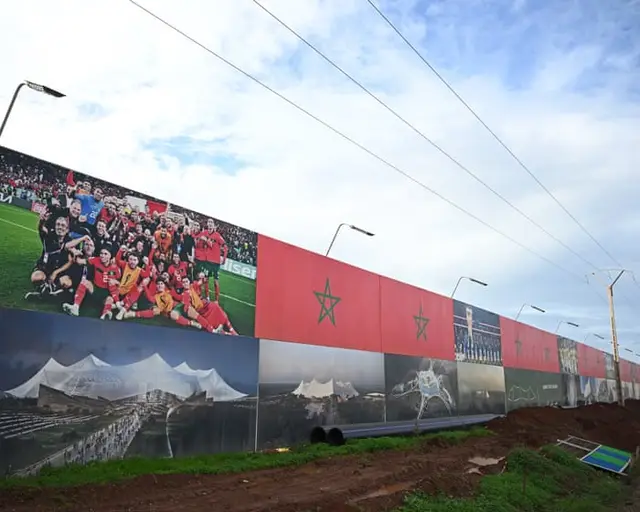
With just over 1,400 days to go until 2030 kicks off, the co-hosts are facing a series of challenges familiar to their South African predecessors Morocco’s World Cup adventure came to a halt with their quarter-final defeat by France. But taking a break, even for a brief post-season summer, is no option for officials of the FRMF, the country’s football federation. The Women’s Africa Cup of Nations (Wafcon), in its newly expanded 16-team format, begins in Rabat on Sunday, a week after the World Cup final in New Jersey, and Morocco then hosts the Under-17 Women’s World Cup in the autumn. The main focus, however, with just over 1,400 days before the start of the centenary 2030 World Cup finals, which Morocco will co-host, mainly with Spain and Portugal, is to ensure that preparations are professionally managed for the second World Cup to take place on African soil. With 50-60 billion Moroccan dirhams (£4bn-£4.8bn) budgeted for direct football investments, and further expenditure for infrastructure upgrades totalling a reported £17bn, the task is herculean. An International Monetary Fund assessment found that accelerated expenditure between 2024 and 2030 would amount to the equivalent of 11.9% of the country’s 2024 GDP. The Morocco 2030 Foundation – the country’s tournament preparation organisation, which started work in 2024 – has spent considerable time in the United States to learn from its organisation of the World Cup. Meetings with Spain and Portugal happen monthly “to align cooperation” and Fifa is expected to designate the host cities at the end of this year and decide whether it will revert to the local organising committee (LOC) model ditched for this year’s tournament because world football’s governing body managed preparations from its Miami office. “The World Cup, for Morocco, is beyond football; it is about developing infrastructure that would be beneficial for the country going forward,” said a leading official who declined to be named. “Our stadiums in Rabat and Tangier are 100% ready.” King Hassan II, who reigned for 38 years and died in July 1999, began the country’s quest to host the World Cup with a failed bid to stage the 1994 tournament. Three subsequent attempts – 2006, 2010 and 2026 – also failed, before Morocco got the 2030 nod, under its current monarch, King Mohammed VI. “Being in my 40s, I bear testimony to all the unsuccessful bids to host the World Cup,” says the journalist Amine El Amri. “Hosting a World Cup is a project that engages every Moroccan in a common dream, knowing that a World Cup comes with a cost, but also with a huge boost to the infrastructure of a very young and very demanding society.” Abderrahim Bourkia, a sports sociologist at the Institute of Sports Science in Settat, does not dismiss the view of those who question the World Cup’s importance to the country. “Others with political positions wonder whether the huge investments should be directed toward education, health, or employment,” he says. “Social status and educational background can shape perceptions too. Public opinion, therefore, remains somewhat ambivalent, reflecting differences in social background, political views, and economic expectations. “Morocco is investing heavily in transport infrastructure, airports, railways, stadiums, urban renewal and digital services. Beyond physical infrastructure, the country is strengthening its institutional capacity to organise mega-events, coordinate policies and improve governance.” Morocco would be well advised to draw on South Africa’s 2010 hosting knowledge. “Our experience shows that ‘success’ lies in planning for legacy, promoting national unity and ensuring infrastructure does not become a burden over the long term,” says Dennis Mumble, a former CEO of the South African Football Association, who was a member of the 2010 World Cup’s LOC. “Some stadiums can become a burden on the fiscus, if not utilised optimally. I don’t believe we built white elephants, but we may not have learned how to position these venues as multi-purpose venues, for concerts of global performers, multi-sports use, church and massive political events.” With many Moroccans apprehensive about the cost of hosting, Mumble tells a cautionary tale about South Africa’s experience. “There were significant cost overruns on the stadium development because the contractors knew the government approved the funds quite late. The result was predatory pricing imposed by contractors who knew we had no choice but to pay whatever they charged. “They were later [criminally] charged and convicted, paying relatively steep fines for this unlawful conduct. Planning to the most minute detail became everything for us.” Morocco is framing its co-hosting of the World Cup as “one with African colours”, but many within the continent’s football community, particularly its sub-Saharan members, are wondering whether, beyond the PR slogans, there will be genuine legacy benefits. Over the past decade, the FRMF has entered into bilateral cooperation agreements with the majority of football federations on the continent. With nearly half of African countries lacking first-rate pitches to stage international matches, forcing them to play official games outside their countries, Moroccan officials say a partnership with the Confederation of African Football to solve this is a part of its World Cup legacy programme. Mumble counsels, based on his experience in the four-year buildup to the 2010 event, that global reputation management will be as big a challenge for Morocco as the nuts-and-bolts preparations, with its political, economic and social issues put under closer media scrutiny. That is something Qatar, the 2022 host, knows a lot about, having had to deal with deeply negative criticism over the deaths of migrant workers and human rights abuses.

FIFA.com22 Jul 2026
Paredes should not be suspended - Spain's Gavi

World Cup News

Paredes should not be suspended - Spain's Gavi

Spain midfielder Gavi does not believe Argentina's Leandro Paredes should be suspended for his part in the confrontation following the World Cup final. Argentina players Paredes, Nahuel Molina and Thiago Almada plus assistant coach Roberto Ayala all appeared to be involved in the fracas on the pitch as Spain celebrated their 1-0 win. Paredes seemed to push Spain's Eric Garcia by the throat and unused substitute Gavi tried to intervene but was forced to the ground by Almada. Paredes pushed the Barcelona midfielder to the turf by putting his hand in the Spaniard's face. "I don't think [Paredes] should be suspended," Gavi told El Partidazo de COPE, external. "I understand it's not a good image for children but I think there's also that side to football, which is a bit more physical, more aggressive. "The most logical thing would have been to send him off during the match and that's it. In the end, I think it's all football and it has to be that way." "When the match ended, I saw a scuffle in the middle of the pitch and I went over to stop it from escalating, because that's not who we are," Ayala told Capital Radio in Valencia. "I take responsibility for what I did. My intention was simply to go and separate them, nothing more." It was incorrectly reported on Fifa's commentator information system that Paredes had been sent off by referee Slavko Vincic for pushing Garcia by the throat. Paredes' red card was deleted on the system shortly afterwards and Fifa has confirmed to BBC Sport that no disciplinary action was taken at the time. Argentina's Enzo Fernandez was dismissed during the final, receiving a second yellow card in second-half added time.

FIFA.com22 Jul 2026
New faces, gulfs in class and flawed drama: how 48 teams changed the World Cup

World Cup News

New faces, gulfs in class and flawed drama: how 48 teams changed the World Cup

The first 48-team World Cup had its positives and negatives – do we need to brace for a 64-team future? It was less than 12 months after Gianni Infantino succeeded Sepp Blatter as president that Fifa announced the expansion of the men’s World Cup from 32 to 48 teams. The reaction was mixed. Diego Maradona said he was “delighted by Gianni’s initiative” because it allowed each country to dream of reaching the tournament, renewing their passion for football. Joachim Löw, then in charge of the world champions Germany, said: “I don’t think it’s a good idea to dilute the sporting value … In the long term, the quality suffers.” On the evidence of the first 48-team edition, won by Spain after 104 games across five-and-a-half weeks in North America, it’s fair to conclude Maradona and Löw both had a point. “Football is more than Europe and South America; football is global,” Infantino said after the 48-team format was announced in 2017, and the 2026 World Cup was undeniably a celebration of the sport’s diversity. Africa and Asia benefited more than other confederations when it came to greater qualifying quotas and all four debutants had their moments. Livano Comenencia’s equaliser for Curaçao against Germany was a group-stage highlight and Cape Verde were the tournament’s biggest underdog story, even if they didn’t win a game. Adding the last 32 also gave six nations the opportunity to play knockout football at a World Cup for the first time, with Egypt and Canada recording their first such wins. With Infantino likely to spread the tournament’s record revenues across Fifa’s member associations, you could argue that the smaller nations – especially those drawing on a previously untapped diaspora – will only get stronger in future tournaments. With a bigger tournament came a wider disparity between opponents in the group stage. At the last 32-team World Cup in Qatar, Brazil v Ghana was the biggest group mismatch, with a difference of 60 in their world rankings. In this tournament there were five group games with gaps of more than 65 places. Some of these were competitive – England 0-0 Ghana, Spain 0-0 Cape Verde. But there was little chance of a shock defeat for the big guns, let alone a humiliating group exit such as those endured by the holders Spain in 2014 or Germany in 2018. A poor Uruguay were the only major early casualty this time around. Whereas Costa Rica had the worst goal difference in 2022 (-8), there were five nations who either matched that or did worse in 2026. Iraq (-11) were the whipping boys in Group I – the closest to a group of death as the 48-team format could muster with France, Norway and Senegal, who all progressed in predictable fashion. The more pedestrian group stage did at least offer star names such as Kylian Mbappé and Lionel Messi a chance to gain some real momentum in a memorable race for the Golden Boot. After the drama of the 2022 group stage, where only two teams (about 6%) were officially out before the final round of fixtures, Fifa changed their plans for three-team groups for the expanded 48-team format and stuck with four-team groups, with eight third-place teams heading through to the last 32. This did not entirely bury the question of collusion between teams nor the fact that those playing later had a competitive advantage in knowing what result they needed to progress. Knockout opponents could also change in an instant. When Riyad Mahrez put Algeria 3-2 up against Austria in the 93rd minute of the final game in Group J, it meant Algeria would go through as runners-up to play Spain in the last 32. When they conceded an equaliser in the 96th minute, it meant they would face Switzerland on the other side of the draw. Players and fans of third-place finishers such as Scotland were also forced to hang around for several days before finding out they were, in fact, going home. With the shift from goal difference to head-to-head as a tie-breaker, there were five teams (about 10%) already eliminated before their final group game, the third-place system giving an illusion that everything would still be to play for. Infantino again stressed the importance of organising the World Cup “not just for Europe and South America” when he dropped the hint of an expansion to 64 teams. Adding an extra 16 nations – but only 24 more games – seems like a logical next step for Fifa if it wants to do away with the third-place system and return to the top-two-go-through group format. There would at least be some jeopardy, although the disparity within the groups would be even greater. Nations such as New Caledonia (ranked 151) and Indonesia (118) were involved in late-stage qualifying for the 2026 edition and could make it in with higher quotas. How would they fare against Spain or Argentina? And with the world’s 16 best teams all in the same pot, glamour group ties – which were already in short supply this time – would probably be a thing of the past. England 4-2 Croatia would not have happened with 64 teams. Then there is the logistical issue of playing four games a day for a three-week group stage – with many matches taking place during the summer daytime heat in Spain, Portugal and Morocco. Of the 23 proposed venues, only the revamped Bernabéu and Camp Nou would have roofs. Further expansion will be a hot topic in the months to come, for sure.

FIFA.com22 Jul 2026
A tournament that crossed borders: crunching the numbers on the diaspora World Cup

World Cup News

A tournament that crossed borders: crunching the numbers on the diaspora World Cup

Nationality in football is increasingly complex and the influence of players from the diaspora has never been higher at a World Cup “Nationality says where you come from. And I actually come from four countries: France, Algeria, Nigeria and Great Britain. I consider myself very lucky to possess these four parts, which all enrich me.” This view was given by Michael Olise. He set up seven goals at the World Cup, breaking Pelé’s record for the most assists at a single edition of the tournament. And he did so for France, one of four countries he was eligible to represent, but not the one in which he was born. The influence of players from the diaspora has never been higher at the World Cup. Four years ago, 16.5% of the players at the tournament were born in different nations from those for whom they played. That represented a 5.1% increase on 2018 and was the previous high for the tournament. No longer. Almost a quarter (23.6%) of the 1,248 players named in squads this year were selected by countries other than their birthplace. This proportion remained broadly consistent for the contribution these players made towards the minutes played, assists provided and goals scored. In a 48-team, 104-match tournament, these are big numbers. There were 70 goals either scored or assisted by footballers born in countries other than the one on their shirt, with a further 19 both set up and converted by such players. As much as the World Cup has never featured as many games, six of the first eight editions saw no more than 89 goals in total, regardless of whether players were born in the nation they represented or not. Not all goals are equal, though, especially at this level. World Cup moments become embedded within the collective consciousness of nations unlike almost anything else from any walk of life. All three host countries saw players born outside their borders make significant contributions. Colombia-born Julián Quiñones delivered the opening goal of the tournament in Mexico’s 2-0 win against South Africa. He scored in a further three matches, including in both knockout games that his team played. Malik Tillman was responsible for two goals and an assist for the USA. When he was replaced after setting up a goal against Paraguay by Gio Reyna (who went on to score), it meant a German-born player went off for one initially raised in England. Players born in the US in turn helped their neighbours. Jonathan David spent his early months in the country yet became a Canadian hero by scoring a hat-trick in their first ever World Cup win. A total of 12 players were born in one of the co-hosting nations but in the squad for another country. North America had nothing on France, though. Seventy-four players at the World Cup were born there without being on Didier Deschamps’ roster. While no squad can touch Curaçao’s for single impact from a specific other nation – with 25 of their 26 men being born in the Netherlands – the next five largest examples of one country providing players for another saw French-born footballers representing other teams. There were 140 combinations of birthplace and team where the two countries differed, helping to illustrate how national borders matter less than ever before in this competition. There were even siblings who proved this point, with some experiencing wildly different campaigns. Nico Williams assisted the winning goal in the final for his homeland Spain, enjoying a better tournament than brother Iñaki, who only reached the last 32. His Ghana side were helped by a goal from Derrick Luckassen, the Amsterdam-born defender whose half-brother Brian Brobbey was the Netherlands’ joint-leading scorer this summer. The Doué brothers were born in Angers, France, though while Désiré plays for the country, Guéla represents Côte d’Ivoire. It’s a similar story in the Souttar family, with Harry (Australia) and John (Scotland) choosing different paths despite both being born in Aberdeen. If one player sums up how the 2026 World Cup crossed borders in multiple ways like never before, it might be Nestory Irankunda. Born in Tanzania, he plays for Watford. The 20-year-old represented Australia and scored the opening goal of a victory against Turkey in Canada before he headed to Seattle to face the USA. His performances this summer have reportedly drawn the interest of Sporting, so he could be off to Portugal next. Nationality in football has never been so complex, nor more readily blurred in international competitions.

FIFA.com22 Jul 2026
World Cup 2026 awards: the Guardian team give their final tournament verdicts

World Cup News

World Cup 2026 awards: the Guardian team give their final tournament verdicts

The best games, goals and personal highlights – from a magical Azteca to Erling Haaland breaking America Paraguay 1-1 Germany. There were plenty more games with more goals but none could match the drama of the penalty shootout in this last-32 tie. Germany aren’t supposed to lose in them but they did this time in spectacular fashion. Ed Aarons Algeria 3-3 Austria was a completely strange fever dream, seeming to exist on a separate plane of reality. I know that sounds grandiose but remember, going into this one the expectation was that it would be a biscotto – a meaningless, pre-arranged kickabout where a draw would see both sides through. For a while in the second half, it looked like that would happen. And finally, in stoppage time, chaos. There were certainly better matches in terms of quality, and maybe a couple that had this beat for drama, but no game was weirder. Alexander Abnos From the 14 I attended, it has to be Mexico 2-3 England at the awesome Azteca. The buildup seemed to start as soon as the draw was made – fortunately the stars aligned and a grippingly tense game ensued in a venue like no other. It was a high point for England that should cut through despite later disappointments, too. Nick Ames France 4-6 England was borderline hilarious. Egypt 1-1 Iran in Seattle had plenty of late drama, Iran’s disallowed stoppage-time winner bookended by them twice hitting the woodwork in the final minutes. The draw ultimately proved insufficient for unbeaten Iran, faced with endless hurdles, to progress. Ben Fisher Argentina 3-2 Egypt . The defending champions looked down and out, thinking about their flights home, before a late Lionel Messi-inspired comeback enabled them to claw back a two-goal deficit and win this last-16 match in normal time. Barry Glendenning Mexico 2-3 England . I have decided that all my answers should relate to things that happened while I was at the tournament and this was one. I mean, I wasn’t there ticking off the “bucket list” of a visit to the Azteca (I think I saw at least half a dozen British hacks claim that), but I did watch it on TV. Besides being like drinking cortisol neat, this was so dramatic, the images so evocative, that even if you are an ardent England fan (as I am) this was pure cinema. Paul MacInnes I am biased here in the sense I attended it but Cape Verde 2-2 Uruguay in Miami was superb. Cape Verde’s attitude and discipline were a joy. Such fun to watch. Ewan Murray Argentina 3-2 Egypt . Incredible drama, despite the questionable behaviour of the referee. Osasu Obayiuwana Tough to pick from over 100 options, but Mexico 2-3 England with Thomas Tuchel’s men surviving the vaunted Azteca and the best first half Mexico could have mustered narrowly takes this category. Jeff Rueter Bias says Mexico v England, but Argentina 3-2 Cape Verde was incredible, Sidny Lopes Cabral bending it top right. Max Rushden For improbable wonder there was Argentina v Cape Verde, for sheer unpredictability there was Mexico v England. Often, though, one is drawn to something more predictable, more familiar: England 1-2 Argentina . Jack Snape Argentina 3-2 Cape Verde . It’s not a debate. Jacob Steinberg Argentina 3-2 Egypt . The possibility of a shock, a great Messi-inspired turnaround, a couple of great goals, refereeing controversy … what else do you want? Jonathan Wilson Rodri was the standout player for the best team in a tournament where the big stars came to the party but all ultimately fell short. EA Kylian Mbappé . Yes, his Golden Boot was padded a bit by that insane third-place game, but the France striker was the best player on what looked to be the best team in the tournament ... at least until that loss to Spain in the semi-final. AA It’s impossible to look further than Rodri , who looks back to his best and absolutely in his element as the fulcrum of this Spain setup. Otherwise it was good to see a World Cup where the stars largely shone. Jude Bellingham, Erling Haaland, Messi and Mbappé were all one more decisive knockout display away from rising above the rest. NA Rodri . Michael Olise was majestic, though should have scored a hat-trick against England. Bellingham was equally instrumental for Tuchel’s side – it is crazy to think there were people questioning his inclusion in the squad. BF Vozinha. What a man. I think it’s largely because his story is so relatable in these parts – middle-aged man finally receives the plaudits he has always deserved! – but the saves were also top drawer. Add in the pedigree of the teams he either shut out or frustrated, and this was an actual fairytale that didn’t need to be spun by any marketing department. And did you know that he’s 40? PM Vozinha , the Cape Verde goalkeeper. At 40, and without a club, he was brilliant for the World Cup debutants. OO While Rodri is an incredibly worthy Golden Ball winner and others made their marks, Erling Haaland leaves this World Cup with the greatest possible souvenirs: a credible if short Golden Boot campaign, a famous first Norwegian foray into the quarter-final stage, and perhaps the biggest boost in star appeal in the lucrative North American market. JR Hard not to say Rodri although I thought Dani Olmo was great too, and a shout for Pico Lopes. MR Haaland, Mbappé and Messi have lived up to expectations. But in those moments where a contest teeters – evading pressure with the ball, in transition to defence or staring down a 50-50 – no player has shown his quality more consistently than Rodri . JSn Rodri . If only England had a player like the Spain captain. JSt Rodri . As Spain have reverted to a more possession-driven model, their metronome in midfield has been the outstanding figure, setting the tempo and providing control. JW For sheer drama, it has to be Sidny Lopes Cabral ’s brilliant equaliser for Cape Verde against Argentina. His reaction was almost as good as the goal itself, clasping his hands to his head before picking out his girlfriend in the crowd to celebrate with. EA I mean, it’s Sidny Lopes Cabral v Argentina. But I feel that the goal from Uzbekistan’s Eldor Shomurodov against the Democratic Republic of the Congo deserves mention too: an instinctive, oddly satisfying lob from a tight angle. No other goal in the tournament was quite like it. AA Julián Alvarez had a largely quiet World Cup but his vicious, swerving long-range goal in extra time against Switzerland was a jaw-dropping moment and lit up the cauldron-like stadium in Kansas City. NA Those seen in the flesh always seem to score more points. A buzz surrounded Bosnia and Herzegovina’s Kerim Alajbegovic coming into the tournament and the 18-year-old eliminating a clutch of defenders and blasting in, off balance, from the outside of the box against Qatar only enhanced his reputation. Johan Manzambi’s run and pass in the buildup to Breel Embolo’s opener against Algeria was also a joy. BF While Morocco’s superior quality would ultimately see them through their group-stage win against Haiti, Wilson Isidor ’s breathtaking long-range strike to put the Caribbean nation 2-1 up was as good a goal as any scored in the World Cup. Ever. BG I had the privilege of reading the paper by the Seoul Women’s University on the aerodynamic effect known as “drag crisis” which is particularly common when people smack an Adidas Trionda, so as such I thought a lot of the big hits were overrated. I do, however, exempt Sidn y Lopes Cabral from that critique. Absolute long-range worldie from the Cape Verde full-back-cum-winger. That it pegged Argentina to parity in extra time of a knockout round only made it more memorable. PM Harry Kane ’s second for England against DRC. EM Sidny Lopes Cabral of Cape Verde, against Argentina. Magical goal. OO I will never, in all my years, be able to recreate the sound that left my body as Sidny Lopes Cabral ’s audacious effort against Argentina completed its curl between a diving Emi Martínez and his far post. Masterful execution in an unprecedented moment. One of many proud moments for Cape Verde at this tournament. JR Beyond Sidny Lopes Cabral – the disallowed Uzbekistan one (was it Uzbekistan?) – someone walloped one into the top left-hand corner and it didn’t count. MR Erling Haaland ’s second against Brazil, placed into the bottom-right corner from outside the box to seal the upset, was a microcosm of his effectiveness at the tournament: precise and powerful with a hint of whimsy. JSn Sidny Lopes Cabral ’s equaliser for Cape Verde against Argentina was a proper jaw-dropping moment. One of the great World Cup goals. JSt Wilson Isidor v Morocco. There were more consequential goals, but none struck quite as sweetly or quite as accurately. If Haiti have nothing else, they’ll always have that. JW It was a joy to watch Eloy Room ’s performance in goal for Curaçao against Ecuador as he broke the World Cup record for the most saves made in a 90-minute match. While Cape Verde’s veteran Vozinha stole most of the headlines for his heroics, the 37-year-old Room clearly enjoyed his moment in the spotlight. “I think I need a statue in Curaçao now,” he joked. EA My first visit to the Azteca was Mexico’s win over Ecuador and I’ve never heard a noise like it. The place really is as magical and monumental as they say. The celebrations afterwards weren’t conducive to a good night’s sleep but were incredible in scale too. Football-wise I’ll also add Messi’s record-breaking goals against Austria in Dallas, which seem an awfully long time ago now but were such a thrill to witness. Those early Argentina games were essentially mass Messi pilgrimages. One more? The view from Monterrey Stadium. Just go, if you can. NA Watching Senegalese journalists pass around a pack of malted milks during their anthem before their collapse against Belgium. And playing eight-a-side with Danny Cipriani, who once spent six weeks training at Tottenham, Harry Kane among his teammates, will stick in the memory. BF Watching my Irish compatriot Roberto “Pico” Lopes excel while repeatedly putting his body on the line for Cape Verde, his father’s homeland. It would be nice to think Pico’s performances will earn him a life-changing move to a more lucrative league in the twilight of his career but his age could stand against him and he may well be content with being a Shamrock Rovers and Cape Verde legend. BG Explaining to a mariachi in a gigantic sombrero how it could possibly be that a team in third could get through the group and how it might still be Spain turning up at the Azteca. Alas, it wasn’t. Sharing a birthday with Martin Ainstein and Luis de la Fuente and my family. And watching a motorcade with the Spain bus pass from the sixth-floor window where Lee Harvey Oswald shot JFK was pretty surreal. SL I loved watching both France eviscerate Sweden and the Instagram reels of Americans acting like they thought the Tartan Army had permanently changed their lives. PM Players running out to warm-up to the tune of Scotland the Brave , via bagpipes, before the game against Haiti in Foxborough. Scotland’s 28-year World Cup wait was over. The less said about all that happened next, the better. EM Seeing Vozinha’s mum , against all expectations, travelling from Cape Verde to the World Cup to see her son play. OO Having covered the nation’s third-to-fifth most popular sport for more than a decade and lived through ICE’s heinous occupation of Minnesota this winter, the sheer scale of interest in soccer was overwhelming and so invigorating – a welcome reprieve in the isolationist second Trump era. Impossible to go through a couple of hours in a World Cup host city without some stranger striking up a conversation about the sport. Long may this remain a part of American society. JR Shouting Paraguay. Number 10. Cover his mouth. Decision is RED CARD. Jonathan Wilson thinking Robbie Williams was Kevin Pietersen. Mark Langdon’s chow mein bridge. The pancakes at Mile End Deli. Doing a live show in Manhattan and legitimately getting to say “HELLO NEW YORK!” MR Covering Australia , the tournament petered out from an extraordinary high. Twenty-six minutes into the Socceroos’ opening victory against Turkey, goalscorer Nestory Irankunda revived Tim Cahill’s goal celebration in a ceremonial handover to mark a new generation. JSn Being at the Azteca for Mexico 2-3 England. It did not have the most quality but it was hard to beat as an occasion. An epic night at an iconic stadium. A thunderstorm pushing kick-off back, a brilliant display from Bellingham, everyone exhausted when it was over. Things didn’t end well for England but this was easily their greatest away win. JSt Standing knee-deep in raging floods in Monterrey waiting for a bus having only gone to the stadium to collect a mislaid iPad that I then lost in Houston a week later anyway. That or the weirdly beautiful flyovers outside Dallas. JW The level of interest from the American public surprised me and it was fascinating to meet so many who were interested in what was happening in the tournament. Many people in the US definitely caught World Cup fever. Logistically it was a real test of endurance with so much travelling required between venues and that wasn’t helped by so many being miles from the city centre. And it would have been much better to have played the final in Mexico City or Atlanta’s impressive downtown stadium. EA I felt unfortunate not to make it to any games in Mexico and only one in Canada. But overall I’m happy that the everyday people who populate the US seemed to show visitors their good side throughout the month. This country has plenty of infrastructure issues I’d like to have seen fixed, but the personal impact is arguably more important, and it seems like the US mostly got that right. AA If first impressions are everything then I refer you to the often troubling weirdness of the Texas Republican party convention in Houston. But more seriously I was very happy, in the US, to find the hoped-for warmth and openness pretty much everywhere – and in bundles. In their different ways, people really did engage with the World Cup. Less welcome was the US administration’s attempt, duly pandered to by Fifa, to bend the course of the tournament with Folarin Balogun’s reprieve. In Mexico I found a fervent, febrile, fascinating football culture that deserved not to be dwarfed by other co-hosts. NA Americans love a big-ticket event but it was clear they were hooked by Mauricio Pochettino’s side as they progressed. It was a privilege to witness Canada’s first World Cup game on home soil in Toronto, where there was a match-day buzz and an afterglow despite being held to a draw by Bosnia and Herzegovina. BF While I didn’t meet Donald Trump, the handful of Americans whose acquaintance I did make – hotel staff, a few bartenders and one LA-based reality TV show star – could not have been friendlier. BG So many people came up to us to say they really hoped we were enjoying this and that we understood that that wasn’t them. We did and they were so nice. SL I spent two days in Toronto, around Canada Day, and I think they were both welcoming and very keen to hear that they qualified as an actual football nation. People in the US were pleasant, although for travelling fans most experiences will have been complicated by the ubiquitous request for a tip. I did think, though, that sometimes there was an expectation that we should all be delighted to be there. Which we were, but perhaps not for the reasons some wanted. PM Canada and Mexico? Excellent. US stadiums were first class, as was the extent to which the nation embraced the World Cup. It is just impossible to ignore the stench of the Balogun situation. EM On an on-field football level? Far from spectacular. The US needs a new player-development architecture to ensure there is a pipeline of high-quality players. They also need a new head coach, with the right vision for the future. Tournament organisation? The fact that Fifa took direct control of it should be a cautionary tale. A local organising committee is always needed. OO All three co-hosts fared about as well as I had projected, but each may have exceeded my expectations in terms of how they went about it. Canada were thrilling at times – I covered their 6-0 win over Qatar at BC Place – and had plenty of pluck with Jesse Marsch as their coach-cum-hype man. The USA played some of the prettiest soccer ever seen by a US national team of any gender, and will for ever rue a missed opportunity to do something greater against Belgium. Mexico were one of the biggest bandwagon teams as they barnstormed Group A, then outclassed an Ecuador team on the rise and pushed England to the brink until they ran out of ideas in the final half-hour. Jobs well done across the board. JR I had six weeks in America. All the Americans were lovely. MR This tournament put the whirled in the World Cup, its scale ensuring it evaded generalisation. Cities such as Vancouver and Seattle – with downtown stadiums and soccer traditions – were fitting hosts, while metropolises such as Dallas and San Francisco accommodated the month-long novelty without embracing it. JSn The people in Mexico could not have been more welcoming, even when England beat their side. It was the same in Kansas City, England’s base and where I spent most of my time. On the other hand it would have been better if getting around some US cities was easier. Public transport infrastructure isn’t really a thing in some places. Florida especially. The Boston traffic was ridiculous, too. JSt A wide range depending on venue but broadly friendly, welcoming and enthusiastic. Would benefit from improved public transport and generally lower volume. Wifi hopeless, coffee weak. JW

FIFA.com22 Jul 2026
World Cup 2030 (very early) power rankings: who will challenge Spain at top?

World Cup News

World Cup 2030 (very early) power rankings: who will challenge Spain at top?

The next men’s World Cup is still four years away, but we take a look at the teams with the firmest foundations who should be primed to contend The 2026 World Cup provided many an esteemed veteran with what could be their international swansongs, with golden greats Lionel Messi, Cristiano Ronaldo, Luka Modric, Neymar, James Rodríguez and Guillermo Ochoa all making teary exits as their tournament ended. As we turn ahead to the 2030 World Cup, any player 32 or older will be sweating their selection status and changing their daily routines to stay sharp against inevitable aging. For these power rankings, we’re overvaluing sure things. Teams with plenty of leading players comfortably in their 20s can build for this impending four-year cycle with greater confidence than a team replacing an ageless talisman. Consider these the 10 teams with the firmest foundations and viable reasons to hope to reach a quarter-final in four years’ time. Mentioned players’ ages on 1 June 2030 listed (in parentheses). The first defending World Cup champion to host the ensuing installment, Spain will enter 2030 as favorites to run it back. With Luis de la Fuente’s masterful sense of his team’s strengths and universal commitment from his players, this group could develop into a juggernaut. Unai Simón (32), Joan García (29) and David Raya (34) could repeat as the goalkeeping trio. Marc Pubill (26), Eric García (29), Pedro Porro (30) and Pau Cubarsí (23) are a solid defensive bedrock. Dani Olmo (32), Gavi (25) and Pedri (27) should return in midfield, while Rodri (33) stands a good chance to start at the midfield’s base. Nico Williams (27) and Lamine Yamal (22) will hope to enjoy better fitness but demonstrated their importance in the final stages, and Ferran Torres (30) may be a threat from the bench again. And, of course, there’s great talent beyond the title-winning 26. Dean Huijsen (25) and Cristhian Mosquera (25) are options to replace Aymeric Laporte (36), while Fermin López (27), Pablo Barrios (26), Javier Guerra (27), Marc Bernal (23) and Jesús Rodríguez (24) have featured under de la Fuente. If Samu Aghehowa (26) or Gonzalo García (26) can become a viable option at striker, Spain could wring even more goals from their possessive machine – a scary thought, indeed. A fresh touchline voice arrives just in time, with Zinedine Zidane replacing the great Didier Deschamps after decreasing returns across his three World Cups. What lessons can Zizou glean from their stunning semi-final crumble against Spain? Mike Maignan (34) should have another cycle in his capable gloves, shielded by Dayot Upamecano (31), Ibrahima Konaté (31) and William Saliba (29). The midfield is in good stead with Manu Koné (29) and Aurélien Tchouaméni (30), as well as squad snubs Eduardo Camavinga (27) and Khéphren Thura m (29). Kylian Mbappé (31) will be raring to extend his goalscoring record with Michael Olise (28) and Désiré Doué (24) in support. Talent wasn’t the issue so much as overcoming Spain’s structure, and for all his success with Real Madrid, Zidane impressed more with his squad management than his tactical chops. The Three Lions showed impressive resolve, outlasting Mexico in an instant classic and coming back against Norway to return to the semi-final. Their timid failures to close out a 2-0 lead over Argentina will haunt many, but the reality is that England are poised for a very strong response at Euro 2028 and the next World Cup – with one glaring asterisk. Marc Guéhi (29) looked a leading center-back for much of the tournament, with Djed Spence (29) having finished the World Cup in top form. Declan Rice (31), Elliot Anderson (27), Jude Bellingham (26) and Kobbie Mainoo (25) offer plenty of midfield combinations, and Bukayo Saka (28) and Anthony Gordon (29) fared well on the wings. The biggest question is whether Harry Kane can be a 90-minute option at age 36, as England hasn’t yet found an obvious successor to their leading goalscorer. Goalkeeper should also be an open battle, but players who missed Thomas Tuchel’s squad such as Lewis Hall (25), Cole Palmer (28), Adam Wharton (26), Alex Scott (26), Phil Foden (30), Rio Ngumoha (21) and Ayden Heaven (23) reiterate the depth of the pool. The groundwork is excellent for another of 2030’s primary co-hosts. Back-to-back World Cup quarter-final runs, with one berth in the semis. Legal custody of the Afcon 2025 title. A freshly installed coach who got more verve from his side without sacrificing stability. Can Morocco take things a step or two further in 2030? Achraf Hakimi (31), Chadi Riad (26), Anass Salah-Eddine (28) and Noussair Mazraoui (32) project to stick around in defense. Ayyoub Bouaddi (22) should be even better after his emergent World Cup, along with his midfield partner Azzedine Ounahi (30). Ismael Saibari (29) was a safe bet to score before his injury, while Bilal El Khannouss (26), Gessime Yassine (24) and Brahim Díaz (30) also challenge any backline. Morocco won the most recent U-20 World Cup, led by forwards Othmane Maamma (24) and Yassir Zabiri (25) as well as goalkeeper Ibrahim Gomis (25). If goalkeeping hero Yassine Bounou (39) can somehow stay in his usual blistering form, they’ll be a tough draw for anybody. Argentina’s run to the final reiterated how uniquely vital Messi was to his team, both as the determinant of their attack and the heart every teammate fought hard to protect. He is, by every definition of the word, irreplaceable. Then again, Argentina were not just a one-man band. Julián Álvarez (30) has grown increasingly comfortable as a leading man, and should again be backed up by lethal Lautaro Martínez (32). Enzo Fernández (33) has a lot of apologies to give after his send-off, but should anchor midfield this cycle. Nahuel Molina (32), Cristian Romero (32) and Lisandro Martínez (32) will be veteran defenders, while Emiliano Martínez (37) should have plenty left to offer. They also were runners-up at the last U-20 World Cup, with standouts including midfielder Milton Delgado (24), left-back Julio Soler (25) and goalkeeper Santino Barbi (24). Portugal were left to wonder what could have been with a more natural and mobile line-leader atop an otherwise terrific team. Ronaldo has admitted he won’t play in the 2030 tournament at age 45, and the biggest question will become whether Roberto Martínez squandered this generation’s best chance to win a first World Cup. Diogo Costa (30) is among the world’s best goalkeepers, with Gonçalo Inácio (28) and Nuno Mendes (27) forming a strong defensive base. António Silva (26) will hope to get his promising career back on track, seemingly with Bournemouth, while João Neves (25) and Vitinha (30) would start in nearly any nation’s midfield. Gonçalo Ramos (28), João Félix (30) and Francisco Conceição (27) return in attack, too. But with the list of aging players including the great Bruno Fernandes (35), Bernardo Silva (35) and Rúben Dias (33), it’s hard not to feel the best opportunity has been missed. Few will underestimate Norway after their deserved run to the quarter-final, with a culture in and around the team that became the envy of the summer. Many of their men should be back in four years, including the main-est man of all. Few people seemed to have enjoyed this World Cup as much as Erling Haaland (29), who should still be devastating defenses when the next one comes around. Andreas Schjelderup (26), Antonio Nusa (25) and Oscar Bobb (26) are credible running mates in the final third, while Martin Ødegaard (31) will hope to shirk his injury bugs to pull the strings once again. There will need to be ample rotation in the defensive half and in goal, but as long as Haaland is leading the line, Norway will stand a chance. The Elephants impressed in a tricky Group E, beating Ecuador and Curaçao before falling to Norway in the last-32. If Emerse Faé is back to lead this team, he’ll enjoy an immense level of talent to work with as (part of) the tournament returns to Africa. Yahia Fofana (29) is steady in goal, his job made easier by the collective defending of Ousmane Diomande (26), Odilon Kossounou (29) and Wilfried Singo (29). Their forward options pose champagne selection issues: Amad Diallo (27), Oumar Diakité (26), Elye Wahi (27), Yan Diomandé (23), Simon Adingra (28) and Ange-Yoan Bonny (26). Midfield appears to be their only thin area especially if Franck Kessié (33) ages out of starting status. But on paper, and on the back of a first World Cup knockout match and the Afcon 2023 title, they’re a team to watch. While the legion of club managers making their World Cup debuts in 2026 saw mixed returns, Jürgen Klopp has four years to build his ideal culture and refine a new system for Die Mannschaft . That seems a dream scenario after a trio of disappointing tournaments on the back of 2014’s triumph. The bigger question is whether Germany have the players. An injury to Lennart Karl (22) on the eve of the World Cup put a damper on preparations, but the Bayern playmaker would be a welcome addition. Kai Havertz (30) should pop up with timely goals, while Florian Wirtz (27) and Jamal Musiala (27) will hope to arrive in better form and fitness. Nathaniel Brown (26) looks to be an ideal wing-back for the next few cycles, and Joshua Kimmich (35) has already dismissed concerns that he may retire before Klopp arrives. That’s a relief given how much turnover will be necessary from this summer’s squad in the defensive half. The Balogun Affair stripped the sheen off of what had been the US’s most promising men’s World Cup showing to date. Mauricio Pochettino’s status for the next cycle is uncertain. Still, the Americans’ run to the last 16 saw many players of a similar age group step up and project to be mainstays. Folarin Balogun (28) should be an even more refined forward to follow his three-goal showing this summer, while Malik Tillman (28) offers strong dead-ball service and tidy midfield play. Chris Richards (30), Tyler Adams (31), Weston McKennie (31), Christian Pulisic (31) and Alex Freeman (25) will probably continue to be foundational pieces, while Sebastian Berhalter (29), Gio Reyna (27) and Ricardo Pepi (27) should stick around after capable World Cup showings. A 12th-place finish still indicates a last-16 exit that has become the frustrating norm for the US, but perhaps the lessons of a high-pressure hosting gig will really pay off in four years.

FIFA.com22 Jul 2026