AccaMate logo
FIFA World Cup 2026 logo

FIFA World Cup

2026 — The Tournament Of A Lifetime

11 June – 19 July 2026

Host nations

Canada flagCanada
Mexico flagMexico
USA flagUSA

Countdown to World Cup

--Days
:
--Hrs
:
--Mins
:
--Secs

World Cup News

The latest stories, squad announcements, build-up coverage and tournament analysis — direct from FIFA.

Alderete and Gomez in Paraguay World Cup squad

World Cup News

Alderete and Gomez in Paraguay World Cup squad

Sunderland's Omar Alderete and Brighton's Diego Gomez have been named in Paraguay's squad for the World Cup. Atlanta's former Newcastle United attacking midfielder Miguel Almiron is also named in the 26-man party. Midfielder Gomez's former Brighton team-mate Julio Enciso, now at Strasbourg, is included too, as is Gustavo Caballero from Championship side Portsmouth. Paraguay qualified after finishing in the sixth and final Conmebol automatic qualification berth. The World Cup is co-hosted by the United States, Canada and Mexico and begins on 11 June. Paraguay, who are in Group D and are making their first World Cup appearance since 2010, start their campaign with against co-hosts the USA (13 June, 02:00 BST) before facing Turkey and Australia. Goalkeepers: Roberto Junior Fernandez (Cerro Porteno), Orlando Gill (San Lorenzo), Gaston Olveira (Olimpia). Defenders: Omar Alderete (Sunderland), Junior Alonso (Atletico Mineiro), Fabian Balbuena (Gremio), Juan Jose Caceres (Dinamo Moscow), Jose Canale (Lanus), Gustavo Gomez (Palmeiras), Alexandro Maidana (Talleres), Gustavo Velazquez (Cerro Porteno). Midfielders: Damian Bobadilla (Sao Paulo), Gustavo Caballero (Portsmouth), Andres Cubas (Vancouver Whitecaps), Matias Galarza (Atlanta United), Diego Gomez (Brighton), Mauricio Magalhaes (Palmeiras), Briaian Ojeda (Orlando City), Alejandro Romero (Al Ain). Forwards: Miguel Almiron (Atlanta United), Gabriel Avalos (Independiente), Alex Arce (Independiente Rivadavia), Julio Enciso (Strasbourg), Isidro Pitta (Bragantino), Antonio Sanabria (Cremonese), Ramon Sosa (Palmeiras). Everything you need to know about the World Cup

FIFA.com01 Jun 2026
Socceroos squad bursting with youthful enthusiasm promises a compelling World Cup | Jack Snape

World Cup News

Socceroos squad bursting with youthful enthusiasm promises a compelling World Cup | Jack Snape

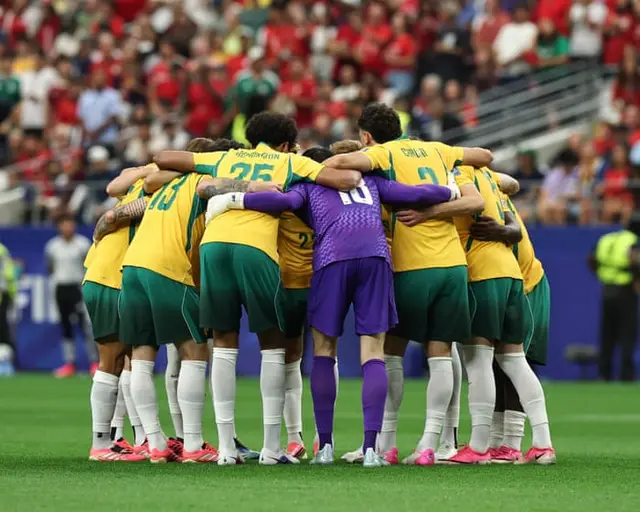
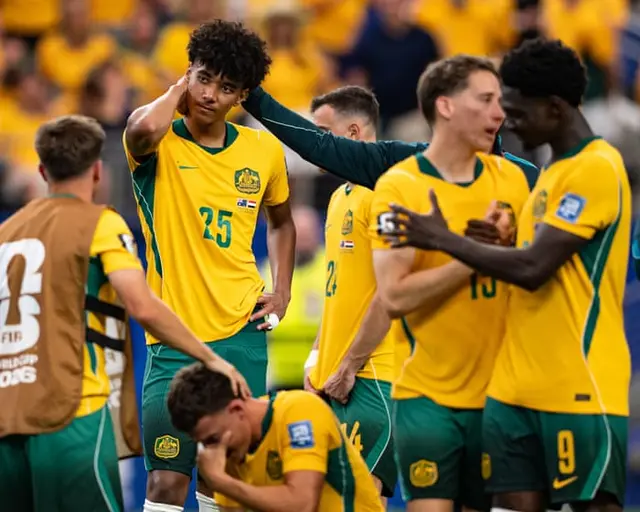
Tony Popovic’s daring selection has been met with excitement but this young cohort will be tested against more polished opponents in a tough Group D Of course Tony Popovic would say “it should be a very exciting group for the Australian public” about the 26 Socceroos he has selected for this month’s World Cup, as he did on Monday. The leader of Australia’s North American adventure needs to at least appear to believe in his squad, to have their backs, as this unproven group prepares for the challenges of a prickly Group D. But, by jingo, he might just be right. These players are oozing with skill and potential, bursting with the enthusiasm of youth. This fresh aroma was topped off by the surprise of uncapped attackers Cristian Volpato and Tete Yengi edging out more experienced options in a daring selection for a coach not known to take risks. Run through the squad list and the argument builds. At 22, Alessandro Circati is already a sumptuous defender, Serie A-proven. Mo Touré is elusive and crafty, who seems to have discovered the recipe for goals. Nestory Irankunda is an explosive talent who could be anything. From nowhere there is now teenager Lucas Herrington, who has managed to win the trust of Popovic, a former central defender himself. “It is quite special at 18 to be doing what he’s doing,” the Socceroos coach said. Paul Okon-Engstler shows the grace and drive of a midfielder 10 years his senior. “He hasn’t reached, I believe, half of what he could reach,” Popovic said. “His improvement over 12 months has been significant.” Perhaps the best of the bunch, however, is Jordy Bos. Perfectly suited to Popovic’s wingback system, the 23-year-old is already one of the finest left full-backs in Holland. The tournament is set to be his Cape Canaveral, and the stratosphere beckons. Popovic described this generation as without fear, mostly. “I’d like them to be more fearless than what they are, because sometimes that comes with experience, that when the pressure’s on, they go in their shell a little bit,” he said. “And then when they do two or three good actions, you can just see them open up and relax and off they go.” Exhilaration is temptation, reality is something different. Against more polished professionals of Turkey and the USA, this young cohort will be tested. They remain far from favourites to go through from their group. Mediocrity, as is generally the tradition for Australia at World Cups, is the most likely outcome. Indeed, a World Cup does not often go to plan. The first act upon the team’s arrival at their Oakland base on Monday ended in failure. The planned livestream of Popovic discussing the squad was canned, even as hundreds of Socceroos fans waited patiently on YouTube. The cause was the venue’s wi-fi, a reminder that for all the money and planning Football Australia has invested into this group, surprises cannot be eliminated. How they handle them will be part of what makes the coming weeks compelling. Watching the best emerging crop of Australian players in a generation tackle a World Cup campaign offers a sense of wonder, of what-might-be, that goes beyond the rarity of the peak of the four-year cycle. A World Cup is exciting; this one doesn’t involve starting Mitch Duke. The young players are complemented by respected veterans in captain Mat Ryan, Jackson Irvine, Harry Souttar and Mat Leckie. The latter was the hero of Qatar after his goal against Denmark. He was all but ruled out, even by his own club manager Aurelio Vidmar, just one month ago. Popovic was of similar mind: “A couple of months ago, God knows what he was thinking in terms of his football with all the injuries that he’s had,” he said. “He’s obviously stayed very true to himself, in terms of his fitness and staying strong.” Popovic has already tried to distil a spirit of possibility among the squad, allowing a degree of authenticity to their ambition. The players parrot his mantra of “why not us” when the topic shifts to these intangibles. The coach invited Socceroos fans to share it on Monday. “I don’t need anyone to dampen their expectation,” he said. “They should believe, they should love to see these boys play and have the mix of the experience and the youngsters.” As was seen in the first half against Mexico – and, indeed, in Monday’s livestream fail – Popovic and these players won’t always get it right. In all likelihood the Socceroos will stutter through the group stage and leave us all processing permutations as the clock ticks down against Paraguay. Then again, they might meet our expectations. Heck, they might even exceed them.

FIFA.com01 Jun 2026
Curaçao World Cup 2026 team guide

World Cup News

Curaçao World Cup 2026 team guide

Curaçao’s 0-0 draw with Jamaica that secured qualification was described by their captain, Leandro Bacuna, as ‘a story written for us’. Photograph: Ricardo Makyn/AFP/Getty ImagesSmallest nation to reach a World Cup will be guided by the oldest coach in Dick Advocaat This article is part of the Guardian’s 2026 World Cup Experts’ Network, a cooperation between some of the best media organisations from the 48 countries who qualified. theguardian.com is running previews from three countries each day in the run-up to the tournament kicking off on 11 June. A Fifa member since 2011, Curaçao have spent years building towards a first World Cup appearance. As an autonomous country within the Kingdom of the Netherlands, the island has been able to draw on a rich pool of Dutch-raised talent with Curaçaoan roots. They were well prepared for the qualifying cycle and had an advantage with the World Cup being hosted by the United States, Mexico and Canada. “We knew we wouldn’t face them in qualifying, which often proved a stumbling block,” said the goalkeeper Eloy Room about this edition’s Concacaf format. “So that became a real trigger for all of us, like: ‘if there’s a chance to reach the World Cup, it’s now.’” Room mentions important qualifying games against Haiti, a 5-1 win, and the goalless draw with Trinidad that made them realise something special could be possible. Then came the home game against Jamaica, which Curaçao went on to win 2-0. When they drew the reverse leg 0-0, they achieved the unthinkable and qualified for the World Cup, remaining unbeaten in their 10 matches and making them the smallest nation to take part in a World Cup, both in population, about 156,000, and land area, 171 square miles. “I think God was with us that night,” said Leandro Bacuna, the 34-year-old midfielder and Curaçao captain. “Because you’ve seen the game, everyone’s seen the game. Couple of balls on the post … Everywhere. But our keeper was great, so I think it was meant for us. It was a story written for us.” To survive a group with Germany, Côte d’Ivoire and Ecuador would be a huge achievement. “We do want to continue in the same way we’ve played in recent years, by playing possession-based football from the back,” says Room. “But we will have to adapt because we’re going to a World Cup where we may have less of the ball than our opponents. Still, we have to stick to our own strengths as we can play good football.” At 78, Dick Advocaat will become the oldest coach to take part in a World Cup, surpassing the record held by Otto Rehhagel, who was 71 when he led Greece in 2010. The former Rangers and Sunderland manager took charge in 2024 and guided Curaçao to qualification, making it one of his finest achievements of his career. Yet in February he stepped down to be with his ill daughter and was succeeded by Fred Rutten, who had been unable to take the role in 2023 due to medical reasons. But when it became clear that the situation involving Advocaat’s daughter had improved, a behind-the-scenes push gathered momentum to bring him back, as he remained highly popular. Rumours circulated that sponsors had applied pressure on the federation to reinstate him and the situation intensified, after which Rutten stepped aside of his own accord, clearing the way for Advocaat’s return. Leandro Bacuna has represented Curaçao for more than a decade and has played longest at the highest level, having spent three seasons in the Premier League with Aston Villa. Together with his younger brother Juninho he leads the team and forms part of one of the island’s best-known football families, with his brother Johnsen and their father, John, having represented the former Netherlands Antilles. Leandro is hugely popular among the local population, involving himself within the community. On international trips, he can often be found helping out with the luggage of the team, or other tasks, always ready to lend a hand when needed. Livano Comenencia spent nine years at the PSV academy, before playing two seasons for their reserve side in the Dutch second tier. A regular for several Dutch youth national teams, he moved to Juventus in 2023, where he further developed his game with the club’s Next Gen team. Now at FC Zürich, the midfielder underlined his growing importance with a crucial goal in the 2-0 win over Jamaica. Technically polished and comfortable dictating play from deep, he combines composure on the ball with the engine of a classic box-to-box midfielder. A steady presence at the back, Juriën Gaari was selected for Curaçao while playing for the Dutch amateur side Kozakken Boys and was then part of Curaçao’s Caribbean Cup win and the country’s first Gold Cup participation in 2017. It marked the start of a career that has since taken him to RKC Waalwijk and the Saudi clubs Al-Hazem and Abha Club. Although a late bloomer, he has amassed significant international experience with almost 60 games for Curaçao. Never one to seek the spotlight, he nevertheless commands respect and is an important presence within the team. It is all singing and dancing, the Caribbean vibe wrapped in a warm exuberance. After Curaçao qualified, the music artist Jeon released Mama Wa’, a song dedicated to the Blue Wave, the team’s nickname. The song captures the pride surrounding the achievement, with several members of the squad mentioned. Estimates suggest more than 3,000 fans will travel for the opening match against Germany, with charter-flight packages being arranged from the island. Around three-quarters of that number are expected for the other group games. Curaçao tends to take a broadly pragmatic view of the United States, viewing it through the prism of regional stability, economics and neighbouring Venezuela, whose coastline lies 65km away, underlining the island’s strategic position in the southern Caribbean. Foreign affairs and defence are handled by the Netherlands, of which Curaçao is a constituent country. In regard to the tournament, the high prices threaten to limit the travelling support. “It’s just incredibly expensive,” said Angelo Cijntje, Curaçao’s performance coach. “This is not affordable for the average person in Curaçao. I’m wondering how they’re going to manage it. People will do everything they can, they might even be willing to sell their car just to experience this. But it’s a real pity Fifa and the US are making it so difficult to be there.”

FIFA.com01 Jun 2026
World Cup: Every squad as they are announced

World Cup News

World Cup: Every squad as they are announced

Countries have started to announce their 26-man squads for the World Cup in the US, Canada and Mexico. The tournament is the biggest yet, with 48 teams, and runs from 11 June to 19 July. You can see the squads below as they are announced. 50 days until World Cup - pick your favourite kits BBC to show Scotland's first World Cup game since 1998 Listen to the latest Football Daily podcast SoundsGet football news sent straight to your phone

FIFA.com01 Jun 2026
Communism, Nasa and a place for Pelé: how Brazil prepared for the 1970 World Cup

World Cup News

Communism, Nasa and a place for Pelé: how Brazil prepared for the 1970 World Cup

In this extract from their forthcoming book on South America and the World Cup, Mark Biram and Tim Vickery describe la Seleçao’s strange buildup to the classic tournament In January 1969, João Saldanha was appointed as Brazil’s coach. Saldanha was barely a coach – he had had a brief spell in charge of Botafogo more than a decade earlier. He was an immensely popular football journalist, who with typewriter or microphone had the fluent gift of communication, talking about the game in language that was both fresh and straightforward, easy to understand. And he was so much more. He was a charismatic powerhouse, who claimed to have popped up at many key moments in history, usually in the service of international communism. Because, yes, at the right-wing height of Brazil’s military dictatorship, a communist was appointed to coach the national football team. João Havelange, the president of the Brazilian sports confederation, knew what he was doing. At a stroke, he had cut away all the intrigue and politicking which was surrounding the side. Saldanha’s opening move was to announce his starting lineup and his reserves. No argument, no discussion, no balancing off one region against the other. Just one man picking the team. And it worked. Brazil sailed through qualification for the 1970 World Cup. But Saldanha was never likely to make it all the way to Mexico, for a number of reasons. One, obviously, was his politics. It seems clear that authorities in Brasília were gunning for him. Another reason is his own erratic behaviour. He had a penchant for waving his gun around, he was observed drunk in public. But the main reason that Saldanha was sacked was almost certainly pragmatic – it was hard to imagine his Brazil winning the World Cup. He played an old style 4-2-4 – fine against the likes of Venezuela in qualification. Mexico would be another matter. His last matches in charge were a couple of friendlies at home to Argentina in early March, a 2-1 win preceded by a 2-0 defeat, a match where his relationship with Pelé broke down. Saldanha was replaced by Mario Zagallo, the “little ant” from the triumphs of 58 and 62. “I took over without a fixed idea of what I was going to do,” he told me many years later, “but I knew there would be a lot of changes, because I didn’t accept the idea of 4-2-4.” But before thinking about tactics, Zagallo had to sort out a key personal relationship – the one with Pelé. It seems bizarre in hindsight – from the point of view of July 1970, let alone well into the 21st century. But Pelé could easily not have gone to the Mexico World Cup. Saldanha had been chuntering about him, hinting that Pelé owed his place in the team to financial considerations, questioning his fitness as well as his eyesight. He was backed up by Aymore Moreira, who when Saldanha was sacked wrote an article under the headline “I, too, would have dropped Pelé”. He was specific. “The problem of the team was structural. And it has a name – Pelé. He can no longer help out the men in midfield because physically he does not have it in him to work back and forth.” Otto Glória, who had been in charge of Portugal in 1966, had been a candidate to replace Saldanha. “The way he is playing,” said Glória, “Pelé would not have a place in my team. He is not fighting in the area or working back as part of the midfield block.” An opinion poll in Placar, the new football magazine, showed that a significant number of people were in favour of dropping Pelé, from 27% in São Paulo (the state where he played with Santos) to 59% in the state of Minas Gerais (where Dirceu Lopes was a competitor). Zagallo wanted to nip this in the bud. In the first training session, he reassured Pelé of his importance. The team, said Zagallo, would be Pelé and 10 more. But who would be the 10? Here, Zagallo had a luxury that modern international coaches can only dream of – months on the training ground to get the blend right. He was not happy with his defence. And so Wilson Piazza was withdrawn from midfield to supply more quality, opening up space for the young Clodoaldo, who had taken over from Zito at Santos as the classy and combative box-to-box midfielder. His lung power would create space for Gérson, the midfield pass master. Zagallo wanted Paulo César on the left wing, but it was not working. And so in came Rivellino – whose natural position was central midfield creator – as a false left-winger. This could have meant that the team were blunt down the left flank, especially after the steady but limited Everaldo replaced the talented but flaky Marco Antônio at left-back. But Tostão was left-footed. He could drift out to the flank. Tostão and Pelé had played together in the qualifiers. But Zagallo was initially not convinced, thinking that they were too similar. He wanted an out-and-out centre-forward, and brought players of this type into the squad. But Tostão, recovered from a detached retina, was technically brilliant and mentally sharp, and this made him an excellent partner for Pelé, who needed someone with whom to combine at pace. Improvised as a centre-forward, not his natural position, Tostão wrote of himself years afterwards that he “was slow and offered little threat to the goal”. But it worked because of Jairzinho, who would burst infield from the right wing supplying speed and physical presence inside the area. The parts fitted together and, going forward at least, the team gelled. But how to defend? There was no Hilderaldo Bellini, Mauro Ramos, Orlando Peçanha. Zagallo’s idea, then, was to play as “a block, compact, leaving only Tostão upfield. Jairzinho, Pelé, Rivellino, all tracked back to help Clodoaldo and Gérson. We brought our team back behind the line of the ball. I’m happy to see the team in terms of 4-5-1.” And if Brazil had moved forward in tactical terms, the same was emphatically true of physical preparation. Brazil already attached great importance to this area. Indeed, one of Havelange’s errors in 1966 had been to bring in a specialist with a background in martial arts rather than football. Now they put themselves ahead of the curve once more. The dictatorship that took charge of the country in 1964 was an alliance between the military and the technocrats, one which made its presence felt very strongly in getting the national team into shape for Mexico. The technocrat class loved the data produced in physical preparation – what they could measure they could manage – and so, with military involvement and even some influence from Nasa, Pelé and company were prepared for the conditions in which the World Cup would be played; both the extreme summer heat of lunchtime Guadalajara and the altitude of Mexico City. This is the main reason that Brazil were the first team to arrive for the competition – with Zagallo promising that they would be the last to leave. Once the ball began rolling, could they live up to his words? This is an edited extract from Mundiales: A South American History of the World Cup (Pitch Publishing) by Mark Biram and Tim Vickery. To support the Guardian buy a copy at guardianbookshop.com. Delivery charges may apply.

FIFA.com01 Jun 2026
Quiz: Name every nation to have played at a World Cup

World Cup News

Quiz: Name every nation to have played at a World Cup

There are just 10 days to go until the start of the 2026 World Cup where 48 nations will face off for the biggest prize in football. To mark it, we want to test your knowledge. Can you name every side who has featured at a World Cup - including those who are doing so for the first time this year? And be aware, we're after the name of each country as it was when they appeared in the World Cup, which might not always be the same name a nation is now known by. After more quizzes? Go to our dedicated Football Quizzes and Sports Quizzes pages and sign up for notifications to get the latest quizzes sent straight to your device. What information do we collect from this quiz?Related topicsFootballFIFA World Cup 2026Play more quizzesQuiz: Name every nation at the 2026 World Cup Which World Cup team are you? Take our quiz World Cup quiz: Name every player in England's squad World Cup quiz: Name every player in Scotland's squad

FIFA.com01 Jun 2026
World Cup 2026: a visual guide to the stadiums across the trio of host nations

World Cup News

World Cup 2026: a visual guide to the stadiums across the trio of host nations

All you need to know about the 16 host stadiums in the US, Mexico and Canada The 2026 World Cup is the largest tournament ever, and as such it involves more stadiums in more countries than ever before. A total of 16 venues will play host to this summer’s big games, and each has a story to tell about the past, present and future of sports in its city. Stadium names may look unfamiliar, as we are using the Fifa-approved names instead of the sponsored names that run afoul of the governing body’s clean venue rules. Location : Vancouver, British Columbia, Canada What to know : BC Place has one of the most distinctive architectural features you’ll see at this World Cup: a cable-supported retractable roof, the largest of its kind in the world. The feature was a late addition to the stadium, part of a major renovation that took place immediately after the 2010 Winter Olympics that got rid of the previous permanent roof. When open in the sun, the cables cast a shadow across the field, which is either pleasantly distinctive or terribly distracting, depending on your point of view. Recent reports indicate the roof will remain closed for the World Cup, due to potential issues with uneven sunlight affecting the growth of the natural grass surface that is being imported for the occasion. Should Fifa decide to open it, though, it won’t be a huge operation – that process takes about 20 minutes. Usual tenants: Vancouver Whitecaps (MLS) and BC Lions (Canadian Football League) Memorable event (non-soccer): The opening and closing ceremonies of the 2010 Winter Olympics were held at BC Place. It was the first Olympic opening ceremony to be held indoors. Hockey legend Wayne Gretzky was among the torch bearers to light the Olympic cauldron at the opening ceremony, and Canadian singer-songwriter Neil Young sang as it was extinguished at the closing ceremony. Memorable game (soccer): The 2015 Women’s World Cup final, where Carli Lloyd’s hat-trick led the US to a 5-2 win over Japan and their first World Cup title in 16 years. The official crowd was 53,341 and the game tied a record set by Brazil v Sweden in 1958 for the most goals in a men’s or women’s World Cup final. Location : Seattle, Washington, United States What to know: Seattle Stadium sits on the site formerly occupied by the excellently named Kingdome, and is one of the few World Cup stadiums in the US located within its city’s urban core. Aside from its location, the stadium’s distinctive architecture makes it stand out. In particular, it features three rarities for outdoor NFL stadiums. One is its roof, covering most of the seats along the sidelines. Another is the pyramid-shaped bleacher section (known as the Hawk’s Nest) at the base of a tower in an otherwise-open north end – purposely left empty so as to maintain views of the city skyline. And lastly, the grounds feature a variety of public art on display. The most visible to viewers on TV will be the four circles that adorn the other side of the tower – that’s Earth Dialogue, a work by Native American artist Bob Houzous that is “intended as a constant reminder of our deep connection to the earth”, according to the Washington state stadium authority. Usual tenants : Seattle Sounders (MLS), Seattle Reign (NWSL), Seattle Seahawks (NFL) Memorable event (non-soccer): The Pacific Northwest Seismic Network began placing sensors at the stadium in 2011 and has since recorded numerous instances of crowd shaking powerful enough to register on a seismometer. Among them: the 2011 Beast Quake run by Marshawn Lynch during a Seahawks home game (with peaks similar to a 2.0-magnitude earthquake) and two of Taylor Swift’s Eras Tour dates in July 2023 (a 2.3-magnitude event). Memorable game (soccer): The Concacaf Champions League final in May 2022. Seattle became the first MLS club to win the tournament in its current format, beating Pumas before a crowd of 68,741 that also produced seismic activity after the Sounders’ three goals. The title was monumental for the Sounders, who have played at the stadium since their days in the US minor leagues, and at the Kingdome before that as members of the NASL. Tournament name: San Francisco Bay Area Stadium Location : Santa Clara, California, United States What to know: The Bay Area venue was built to replace the 49ers’ old home Candlestick Park, one of the most iconic and soulful old stadiums of its era. Given that and its location 40 miles south, the new venue was always going to suffer by comparison. In reality, it’s a perfectly fine modern stadium, praised for its environment-friendly design and clean sightlines throughout, with a large block of luxury suites resulting in an upper deck that is closer to the field than most. However, that upper deck also happens to face fans directly into the sun for afternoon and evening games. The resulting temperatures have resulted in multiple heat stress-related issues among fans. Memorable event (non-soccer): The stadium has twice hosted the Super Bowl, first in 2016 and most recently this year. Back then, Beyoncé soft-launched her Lemonade era to overshadow the Denver Broncos’ win over the Carolina Panthers. In February, a crowd of 70,823 watched the Seattle Seahawks defeat the New England Patriots 29-13. Bad Bunny headlined the half-time show, with sets that mirrored the Puerto Rican countryside and guest appearances by Lady Gaga and Ricky Martin. Memorable game (soccer): The Copa América Centenario in 2016 kicked off at this stadium with Colombia’s 2-0 win over the USMNT. Cristián Zapata and James Rodríguez scored for Los Cafeteros, who went on to finish third in a tournament won by Chile. Location : Inglewood, California, United States Switzerland v Bosnia and Herzegovina, 18 June What to know: Constructed at a total cost of around $5bn, this stadium has quickly become a fixture for major events, sporting and otherwise, on the west coast of the United States. Its distinctive feature is the semi-clear canopy, spanning around 1m sq ft and covering the entire stadium structure while letting a good amount of light through. That roof extends in a teardrop shape to create a plaza in the south-east corner while also covering an event venue. Despite California’s warm, inviting climate, the stadium usually uses an artificial turf surface because it serves as the home for two NFL teams, who can wreak havoc on natural grass over time. That’s not the only major modification: as did a few other venues, this stadium has had to demolish a few rows of permanent seats in order to accommodate a pitch that meets Fifa’s sizing standards. Usual tenants: Los Angeles Rams and Los Angeles Chargers (NFL) Memorable game (non-soccer): The stadium will host the opening ceremony and the swimming events at the 2028 Los Angeles Olympics. The swimming venue will seat 38,000 spectators – the largest for a swimming event in the history of the Olympics – and take its design inspiration from the structures built at Lucas Oil Stadium in Indianapolis for the 2024 US Olympic trials. Memorable game (soccer): The 2023 Concacaf Gold Cup final between Mexico and Panama had a crowd of 72,963, still the largest for a soccer game in the venue’s six-year history. Santiago Giménez’s goal off the bench gave El Tri their record ninth Gold Cup title. Colombia v Democratic Republic of Congo, 23 June What to know: From the inside, there does not appear to be anything especially noteworthy about the everyday home of Chivas, the Mexican league team who play here. From the outside, though, Estadio Guadalajara has perhaps the most striking facade of any venue at this World Cup. Designed by French architects Jean-Marie Massaud and Daniel Pouzet to resemble an erupting volcano, the vast majority of the stadium sits within a grass-covered, man-made hill. Only the 360-degree roof rises above, with fans entering through overhangs in the hill below. It’s quite a statement, even if the interior does not immediately distinguish itself among the other 2026 venues. Memorable event (non-soccer): The stadium’s attendance record was set at a 2023 boxing bout between Mexico’s Canelo Álvarez and British fighter John Ryder. The Guadalajara native, fighting in his home country for the first time in 12 years, dominated in front of a reported 51,000 fans. Memorable game (soccer): Manchester United and Chivas played one of the first friendlies after the stadium opened in 2010. Javier “Chicharito” Hernández, a former youth player at Chivas, played the first half for his boyhood club and scored the first goal at the stadium before switching kits and playing for United in the second half. Usual name: Estadio Banorte (more commonly: Estadio Azteca) What to know: For all the large capacities, flashy amenities and significant history offered by other stadiums, there’s no denying that this is easily the most iconic of this year’s World Cup venues. Built for the 1968 Olympics, this stadium has undergone several rounds of renovations over the course of its life. That includes a wide-ranging recent round that wrapped this spring, bringing the official capacity to 87,500, making it the eighth-largest stadium in the world used for soccer. (Fifa lists the capacity for this tournament as 83,000.) It was also the first stadium to host two World Cup finals, with Mexico staging in 1970 and 1986. The environment when Mexico plays here is legendarily tough – partially due to El Tri’s passionate fans but also due to the elevation (7,200ft above sea level). Usual tenants: Club América, Cruz Azul and Atlante (Liga MX) Memorable event (non-soccer): A parade of big-name acts have made this stadium a stop on their world tours. Some of note include Michael Jackson, who brought in more than half a million people across five nights for his Dangerous World Tour in 1993. In 2011, U2 brought their 360° Tour to the Azteca, attracting 282,978. Memorable game (soccer): There’s certainly no shortage of these. In the 1970 World Cup final, Brazil beat Italy 4-1 to secure a third star above their crest. In 1986, Diego Maradona was paraded around the stadium on the shoulders of his teammates after Argentina defeated West Germany 3-2 to win their second World Cup. Days before that, though, was perhaps the most infamous match of the stadium’s lifetime: Argentina’s win over England in the quarter-finals, where Maradona introduced the world to the Hand of God and the Goal of the Century. What to know: No stadium at this World Cup has a more magnificent view from the stands than this one, so expect no shortage of photos from fans in the upper decks in Monterrey of the mountain lying just beyond the south end. That would be the Cerro de la Silla, whose peak is just below 6,000ft. The stadium and the grounds it oversees are among the newest and most advanced in Mexico, with a number of nods to preserving the surrounding ecological environment with sustainable design. Nicknamed the “steel giant”, the stadium also features a cantilever roof designed to block sunlight and allow airflow to cool the hot temperatures in north-east Mexico. Memorable event (non-soccer): The stadium has held numerous big-name concerts in the 11 years it has been open, with Bad Bunny visiting for two sold-out nights on his World’s Hottest Tour in 2022. Memorable game (soccer): Inter Miami got their first taste of continental disappointment here on 10 April 2024, as Lionel Messi and co fell 3-1 to home side Monterrey in the second leg of their Concacaf Champions Cup quarter-final. Usual name: NRG Stadium (formerly and soon to be Reliant Stadium) Portugal v Democratic Republic of Congo, 17 June What to know: Opened at the turn of the century, this stadium was the first with a retractable roof to be used in the NFL. Designed by architecture firm Populous (then known as HOK Sport), the roof meets in the middle of the field in two sections and is covered in fabric, giving the interior a boxy feel that nonetheless makes use of abundant natural light. The roof opening procedure takes about seven minutes, but it’s anticipated it will be closed for every World Cup match. The stadium was initially known as Reliant Stadium, but later changed to NRG Stadium after the parent company of Reliant. After the World Cup, it will return to the original Reliant moniker – not that it changes much about the product being promoted. In true Houston fashion, both are energy companies – Reliant is a subsidiary of NRG. Memorable event (non-soccer) : The only thing more Texan than American football: the rodeo. The Houston Livestock Show and Rodeo is held at NRG Stadium for three weeks each March. Top professional rodeo cowboys like Stetson Wright and Riley Webb headline events from calf roping and bronc riding to steer wrestling and bull riding. This year’s event drew more than 2.6m visitors across the 21 days. Memorable game (soccer): At the 2010 MLS All-Star Game, 70,728 watched Chicharito and Manchester United beat Landon Donovan and the MLS All-Stars 5-2. United were the first international club to beat the MLS All-Stars in regulation. Location: Arlington, Texas, United States What to know: In a country of huge stadiums, this one stands out. Colloquially known as Jerry World, after Dallas Cowboys owner Jerry Jones, this retractable-roof behemoth has the largest capacity of any stadium at the World Cup. The stadium’s dome is one of the tallest in the world, supported by two 300ft-tall arches spanning the length of the venue and then some. The retractable roof, like others at the World Cup, is expected to remain closed throughout the tournament. But when it is open, the relatively small opening it reveals is a nod to the Cowboys’ previous home, Texas Stadium, which had a distinctive hole as a result of abandoned plans for its own retractable roof. Befitting Texas, just about everything about the stadium is big. The twin video boards running the length of the field were the largest in the world upon opening, and still remain among the biggest. They’re so big, in fact, that some NFL punters have been able to hit them with kicks. Let’s hope that won’t be an issue this summer. Memorable event (non-soccer): The 2021 bout between Canelo Álvarez and Billy Joe Saunders surpassed Leon Spinks v Muhammad Ali in 1973 as the most-attended indoor boxing fight in US history with an official attendance of 73,126. Jake Paul and Mike Tyson faced off there before more than 72,000 in 2024. Memorable game (soccer): Some trivia for your World Cup watch parties: the first sporting event at Jerry World wasn’t American football. It was a 2009 Concacaf Gold Cup quarter-final between Costa Rica and Guadeloupe. Costa Rican legend Celso Borges scored the first goal in the stadium’s history; the nightcap match of Mexico v Haiti drew a crowd of 82,252. Usual name: Arrowhead Stadium (or, if you must, GEHA Field at Arrowhead Stadium) Location: Kansas City, Missouri, United States What to know: At the time this stadium was built, multi-purpose monstrosities like Riverfront Stadium (Cincinnati), Three Rivers Stadium (Pittsburgh) and Veterans Stadium (Philadelphia) were all the rage. Those concrete donuts sought to serve both baseball and gridiron football teams, and featured modular designs with movable stands to accommodate both. Kansas City went a different route, building a stadium for the NFL’s Chiefs separate from one for MLB’s Royals. Fifty years later, all of the multi-sport buildings have been demolished and Arrowhead remains, still high-functioning even if it lacks some of the flashier amenities and glass of newer venues. This is the oldest World Cup stadium in the United States, but it has undergone numerous renovations over the years, including the addition of a new press box, updated football-shaped video boards at either end and the removal of some rows of seating to allow for a Fifa-approved pitch. Its distinctive feature is the swooping silhouette along the top, meaning that seats in the corners are truly in the corners . Memorable game (non-soccer): Take your pick of any of the six AFC championship games hosted at the stadium since 2018, the second most of any stadium all-time. The Chiefs won four of those to advance to the Super Bowl. Other than those, the biggest game played at the venue may well be the 2007 college football game between Missouri and Kansas, who were ranked No 4 and No 2 in the country respectively at the time and carry huge fanbases in the city, which straddles the Missouri/Kansas state line. Mizzou won that edition 36-28. Memorable game (soccer): The venue served as home of the Kansas City Wizards of MLS before they rebranded to Sporting Kansas City and moved into their own stadium on the Kansas side of town. The team won a US Open Cup title there in 2004, when Russian forward Igor Simutenkov scored what was likely the last top-flight golden goal in the world before the rule was nixed. Years later, Manchester United fell to the Wizards 2-1 in a preseason friendly at the stadium, with Davy Arnaud and Kei Kamara scoring for the hosts. Location: Atlanta, Georgia, United States Democratic Republic of Congo v Uzbekistan, 27 June What to know: A stadium with a retractable roof is not exactly a rarity in the United States, but none of those retractable roofs quite resemble the pinwheel-esque design utilized here. It’s one of several distinctive features utilized throughout the stadium, including one end that utilizes a massive glass wall to provide views to the outside. The stadium was designed with American football and soccer in mind, with the NFL’s Falcons and MLS’s Atlanta United always in the picture to be primary tenants. Beyond that, the stadium’s most unusual feature may be its prices. Hot dogs, sodas, beer and other snacks are priced similarly inside the stadium as you might see on the outside, a key factor in what owner Arthur Blank sees as the stadium’s commitment to fan experience. Usual tenants: Atlanta Falcons (NFL), Atlanta United (MLS), Atlanta NWSL (future) Memorable event (non-soccer): In this case, the game in question was memorable for how relatively unexciting it was. Super Bowl LIII occurred here in 2019, when the New England Patriots defeated the Los Angeles Rams 13-3 in the lowest-scoring Super Bowl ever. Memorable game (soccer): Atlanta United lifted their first and to date only MLS Cup at their home stadium in 2018, defeating the Portland Timbers 2-0 to set off wild celebrations. Location: Miami Gardens, Florida, United States Third-place match, 18 July (RU101 v RU102) What to know: Of all of the stadiums in the United States, none has had a makeover quite like this one over the course of its life. Founded as Joe Robbie Stadium, the namesake of the founder and owner of the NFL’s Miami Dolphins, the venue was initially completely uncovered and over time adapted to host baseball in addition to American football. After the baseball team left, a large-scale renovation was undertaken that included the addition of a canopy over most of the seats, lending a more traditional feel to a stadium that has hosted no shortage of international soccer events over the years. That canopy is much needed – the south Florida heat has been a factor at numerous games played within the confines. Aside from hosting a wide variety of major events over its history, the venue is also known for its near-constant name-changing – Miami Stadium will be the ninth moniker used, following Joe Robbie Stadium, Pro Player Park, Pro Player Stadium, Dolphins Stadium, Dolphin Stadium, Land Shark Stadium, Sun Life Stadium, New Miami Stadium and its current Hard Rock Stadium name it will revert to after the tournament. Usual tenants: Miami Dolphins (NFL), Miami Hurricanes (college football) Memorable event (non-soccer): Miami’s stadium may have the most wide-ranging resume of any venue at this World Cup. In addition to six Super Bowls, it was home to baseball’s Miami Marlins from 1993 to 2001 – during which it hosted the World Series twice – and is still the site of tennis’s annual Miami Open, where the main show court is built over the grass field. The stadium’s parking lots also are used as part of the course of Formula One’s annual Miami Grand Prix. Memorable game (soccer): Miami hosted the 2024 Copa América final, where Argentina beat Colombia 1-0. The match may be best remembered for chaos off the pitch: kickoff was delayed for more than an hour due to overcrowding, with an estimated 7,000 people gaining entry without having tickets; the president of the Colombian federation was arrested after getting in several fights; and the venue was left with significant damage. On a brighter note, Shakira did the half-time show. (She’s also co-headlining the World Cup final half-time show.) Opened: 2007 (last renovated and expanded in 2016) What to know: Originally built as a modest home with about 20,000 seats for Toronto’s entry into MLS, this stadium’s permanent capacity has expanded significantly and its physical profile has grown to match. Its current configuration, with an added upper deck along the sideline, seats about 28,000, and the added roof over many of the seats gives it a European feel. This summer the stadium will add more than 17,000 new temporary seats, largely through the addition of a large structure at the stadium’s south end, just under the canopy that was installed in 2016. The stadium is getting other notable upgrades for the showpiece event, namely new LED video boards, new team dugouts and a fresh sound system. Usual tenants: Toronto FC (MLS) and Toronto Argonauts (Canadian Football League) Memorable game (non-soccer): The 104th Grey Cup, the championship of Canadian football, was hosted at BMO Field in 2016. In that game, the Ottawa Redblacks defeated the Calgary Stampeders 39-33 to win the championship despite finishing the regular season with a losing record. Memorable game (soccer): BMO Field has hosted MLS Cup three times, once as a neutral venue in 2010 and twice as Toronto FC’s home stadium in Cup wins over Seattle Sounders in 2016 and 2017, with the home side losing on penalties in the former before winning 2-0 in the latter. Location: Foxborough, Massachusetts, United States What to know: This stadium was built to replace the old Foxboro Stadium, which served as a venue for the 1994 World Cup and was located adjacent to the current plot in what is now a parking lot. It has many notable architectural features, the most obvious being a slice cut out of the seating bowl to its north-east corner. That is there at the behest of New England Patriots owner Robert Kraft, who also owns the stadium and insisted upon a grand entrance to the venue. Next to that grand entrance is a mock lighthouse that features 360-degree panoramic views of the stadium and Patriot Place, a nearby open-air shopping center also owned by the Kraft family. Usual tenants: New England Patriots (NFL), New England Revolution (MLS) and Boston Legacy (NWSL) Memorable event (non-soccer): The 2002 Tuck Rule game is storied in NFL lore. As heavy snow fell during a playoff game between the Patriots and Raiders, Tom Brady was initially ruled to have fumbled the ball after being sacked deep in the fourth quarter with New England down by three. The referee overturned the decision, citing the controversial Tuck Rule. The Patriots went on to win the game and then the Super Bowl, starting a run of six championships with Brady and coach Bill Belichick. Memorable game (soccer): The 2002 MLS Cup between the New England Revolution and the LA Galaxy. The Galaxy won with Carlos Ruiz’s 113th-minute golden goal in double overtime – the final MLS Cup to be played with a golden-goal rule – before a crowd of 61,316, an attendance record that stood until 2018. Location: Philadelphia, Pennsylvania, United States What to know: Like many stadiums of its era, Philadelphia’s venue is a huge mass of exposed steel and irregular seating sections. One notable feature is located at the stadium’s north end – a steel tower upon which sits a small circular seating section called the Eagles Nest. At one point, a row of wind turbines adorned the top of the adjacent seating section, but they were removed in 2019 and never replaced. Directly abutting Interstate 95 and situated in a mass of parking lots alongside the city’s baseball stadium and basketball/hockey arena, the stadium is not within the downtown core but is easily accessible via the city’s Septa train, which will be running extra service for the usual $2.90 fee with no charge for outbound trips after the games. Usual tenants: Philadelphia Eagles (NFL) and Temple Owls (college football) Memorable event (non-soccer): Located between the US Military Academy in upstate New York and the US Naval Academy in Maryland, Philadelphia is the most regular home of the annual Army-Navy college football game. The city has hosted the game 90 times – 14 times at this stadium – with sitting US presidents from Truman and JFK to Clinton and Trump attending over the years. Memorable game (soccer): The first sporting event held in the stadium was a 2003 friendly between Manchester United and Barcelona. Patrick Kluivert scored the first goal in the stadium’s history off a Ronaldinho assist before United responded for a 3-1 win. The crowd of 68,396 was a record for a Philadelphia soccer game for 21 years until a 2024 friendly between Liverpool and Arsenal garnered 69,879 fans. Tournament name: New York/New Jersey Stadium Location: East Rutherford, New Jersey, United States What to know: The site of this summer’s World Cup final is no stranger to big events, having been one of the few open-air stadiums in a cold-weather city to host a Super Bowl. Built for about $1.6bn, it is shared by the Giants and Jets of the NFL, who collaboratively designed the stadium. The exterior is marked by rows of aluminum slats that surround the facade, and the massive seating bowl is interrupted only by four high-definition TV screens. There is no roof over the stadium and only a small canopy over some of the seats, the result of a late change to the funding agreement that saw a proposed retractable roof dropped from the plans. Located across the Hudson River from New York City in the swamplands of New Jersey, getting to and from the stadium is a bit of a chore even at the best of times. There is no direct rail connection between New York City and the small station that serves the stadium, and car traffic often slows to a total gridlock after big games. On the mildly positive side, the American Dream mall is linked to MetLife by a pedestrian walkway, and it features numerous places to eat along with a water park and an indoor skiing facility. Usual tenants: New York Giants and New York Jets (NFL) Memorable game (non-soccer): Super Bowls don’t often get played in open-air stadiums in cold-weather cities, but NFL Commissioner Roger Goodell made an exception for Super Bowl XLVIII. The game didn’t necessarily reward that risk – the Seattle Seahawks dominated the Denver Broncos 43-8 in one of the most lopsided Super Bowls ever. Memorable game (soccer): The stadium has been the site of two notable finals: the 2016 Copa América Centenario final that saw Chile win on penalties, prompting a distraught Lionel Messi to retire from the national team in the tunnel after the match. (Obviously, that retirement didn’t last.) The other notable final came last year, as Chelsea lifted the Club World Cup as Donald Trump stayed front and center in the celebrations. Photos supplied by Getty Images, Reuters and the Associated Press.

FIFA.com01 Jun 2026
Christian Pulisic wanted to talk about something else. Now he can

World Cup News

Christian Pulisic wanted to talk about something else. Now he can

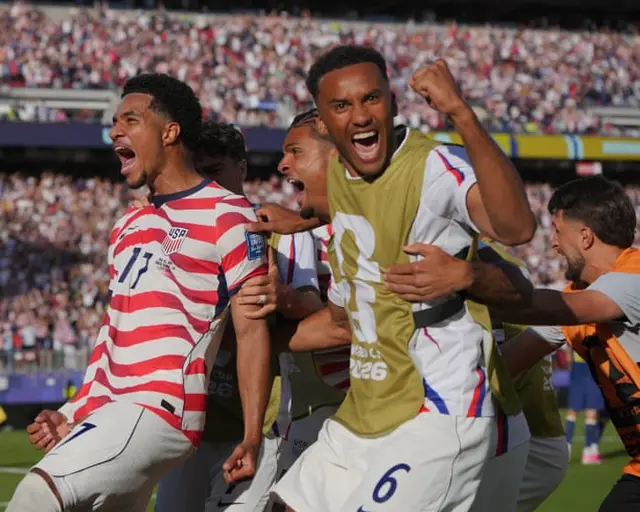
The US forward’s imperious 45 minutes against Senegal put some questions to rest, while his manager still wants to see more It wasn’t hard to see how annoyed US men’s national team star Christian Pulisic was getting. Another US national team camp, another friendly on the road to an all-important World Cup at home, and another batch of questions about his goal scoring drought, and the pressure it created for him and the team. Before Sunday, the Milan midfielder hadn’t scored a goal for club or country in nearly six months. His dry spell just with the national team stretched back even further, with Pulisic having last found the back of the net on 19 November 2024, during a Nations League match against Jamaica. By this past March, the US standout sounded exhausted by questions about the drought, always insisting that he felt good about his game and expressing confidence in a return to form. Lackluster performances against Belgium and Portugal did little to end the inquiries. When the US roster was revealed on Tuesday in New York, Pulisic had all but given up trying to hide his annoyance. Pulisic was arguably the most consequential player on the field for the US in a much-needed positive result, a 3-2 win against Senegal that restores some measure of good vibes to the World Cup ho-hosts. After a lovely assist to Sergiño Dest on the US’s opener, Pulisic showed off an even better finish on their second goal, rounding the goalkeeper and finishing neatly from a tough angle off a nice feed behind the backline from Ricardo Pepi. Just like that, Pulisic found himself sprinting, finally, towards the corner flag. He was mobbed by teammates. The celebration felt emotional, visceral even. The questions Pulisic faced in the mixed zone after the match were more easily answered. “Hopefully now people can stop talking about it,” Pulisic told reporters, sounding relieved he could talk about breaking the spell, not extending it. “It felt great,” said Pulisic. “I’ve felt this confidence [the whole time.] I’ve played really well in recent months … I feel good and now, obviously this was just a friendly – we have big games ahead and I have to be ready.” US head coach Mauricio Pochettino has expressed confidence at times in Pulisic, even playing him as a center forward in March in a bid for him to snap out of his funk. At times, though, Pochettino’s praise of his playmaker has felt a bit tempered. That was the case on Sunday, when he answered a reporter’s question about Pulisic’s game and immediately addressed the entire group, not Pulisic alone. “I think for the first time, or second or maybe the third time that we can’t complain that [everyone] had the right attitude and right commitment for the 22 players [that played],” Pochettino said in his press conference. “That’s the attitude that we’re trying to find, the commitment … [Pulisic’s] performance today in 45 minutes was really really good, but I think he still has potential to improve.” It’s worth noting that Pochettino has also provided helpings of no-strings praise toward Pulisic in the past. As recently as last week, he told media that he was certain his star player would score at the World Cup, a ringing endorsement – or a bit of pressure – offered to the man many hope will finish his career as the greatest player in the history of American men’s soccer. The commentary of Pulisic’s teammates was easier to analyze. “Any player goes through high and low moments in their career,” Weston McKennie told reporters. “Obviously I think the outside world may have been worried and questioning ‘what he’s gonna look like, is he gonna be in form?’ But I think Christian has shown countless times at club level and country level that he shows up in the moments that we need him the most. He always has the support from us, the team and his close people around him. We believe in him. “It’s amazing for all of us to witness [the end to the drought], but we move forward and we count on him for a lot of things. He’ll come through when we need him.” It remains to be seen whether Pulisic can stretch his outstanding effort on Sunday into something more sustainable as he approaches the biggest moment of his professional career. Whatever the case, he’ll surely be relieved to stop answering questions about his form.

FIFA.com01 Jun 2026
West Ham's Soucek in Czech World Cup squad

World Cup News

West Ham's Soucek in Czech World Cup squad

West Ham midfielder Tomas Soucek has been named in the Czech Republic squad for this summer's World Cup - their first appearance at the tournament since 2006. With 89 caps to his name, 31-year-old Soucek is the most experienced player selected by head coach Miroslav Koubek. He is joined in the squad by former Hammers team-mate Vladimir Coufal, who joined Hoffenheim in 2025, while Wolves defender Ladislav Krejci also makes the cut. At 17, Sparta Prague midfielder Hugo Sochurek is the youngest player selected, while 10 players from reigning Czech champions Slavia Prague will feature. The expanded 48-team World Cup in the USA, Canada and Mexico runs from 11 June to 19 July. The Czechs are in Group A and start their campaign against South Korea on 12 June in Guadalajara. They then face South Africa in Atlanta on 18 June before playing co-hosts Mexico a week later in Mexico City. Goalkeepers: Lukas Hornicek (Braga), Matej Kovar (PSV Eindhoven), Jindrich Stanek (Slavia Prague) Defenders: Vladimir Coufal (Hoffenheim), David Doudera (Slavia Prague), Tomas Holes (Slavia Prague), Robin Hranac (Hoffenheim), Stepan Chaloupek (Slavia Prague), David Jurasek (Slavia Prague), Ladislav Krejci (Wolverhampton), Jaroslav Zeleny (Sparta Prague), David Zima (Slavia Prague) Midfielders: Lukas Cerv (Viktoria Plzen), Vladimir Darida (Hradec Kralove), Lukas Provod (Slavia Prague), Michal Sadilek (Slavia Prague), Hugo Sochurek (Sparta Prague), Alexandr Sojka (Viktoria Plzen), Tomas Soucek (West Ham), Pavel Sulc (Olympique Lyonnais), Denis Visinsky (Viktoria Plzen) Forwards: Adam Hlozek (Hoffenheim), Tomas Chory (Slavia Prague), Mojmir Chytil (Slavia Prague), Jan Kuchta (Sparta Prague), Patrik Schick (Bayer Leverkusen) Everything you need to know about the World Cup

FIFA.com31 May 2026